Four inches sounds like a small measurement, but it can be surprisingly difficult to picture until you compare it with something you already know. It is longer than a standard credit card is wide, close to the length of a large smartphone’s shorter side, and easy to underestimate when you try to imagine it in your head.
You might need to understand this size when shopping for a phone accessory, measuring a small object, checking a product’s dimensions, or working on a home project. In each situation, knowing the number is useful, but seeing how it compares with familiar objects makes it much easier to understand.
The good news is that you do not need a ruler to get a reasonable idea of four inches. Several everyday items provide helpful visual references, although their exact dimensions vary by brand and model.
Four inches equals ⅓ of a foot, 10.16 centimeters, 101.6 millimeters, and 0.1016 meters. That is a little more than 10 centimeters, making it a manageable length to picture using your hand or a familiar household object.
Every Unit 4 Inches Converts To
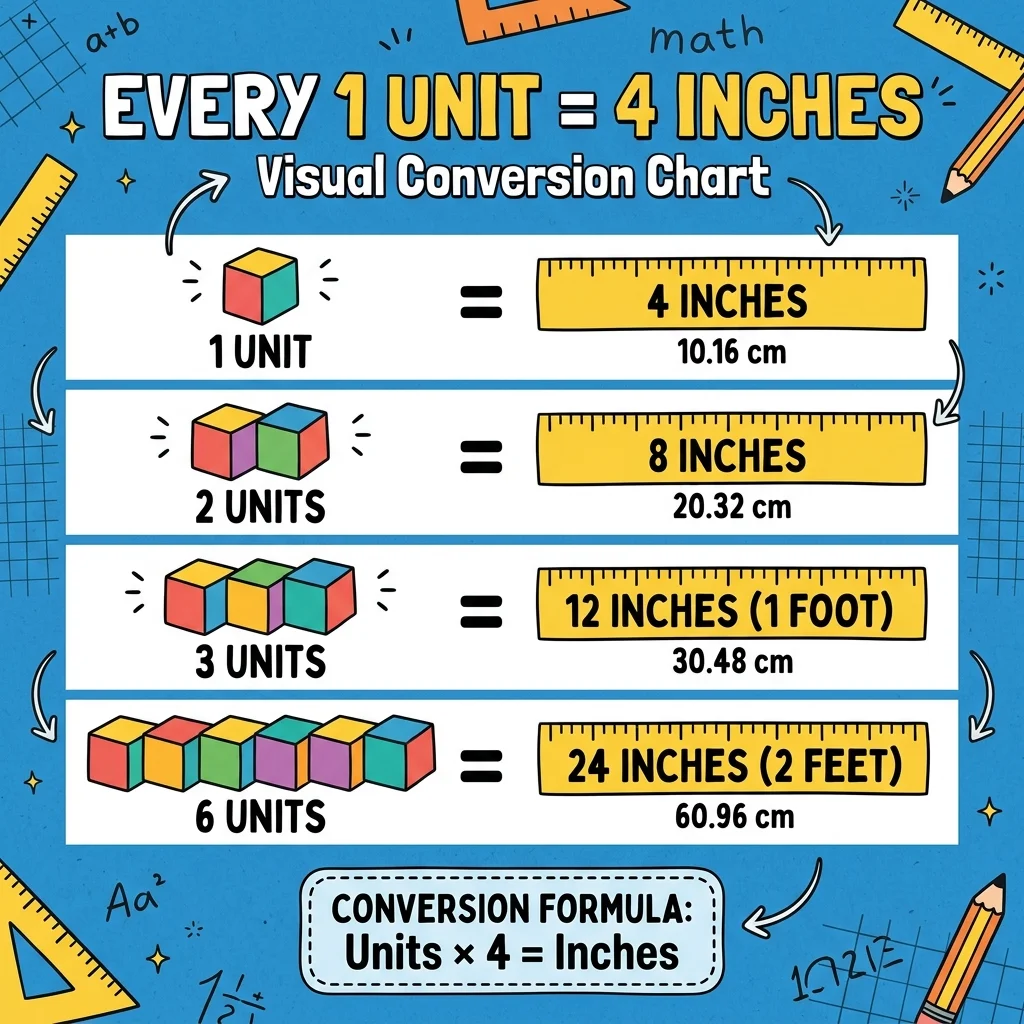
Four inches is a straightforward measurement in the imperial system, but converting it into other units helps you picture its size more accurately. Centimeters are particularly useful because many everyday products list their dimensions in metric measurements.
Here is a quick conversion table for four inches.
| Unit | Value |
|---|---|
| Inches | 4 inches |
| Feet | 0.3333 feet (⅓ foot) |
| Centimeters | 10.16 cm |
| Millimeters | 101.6 mm |
| Meters | 0.1016 m |
| Yards | 0.1111 yards |
| Fraction of a foot | ⅓ foot |
| Fraction of a yard | 1/9 yard |
The most useful conversions to remember are 4 inches in feet = ⅓ foot and 4 inches in cm = 10.16 cm. If you prefer millimeters, the same length is 101.6 mm.
How to Calculate the Conversions
The math is simple once you know the standard conversion factors.
- Inches to feet: Divide the number of inches by 12. Four divided by 12 equals approximately 0.3333 feet.
- Inches to centimeters: Multiply by 2.54. Therefore, 4 × 2.54 = 10.16 cm.
- Inches to millimeters: Multiply by 25.4. This gives 4 × 25.4 = 101.6 mm.
- Inches to meters: Multiply by 0.0254. Four inches equals 0.1016 meters.
- Inches to yards: Divide by 36. Four divided by 36 equals approximately 0.1111 yards.
For quick mental math, think of four inches as about 10 centimeters. The rounded figure is convenient for everyday estimates, while 10.16 cm is the more precise conversion.
Where 4 Inches Sits on a Common Size Scale
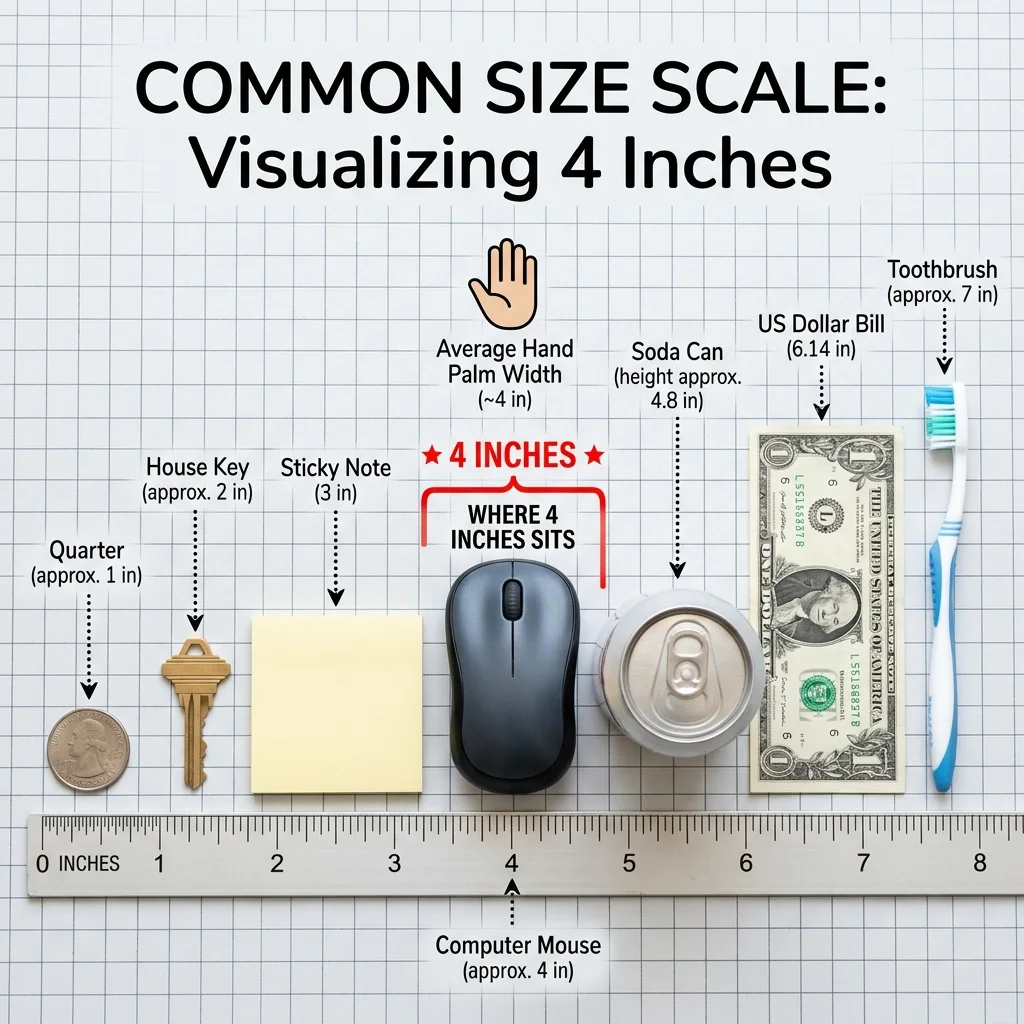
Four inches sits in the small-object range. It is long enough to notice clearly in your hand, but short enough to fit easily inside a pocket, pencil case, or small storage compartment.
The measurement becomes easier to understand when you compare it with familiar lengths.
- Under half a foot: Six inches is half a foot, so four inches is two-thirds of that distance.
- A little over 10 centimeters: On a metric ruler, it extends just past the 10 cm mark.
- One-third of a foot: A standard foot contains 12 inches, making four inches exactly one-third of that length.
- Shorter than a typical smartphone: Many modern smartphones are around 5.5 to 7 inches tall, so four inches is shorter than their full length.
- Similar to a small handheld object: Many compact items, including short tools and small accessories, have one dimension near four inches.
It is important to distinguish between an object’s length, width, and height. A product described as four inches wide may be much taller or longer in another direction. Always check which dimension the measurement refers to.
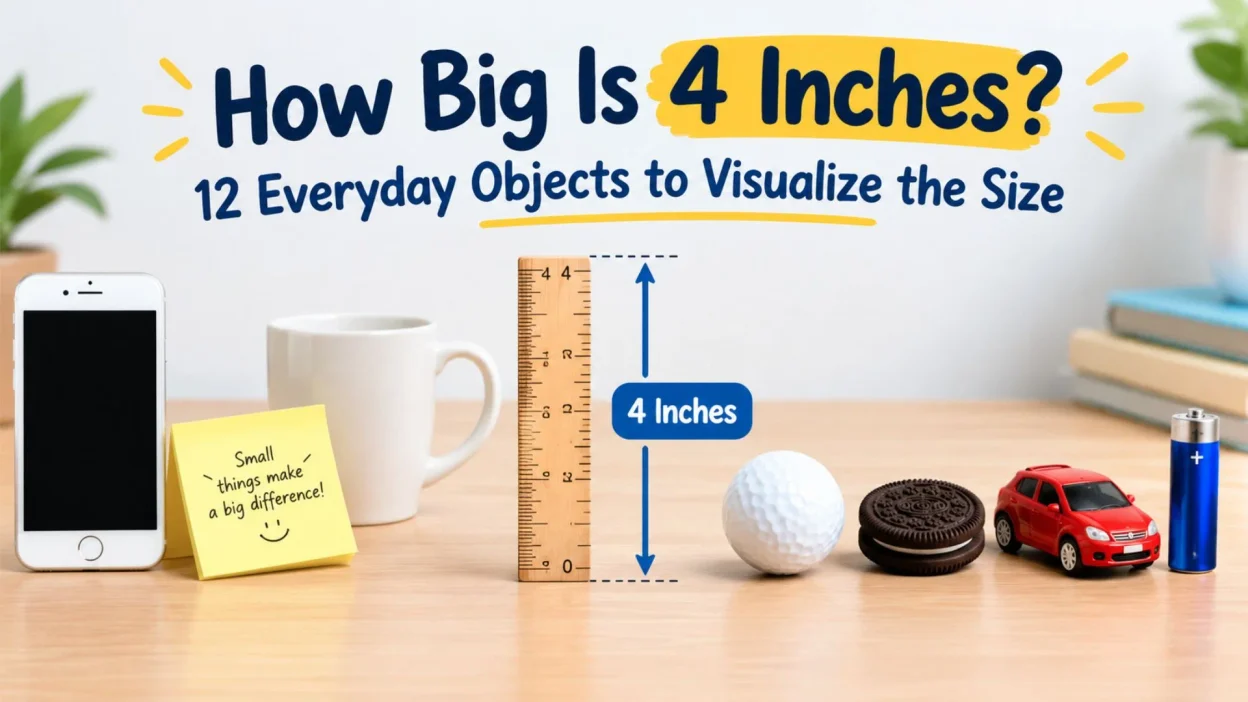
12 Everyday Things That Help You Picture 4 Inches
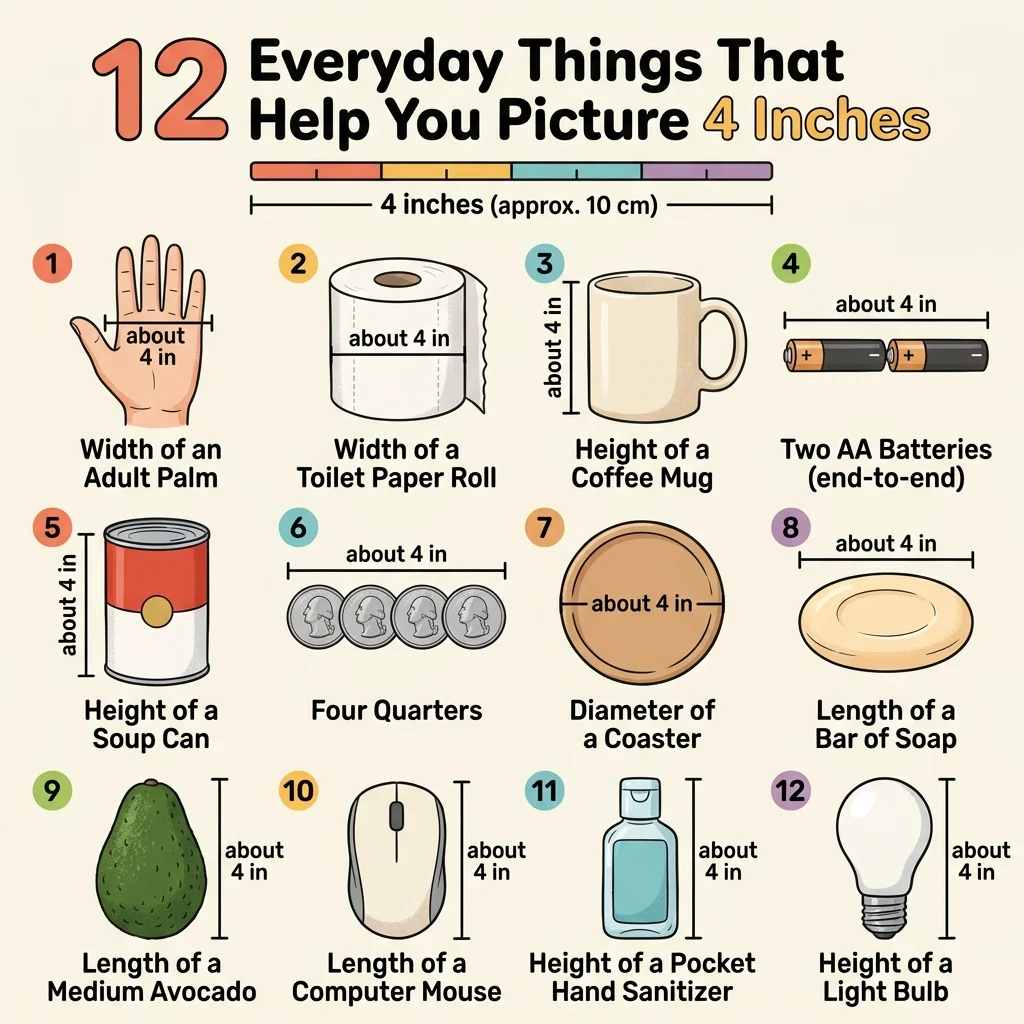
The easiest way to visualize four inches is to compare it with objects you see or use regularly. The following examples are practical reference points, but not every item measures exactly four inches. Product designs and sizes differ, so treat approximate examples as visual guides rather than precise measuring tools.
A Standard Credit Card’s Width
A typical bank or credit card measures about 3.37 inches wide and 2.125 inches tall. That means four inches is slightly longer than the card’s longest edge.
This is a useful comparison because most people have handled a payment card. Its standard dimensions are widely used for bank cards and similar identification cards.
Place the card horizontally in your mind and extend the longest edge by a little over half an inch. That gives you a rough sense of four inches.
Although the card is not a perfect four-inch reference, it is a familiar object that helps establish the scale.
A Small Smartphone’s Shorter Side
Many smartphones have a width of roughly 2.5 to 3.5 inches, depending on the model. Four inches is therefore slightly wider than many phones, though some larger devices may come close.
Smartphones are designed to fit comfortably in one hand, which is why their width is usually much less than their height. Comparing a four-inch length with your phone’s shorter side can help you picture the measurement.
Check your own device if you want a closer comparison. Phone cases can add a little extra width, so use the bare device’s specifications when accuracy matters.
A Large Household Sponge
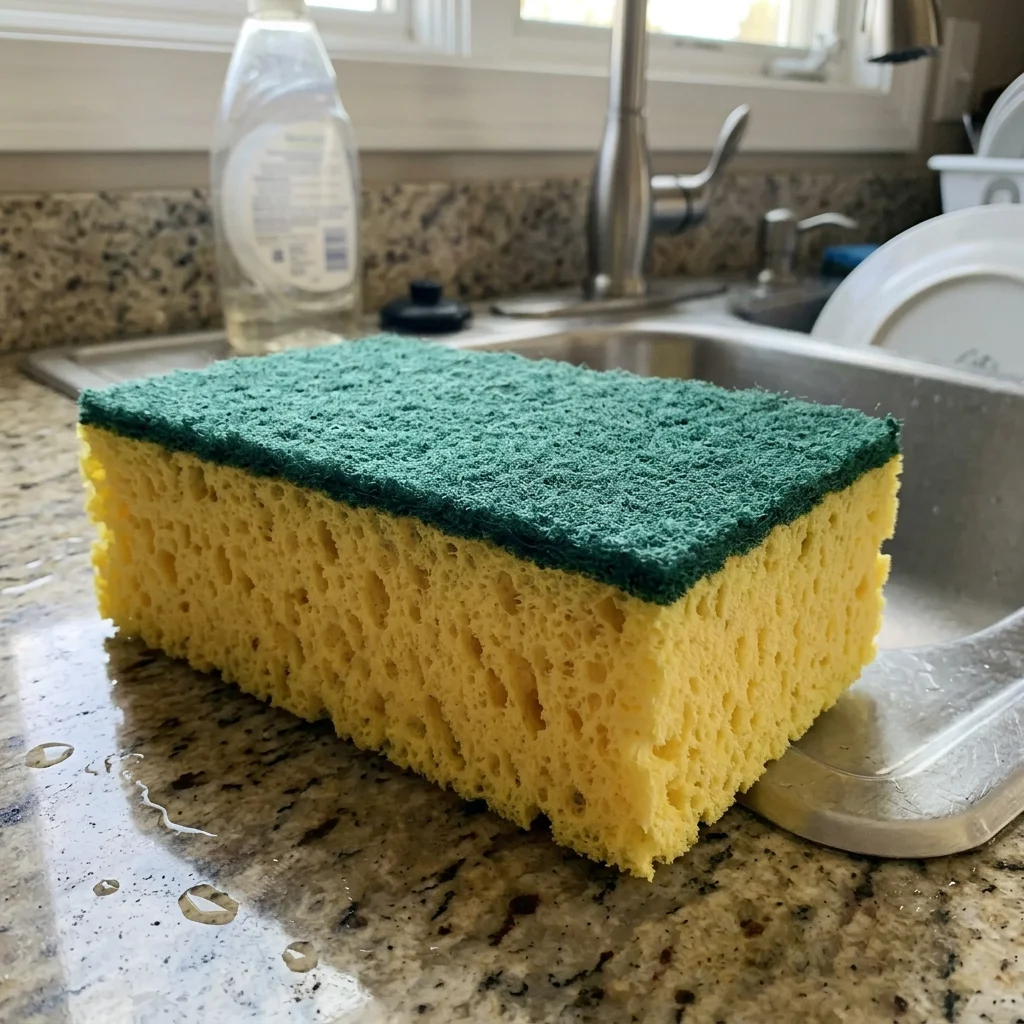
Some kitchen sponges measure around four inches along their longer side, although their dimensions vary considerably by type. Compact scrub sponges may be shorter, while larger cleaning sponges can be much longer.
A sponge is a helpful reference because it is easy to hold and inspect from different angles. You can compare its length with an imagined four-inch line.
However, sponges compress when squeezed, so their apparent dimensions may change slightly. For a fair comparison, lay the sponge flat without pressing it.
A Small Bar of Soap
Some individual bars of soap are around four inches long, although many are shorter or longer depending on their shape and manufacturer.
Soap is a practical visual reference because its length is easy to see when it rests on a bathroom counter. A rectangular bar also has clear edges, making it easier to compare with a straight line.
If you have a bar of soap nearby, look at its longest dimension. It may offer a useful approximation, but do not assume every bar has the same measurements.
A Short Pencil or Pencil Segment
A full standard pencil is usually considerably longer than four inches, especially when new. However, a short pencil or a remaining pencil segment can be close to this length.
This comparison is particularly useful for students, artists, and anyone who regularly uses writing supplies. Four inches represents a noticeable portion of a typical pencil.
Imagine dividing a new pencil into several equal sections. A four-inch piece would be a relatively short segment rather than a full pencil.
A Small Hairbrush Handle

Some compact hairbrushes have handles around four inches long, though the full brush may be considerably longer. Travel-size grooming tools are especially useful for visualizing small measurements.
A handle offers a defined length that you can compare against a straight four-inch line. Still, handle shapes vary, and curved designs can make visual estimation less reliable.
If you are measuring a grooming tool for a storage case, use its actual specifications rather than relying on this general comparison.
A Compact TV Remote’s Width
Some small remotes have widths approaching four inches, but most common TV remotes are much longer than they are wide. Their width is often a more useful comparison than their overall length.
This distinction matters because a remote that is eight inches long may still be only two inches wide. The four-inch measurement should be compared with the correct dimension.
Look at the shorter edge of a remote to get a sense of its width. Depending on the model, it may be noticeably narrower than four inches.
A Small Notebook’s Short Edge
Pocket notebooks come in a variety of sizes, and some have a shorter edge close to four inches. Others are noticeably smaller or larger, so the comparison depends on the format.
A notebook is useful because it provides a flat surface and straight edges. You can imagine a four-inch line running along one side to compare the scale.
If you use a notebook as a reference, check whether you are looking at its width or height. A notebook’s longer edge may be several inches greater than four.
A Compact Computer Mouse
Some computer mice measure around four inches from front to back. Others are shorter or longer depending on whether they are designed for travel, gaming, or general office use.
The mouse is a good example of a small object that fits comfortably in your hand. Four inches is a plausible length for many compact models, but it is not a universal standard.
If your mouse is nearby, compare its front-to-back length with your idea of four inches. The shape may curve, but the overall dimension can still provide a useful visual guide.
A Small Plant Pot’s Opening
Some small indoor plant pots have an opening approximately four inches across. This is a common scale for certain miniature plants and compact decorative containers, though pot sizes vary.
The opening is a helpful reference because you can see its diameter from above. A four-inch diameter means the distance straight across the circular opening through its center is four inches.
Remember that the pot’s base may be narrower than its opening. The diameter at the top is the relevant measurement in this comparison.
A Compact Wallet’s Width
Some small wallets and card holders approach four inches in width, although their dimensions depend on their design and intended contents. Slim card holders are often smaller, while folding wallets can be wider.
A wallet is useful because it is something many people carry daily. Its width can help establish a sense of scale without needing a measuring tool.
For a more reliable comparison, check the dimensions of your own wallet. Different styles can vary by an inch or more.
A Small Picture Frame’s Short Side
A miniature picture frame may have a short side close to four inches, particularly when designed for small photographs or decorative displays. Larger tabletop frames are often much bigger.
The frame’s outer dimensions can differ from the size of the photo it holds. A frame with a four-inch outer edge may have a smaller visible picture area.
If you have a small frame on a shelf, its shorter edge can give you a rough idea of four inches. Just make sure you are comparing the outside edge with the measurement you have in mind.
What Does a 4-Inch Measurement Usually Mean?
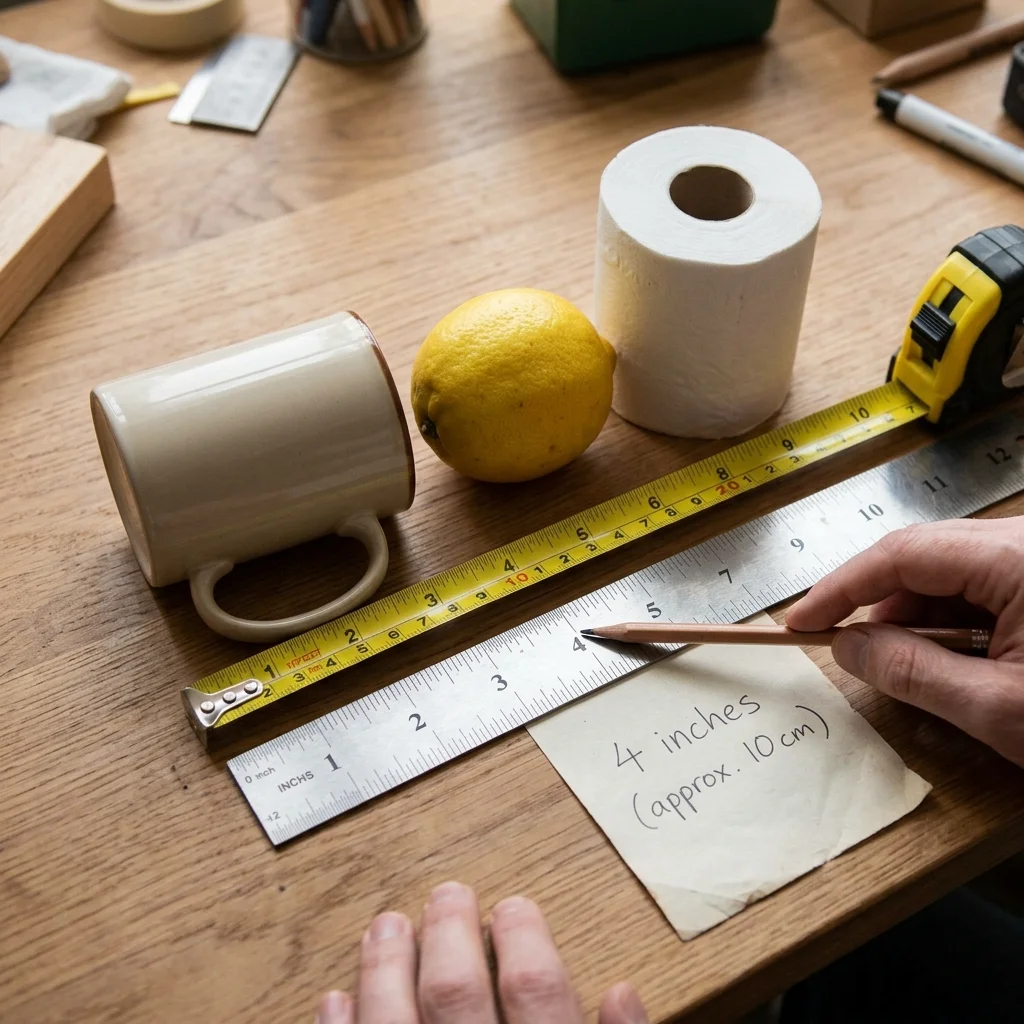
The question “how big is 4 inches?” can refer to several different things. Sometimes people want a simple length comparison; in other cases, they are trying to understand the size of a product or the dimensions of a screen.
Here is how to interpret the measurement in common situations.
Is a 4-Inch Screen Four Inches Wide?
Not necessarily. Screen sizes are generally measured diagonally, from one corner of the display area to the opposite corner. A four-inch screen therefore does not usually measure four inches across its width.
For a rectangular screen with a 16:9 aspect ratio, a four-inch diagonal would give an approximate display width of 3.49 inches and a height of 1.96 inches. These figures describe the display area, not the full device or its frame.
The actual width and height depend on the screen’s aspect ratio. This is why diagonal size alone does not tell you the complete dimensions of a device.
Is 4 Inches a Large Measurement?
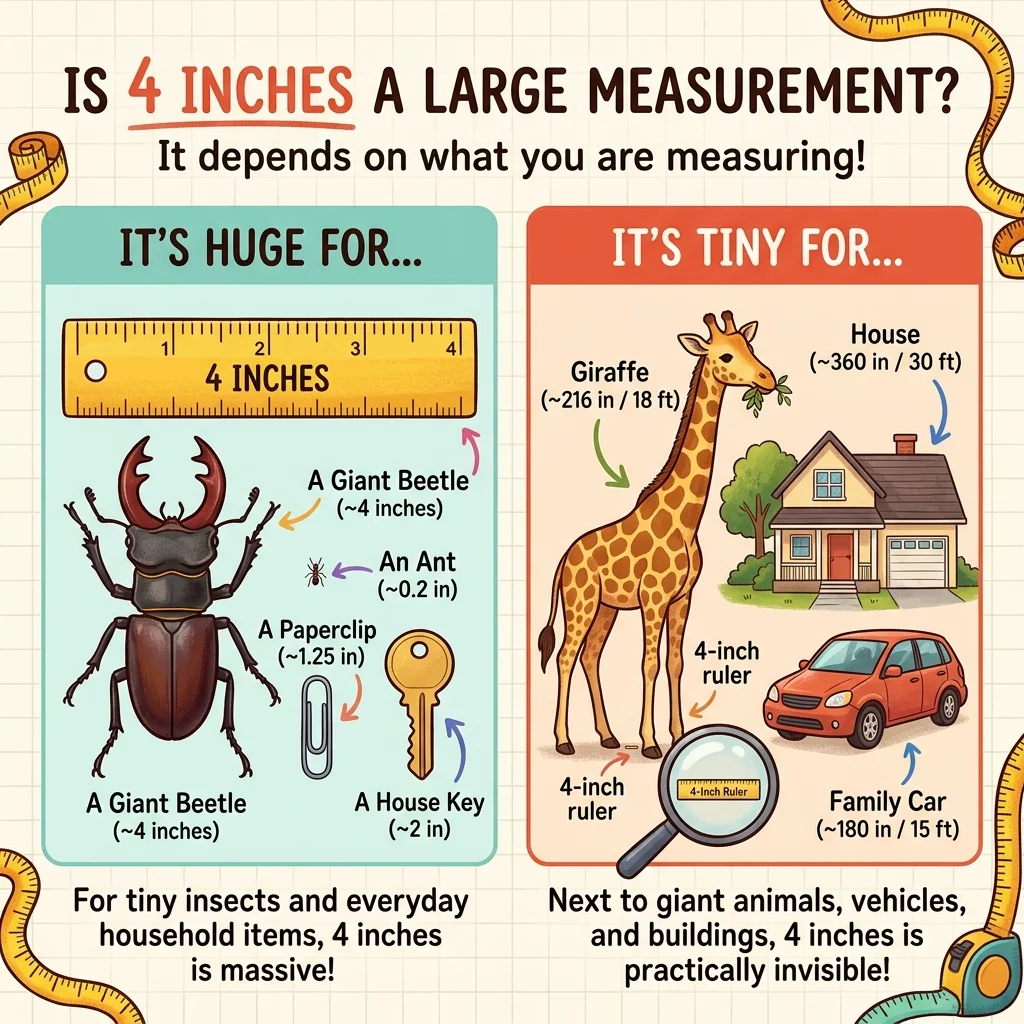
Four inches is relatively small for furniture, a room, or a person’s height, but it can be substantial for a small accessory or compact object.
For example, four inches may be a noticeable width for a handheld item. In contrast, a four-inch height would be very short for most everyday furniture.
Whether the measurement is considered large depends on what you are measuring. Always compare it with the typical dimensions of the relevant product.
How Does 4 Inches Compare With 10 Centimeters?
Four inches equals 10.16 centimeters, which is just 0.16 cm longer than 10 centimeters. In everyday conversation, the two measurements are close enough that people may use 10 cm as a rough estimate.
However, the difference can matter when cutting materials, fitting parts together, or following detailed instructions. In those cases, use the exact conversion rather than rounding.
Getting to 4 Inches Without a Tape Measure
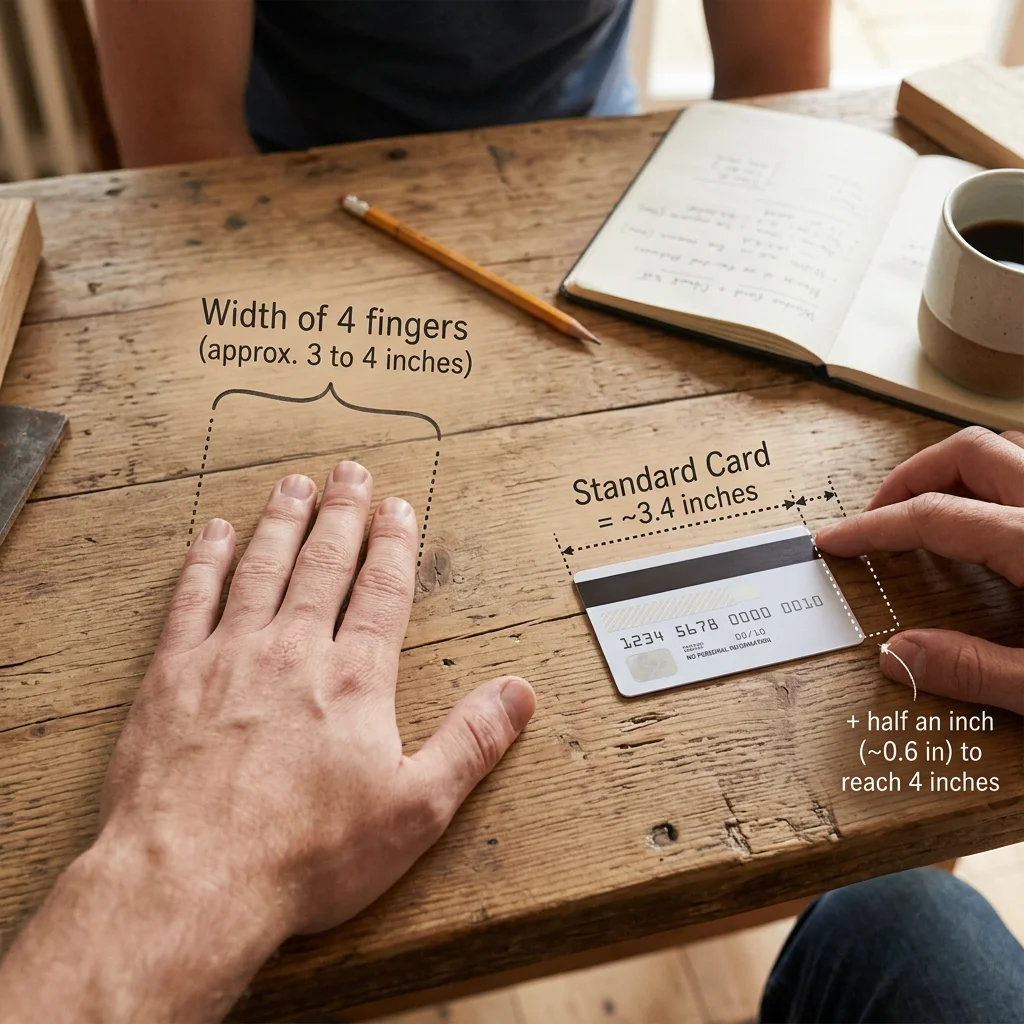
You can estimate four inches using familiar objects, but keep in mind that an estimate is not the same as an exact measurement. If a close fit or precise cut matters, use a ruler or another suitable measuring tool.
Use a Credit Card as a Reference
A standard payment card is approximately 3.37 inches wide. Four inches is about 0.63 inches longer, so you can picture a card’s width plus a little extra.
This works well as a quick mental comparison, but it is not ideal for precision work.
Think of 10 Centimeters on a Metric Ruler
Four inches equals 10.16 cm. If you have used a metric ruler before, imagine the distance from zero to just beyond the 10 cm mark.
This is one of the simplest ways to remember the measurement because the conversion is close to a round metric number.
Compare It With Your Hand
The width of a person’s hand, the span between fingers, and finger lengths differ significantly from person to person. Your hand can still help you estimate four inches if you first compare it with a ruler once.
After you learn how four inches looks against your own hand, it may become a convenient rough reference. Do not assume another person’s hand will provide the same measurement.
Use a Smartphone’s Dimensions
Look up your phone’s official height or width in its specifications. If one dimension is close to four inches, you can use it as a familiar reference.
This approach is more reliable than guessing from appearance alone. However, remember that different phone models have different dimensions, and a case can change the overall size.
Mark a Known Length on Paper
If you have a sheet of paper and access to a ruler even briefly, mark a four-inch line. You can then use that mark for quick visual comparisons later.
Without a ruler, paper alone is not a dependable way to establish exactly four inches because paper sizes and folding methods differ. A known reference makes the method much more useful.
Frequently Asked Questions
How many feet is 4 inches?
Four inches equals one-third of a foot, or approximately 0.3333 feet. This is because one foot contains 12 inches.
How many centimeters is 4 inches?
Four inches equals 10.16 centimeters. For quick estimates, you can think of it as approximately 10 cm.
How many millimeters is 4 inches?
Four inches equals 101.6 millimeters. To convert inches to millimeters, multiply the inch measurement by 25.4.
How many meters is 4 inches?
Four inches equals 0.1016 meters. That is a little more than one-tenth of a meter.
How long is 4 inches in real life?
Four inches is a little longer than the width of a standard credit card. It is also close to the length of some compact household items, such as certain computer mice or small bars of soap, although exact sizes vary.
Is 4 inches considered big?
Four inches is a small measurement for many large objects, but it can be a meaningful size for accessories, small containers, and handheld items. Whether it feels big or small depends on the object’s purpose and the dimension being measured.
Can I estimate 4 inches without a ruler?
Yes. You can use a credit card’s width as a starting point because four inches is somewhat longer than a standard card’s width. For precise measurements, however, a ruler or tape measure is the better choice.
Is a 4-inch screen four inches wide?
No. Screen size usually refers to the diagonal distance between opposite corners of the display. The actual width depends on the screen’s aspect ratio.
Where That Leaves You
Four inches is easier to picture when you connect the number with a familiar object. It equals ⅓ of a foot, 10.16 cm, 101.6 mm, and 0.1016 meters. For a quick visual reference, imagine a standard credit card’s width with a little extra length added.
Everyday objects can help you estimate the size, but their dimensions are not universal. A small computer mouse, notebook, or plant pot may come close to four inches in one direction, yet another model may be quite different.