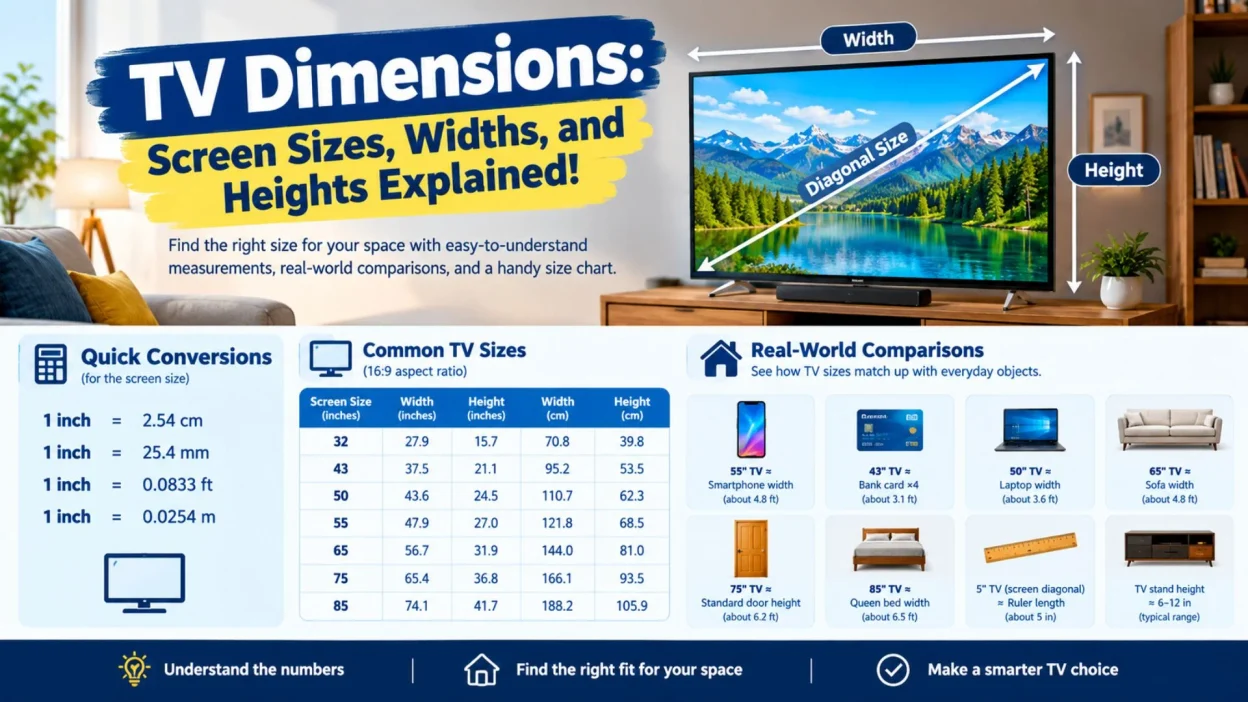
A television can look perfectly sized in a showroom and feel surprisingly large once you bring it home. The reason is simple: the screen size printed on a TV box usually describes its diagonal, not its actual width or height. That distinction matters when you are choosing a wall mount, measuring a TV cabinet, or deciding whether a screen will fit between two pieces of furniture.
TV dimensions vary with screen size, aspect ratio, and bezel design. A 55-inch television, for example, is not 55 inches wide. Most modern widescreen TVs use a 16:9 aspect ratio, so a 55-inch screen is approximately 47.9 inches wide and 27 inches tall, excluding the frame and stand.
TV dimensions depend on the screen’s diagonal measurement, but a typical 16:9 screen can be converted into approximate width and height measurements in inches, feet, centimeters, millimeters, and meters. A 55-inch TV screen measures approximately 121.8 cm wide and 68.5 cm tall, before adding its bezel.
This guide explains common TV sizes, provides a conversion chart, and compares televisions with everyday objects and furniture. You will also learn how to measure your available space and choose a screen that fits your room.
📏 Every TV Screen Size Converts To
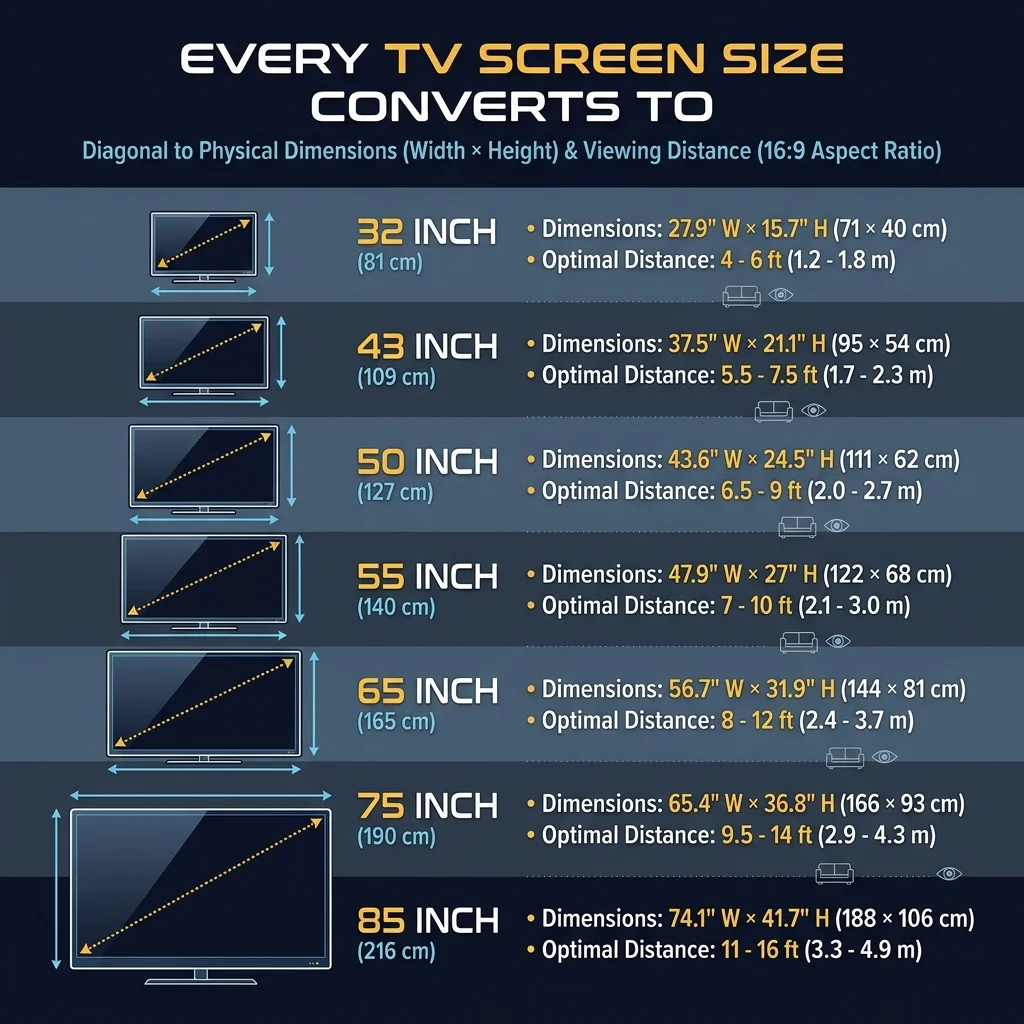
A TV’s advertised size is usually the diagonal measurement of its screen, taken from one corner to the opposite corner.
For a typical 16:9 television, that diagonal can be used to calculate approximate screen width and height.
TV Screen Dimensions Conversion Chart
The table below shows common widescreen television sizes. Measurements are approximate and refer to the visible screen area, excluding the bezel, casing, and stand.
| Advertised Screen Size | Screen Width (Inches) | Screen Height (Inches) | Width (cm) | Height (cm) |
|---|---|---|---|---|
| 32-inch TV | 27.9 | 15.7 | 70.8 | 39.8 |
| 40-inch TV | 34.9 | 19.6 | 88.6 | 49.8 |
| 43-inch TV | 37.5 | 21.1 | 95.2 | 53.5 |
| 50-inch TV | 43.6 | 24.5 | 110.7 | 62.3 |
| 55-inch TV | 47.9 | 27.0 | 121.8 | 68.5 |
| 60-inch TV | 52.3 | 29.4 | 132.8 | 74.7 |
| 65-inch TV | 56.7 | 31.9 | 144.0 | 81.0 |
| 70-inch TV | 61.0 | 34.3 | 154.9 | 87.1 |
| 75-inch TV | 65.4 | 36.8 | 166.1 | 93.5 |
| 85-inch TV | 74.1 | 41.7 | 188.2 | 105.9 |
These figures use a 16:9 aspect ratio and are rounded to one decimal place. Actual product dimensions can differ slightly, and the complete TV is usually larger than the screen alone.
Converting TV Dimensions Into Feet and Meters
You can convert the width and height into other units using a few simple formulas.
- Inches to feet: Divide the measurement by 12.
- Inches to centimeters: Multiply by 2.54.
- Inches to millimeters: Multiply by 25.4.
- Inches to meters: Multiply by 0.0254.
For example, a 65-inch TV has an approximate screen width of 56.7 inches.
56.7 ÷ 12 = 4.73 feet
56.7 × 2.54 = 144 cm
56.7 × 25.4 = 1,440 mm
56.7 × 0.0254 = 1.44 meters
Its screen height is approximately 31.9 inches, or 2.66 feet, 81 cm, and 0.81 meters.
These conversions are useful when comparing product listings that use different measurement systems. They also help when you are planning a TV wall, measuring a cabinet, or deciding how much wall space to leave around a screen.
📐 Where TV Dimensions Fit on a Size Chart

A television’s diagonal size gives you a quick way to compare screens, but width and height are often more useful when planning a room.
The right size depends on your available space, viewing distance, furniture, and personal preference.
Small TVs: 24 to 32 Inches
Smaller televisions are useful where space is limited. They can work well in compact bedrooms, kitchens, study areas, or as secondary screens.
A typical 32-inch widescreen TV has a screen measuring approximately 27.9 inches wide and 15.7 inches tall. That is around 71 cm by 40 cm, before accounting for the casing.
Although the screen is relatively compact, remember to leave extra space for the stand or wall-mount hardware.
Medium TVs: 40 to 55 Inches
Medium-sized TVs offer a balance between screen area and room requirements. Common sizes include 43, 50, and 55 inches.
A 50-inch screen is approximately 43.6 inches wide and 24.5 inches tall. A 55-inch screen increases to around 47.9 inches wide and 27 inches tall.
This difference may seem modest on paper, but the larger screen can occupy noticeably more wall space. Measure the intended location before deciding whether the extra size is practical.
Large TVs: 60 to 75 Inches
Large televisions create a more prominent viewing area and are often considered for living rooms or dedicated entertainment spaces.
A 65-inch screen measures roughly 56.7 inches wide, while a 75-inch screen is approximately 65.4 inches wide. The larger screen therefore needs nearly nine additional inches of horizontal space.
These sizes can look impressive, but they also require attention to viewing distance, furniture proportions, and mounting height.
Extra-Large TVs: 80 to 85 Inches and Beyond
An 85-inch TV has an approximate screen width of 74.1 inches and a height of 41.7 inches. That is more than six feet wide before including the outer frame.
At this size, small measurement errors become important. Check the manufacturer’s full dimensions, packaging access, stand placement, and wall-mount specifications before buying.
A television may fit on a wall but still be too wide for the cabinet underneath it. Measuring the entire installation area is more reliable than comparing screen sizes alone.
🏠 10 Common TV Sizes and Real-World Comparisons
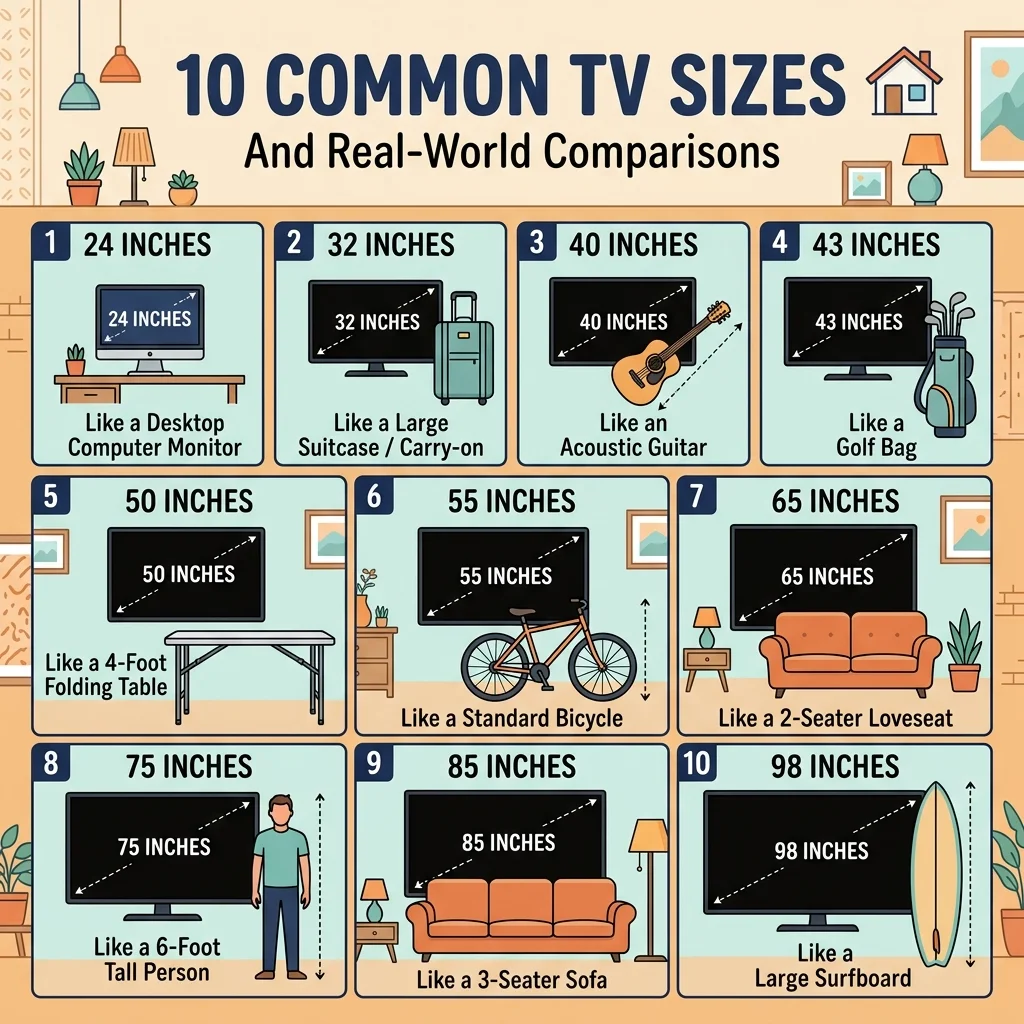
The easiest way to picture a TV’s dimensions is to compare its screen with familiar objects and furniture.
The following examples use approximate 16:9 screen measurements, with practical notes about the space each size may require.
1. A 32-Inch TV Compared With a Small Desk Area
A 32-inch TV has a screen approximately 27.9 inches wide and 15.7 inches tall. In metric measurements, that is around 70.8 cm by 39.8 cm.
This size is often considered for compact rooms or desk setups because its screen is considerably narrower than a large living-room television.
However, the complete television may be wider and taller once the bezel and stand are included. A desktop setup also needs enough depth for the stand and enough room to position the screen comfortably.
Imagine a screen spanning a little over two feet horizontally. That gives you a useful first impression of how much space a 32-inch model occupies.
2. A 40-Inch TV Compared With a Small Cabinet
A 40-inch screen measures approximately 34.9 inches wide and 19.6 inches tall. That works out to about 88.6 cm by 49.8 cm.
The screen is close to three feet wide, making it substantially wider than a small computer monitor. It may suit a compact entertainment cabinet, provided the complete television fits safely.
Check the distance between the cabinet’s outer edges and the TV’s feet. Some televisions have widely spaced feet, while others use a central pedestal.
A useful visualization is a screen nearly three feet across and roughly 20 inches high, with a little extra room needed for its frame.
3. A 43-Inch TV Compared With a Small Tabletop Display
A 43-inch screen is approximately 37.5 inches wide and 21.1 inches tall. That is about 95.2 cm across and 53.5 cm high.
Its width is slightly more than three feet, so it can look considerably larger than its diagonal number might suggest.
A screen of this size may fit a bedroom or smaller living area, but the actual installation space must account for the frame and stand.
Picture a display stretching across most of a small table’s width. This is a practical way to visualize the horizontal space without relying on the diagonal measurement alone.
4. A 50-Inch TV Compared With a Four-Foot Space
A 50-inch screen is approximately 43.6 inches wide and 24.5 inches tall. In centimeters, that is about 110.7 cm by 62.3 cm.
Its screen is a little over three and a half feet wide, so a four-foot-wide opening may appear sufficient at first glance. However, the television’s frame could make it wider than the screen measurements suggest.
For a cabinet or wall niche, compare the manufacturer’s overall width with the available space. Allow for any required clearance and avoid assuming the advertised diagonal equals the horizontal dimension.
Visualize a screen that occupies most of a four-foot span. That gives you a more realistic sense of its presence in a room.
5. A 55-Inch TV Compared With a Two-Foot-High Space
A 55-inch TV screen is approximately 47.9 inches wide and 27 inches tall. That equals roughly 121.8 cm by 68.5 cm.
The screen is almost four feet wide and slightly more than two feet tall. This helps explain why a 55-inch model can look much larger than expected when viewed in a showroom.
The actual television will generally be somewhat larger than the visible screen. Stand height also affects how much vertical space the complete installation requires.
Imagine a display approaching four feet across, with a screen height just over two feet. It is a helpful reference when deciding whether a wall section feels proportionate.
6. A 60-Inch TV Compared With a Five-Foot Wall Section
A 60-inch TV has an approximate screen width of 52.3 inches and a height of 29.4 inches. In metric units, it measures about 132.8 cm by 74.7 cm.
Its screen is more than four feet wide, so a five-foot wall section might accommodate it horizontally, depending on the actual product dimensions and desired clearance.
This is the point where measuring the whole TV becomes especially important. A few extra inches can affect whether the television fits between shelves or wall features.
Picture a display spanning most of a five-foot section of wall. It leaves less horizontal space than you might expect from the diagonal number.
7. A 65-Inch TV Compared With a Large Coffee Table
A 65-inch TV screen measures approximately 56.7 inches wide and 31.9 inches tall. That is around 144 cm by 81 cm.
Its width is nearly four feet and nine inches, which gives it a substantial horizontal presence. A large coffee table can provide a familiar visual reference, although table dimensions vary widely.
The television itself may extend beyond the screen measurements because of the casing. Its feet may also require a specific support width and a stable surface.
Think of a screen almost five feet across. This comparison helps you judge whether a 65-inch model will dominate the wall or fit comfortably within your layout.
8. A 70-Inch TV Compared With a Six-Foot Furniture Arrangement
A 70-inch screen is approximately 61 inches wide and 34.3 inches tall. In metric measurements, it is about 154.9 cm by 87.1 cm.
That makes the visible screen slightly over five feet wide. A six-foot furniture arrangement may provide a useful reference, but the TV’s complete width must still be checked.
Large screens can look balanced above a wide media console, provided the cabinet and mounting arrangement are suitable. Do not assume a cabinet is safe simply because it is wider than the screen.
Imagine a television occupying most of a six-foot span. This makes the size easier to visualize than thinking only about its 70-inch diagonal.
9. A 75-Inch TV Compared With a Six-Foot-Wide Wall
A 75-inch screen measures about 65.4 inches wide and 36.8 inches tall. That converts to approximately 166.1 cm by 93.5 cm.
Its screen is roughly five feet and five inches wide. A six-foot wall section may appear suitable, but the TV frame, wall features, and mounting requirements can reduce the available clearance.
This size creates a large viewing area, so it is worth considering the room’s layout before installation. Make sure the screen does not interfere with doors, shelves, lights, or other wall-mounted items.
Visualize a screen that fills most of a six-foot-wide space. That image makes the horizontal requirement easier to appreciate.
10. An 85-Inch TV Compared With a Full-Size Sofa
An 85-inch screen is approximately 74.1 inches wide and 41.7 inches tall. That equals about 188.2 cm by 105.9 cm.
The visible screen is more than six feet wide and nearly three and a half feet tall. Depending on the sofa, it may span a large portion of the seating arrangement behind or above a media console.
At this size, delivery and installation also matter. Check doorways, stairways, lifts, packaging dimensions, and the mounting surface before the television arrives.
Imagine a screen stretching across a little over six feet. It is a good reminder that an 85-inch TV is a large piece of equipment, not merely a bigger version of a compact television.
📺 What Does a TV’s Screen Size Actually Measure?
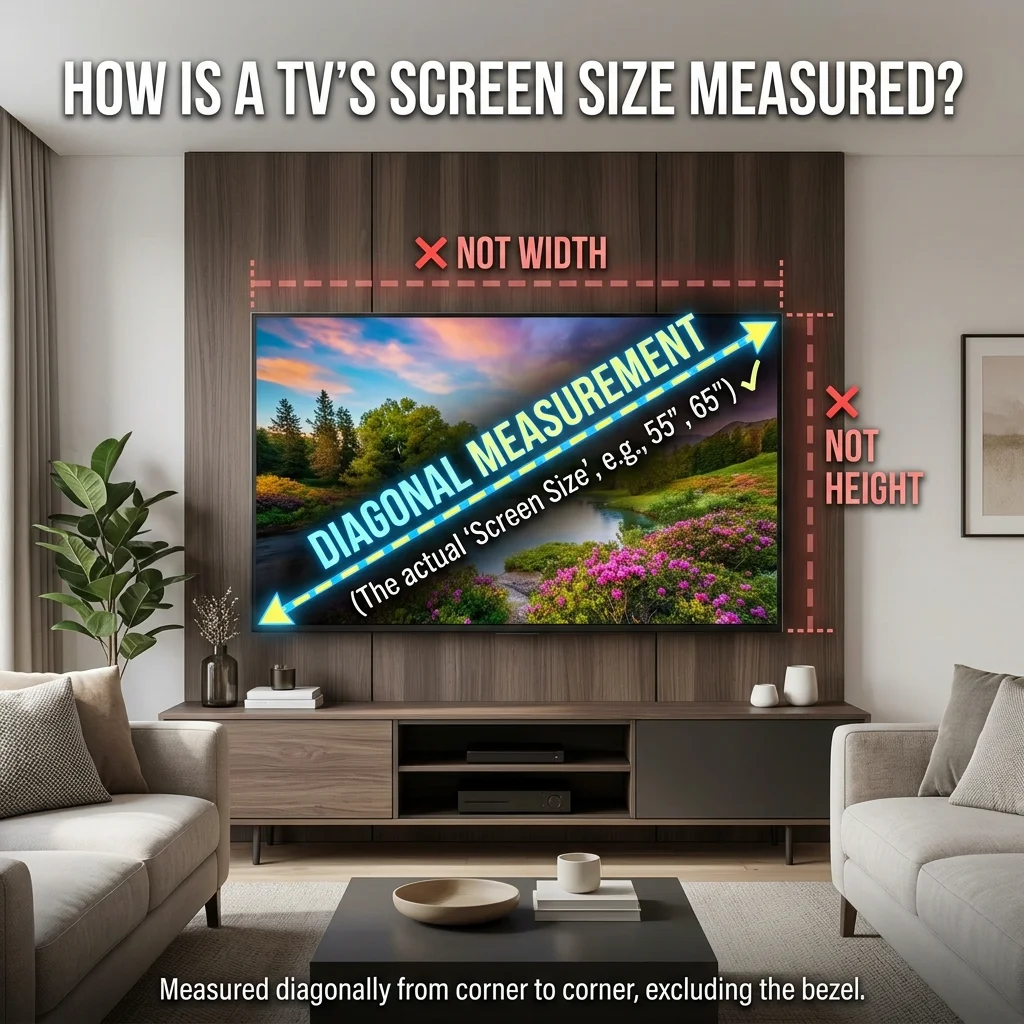
The number printed in a television’s name usually describes the diagonal of its display, measured from one corner to the opposite corner.
It does not directly tell you the TV’s width, height, depth, or complete footprint.
Why Is a 55-Inch TV Not 55 Inches Wide?
Most modern televisions use a widescreen 16:9 aspect ratio. This means the screen is 16 units wide for every 9 units of height.
The diagonal runs across the screen from corner to corner, so it is longer than either the width or height. For a 55-inch 16:9 display, the diagonal is 55 inches, while the screen width is approximately 47.9 inches and its height is about 27 inches.
This is why two numbers on a product listing can seem confusing until you know which dimension each one describes.
How to Calculate TV Width and Height
For a standard 16:9 screen, you can estimate the dimensions mathematically.
- Width: Screen diagonal × 16 ÷ √(16² + 9²)
- Height: Screen diagonal × 9 ÷ √(16² + 9²)
The denominator is √337, approximately 18.36.
For a 55-inch screen, the calculations produce a width of roughly 47.9 inches and a height of about 27 inches.
These formulas estimate the visible display area. They do not include the bezel, casing, stand, or mounting hardware.
Does the TV Frame Add Extra Inches?
Yes. The outer casing generally makes the complete television slightly larger than its visible screen.
The exact difference depends on the model. Some modern TVs have very slim bezels, while others include thicker frames, decorative edges, or built-in speaker sections.
Always look for the manufacturer’s overall product dimensions when checking whether a television fits a specific space.
What About TV Depth and Stand Height?
Depth is especially important if the television will sit on a narrow cabinet or inside a recessed area. The stand can also increase the total height significantly.
Wall-mounted televisions have different space requirements because the stand is not used, but the mounting bracket and cable connections still need room.
Before buying, record the full width, height with and without the stand, and depth. Those details give you a more complete picture of the installation.
👀 Estimating TV Dimensions Without a Tape Measure
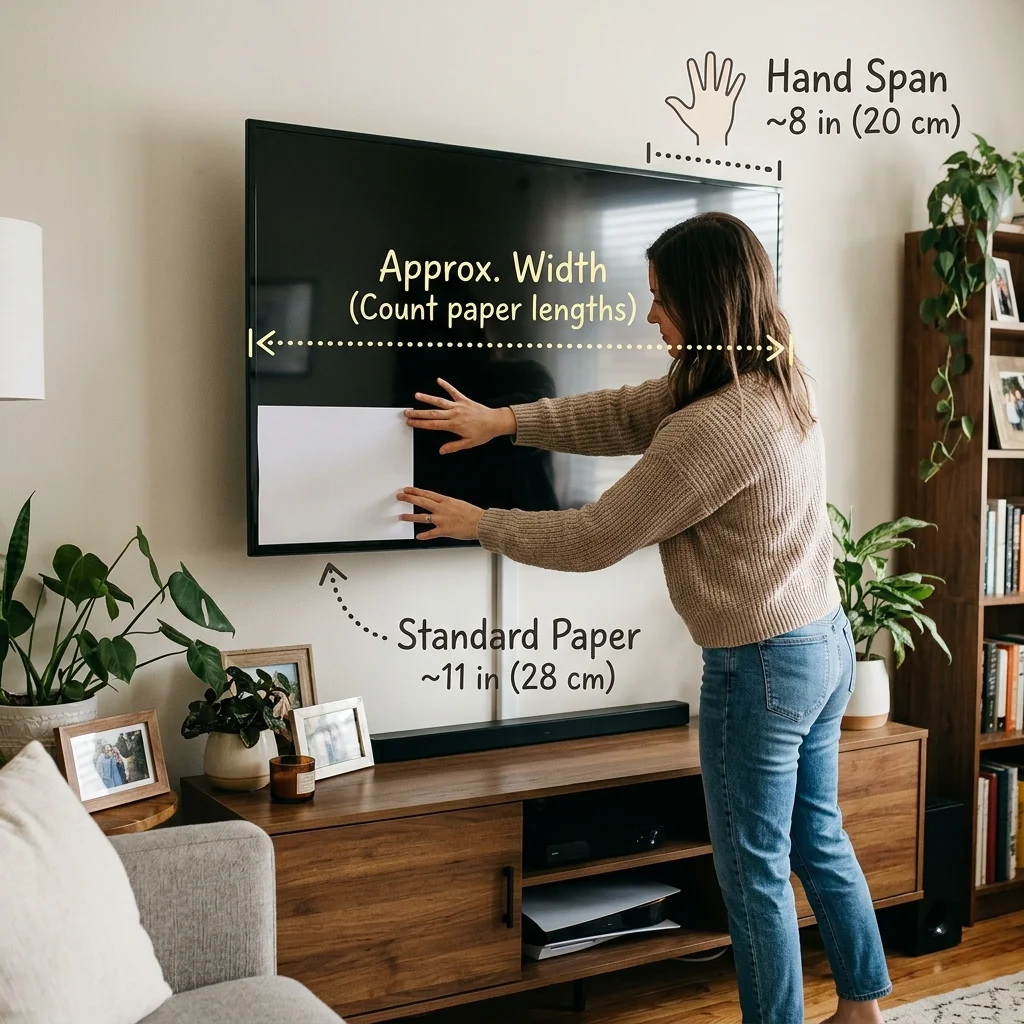
You can get a rough idea of a television’s size using familiar measurements, but estimation should not replace checking the manufacturer’s specifications.
A small error can matter when the TV needs to fit inside a cabinet or between fixed wall features.
- Use a known wall width: If you know the wall is six feet wide, compare the TV’s published width with that reference.
- Use standard paper: A US letter sheet is 11 inches wide and 8.5 inches tall. Several sheets placed side by side can help visualize a screen, though this is only an estimate.
- Use a floor plan: Mark the television’s overall width and height on a simple drawing before choosing its position.
- Use painter’s tape: Mark the planned width and height on the wall to see how the screen will look in the room.
- Check the product listing: The manufacturer’s dimension diagram is more dependable than guessing from the advertised diagonal.
❓ TV Dimensions FAQs
How wide is a 55-inch TV?
A typical 55-inch 16:9 screen is approximately 47.9 inches wide, or 121.8 cm. The complete television may be slightly wider because of its bezel and casing.
How tall is a 65-inch TV?
A typical 65-inch 16:9 screen is about 31.9 inches tall, equivalent to approximately 81 cm. The overall height depends on the model and whether its stand is included.
How wide is a 75-inch TV in feet?
A 75-inch 16:9 screen is approximately 65.4 inches wide, or about 5.45 feet. Check the manufacturer’s complete width before installing it.
How many centimeters is a 50-inch TV?
The diagonal of a 50-inch screen equals 127 cm. For a typical 16:9 display, the visible screen is approximately 110.7 cm wide and 62.3 cm tall.
Is a 55-inch TV actually 55 inches wide?
No. The advertised 55 inches refers to the diagonal measurement of the screen. A typical 55-inch 16:9 display is around 47.9 inches wide.
How much bigger is a 65-inch TV than a 55-inch TV?
The diagonal increases by 10 inches, but the width does not increase by 10 inches. For typical 16:9 screens, the width rises from about 47.9 inches to 56.7 inches, an increase of roughly 8.8 inches.
Should I measure the TV with or without its stand?
Measure both configurations if you are deciding where the TV will go. For a wall mount, the stand may not be needed, but for a cabinet, the feet and total stand height are important.
How do I know whether a TV will fit my wall?
Check the manufacturer’s overall width and height, then compare those measurements with your available wall space. Also account for the mount, cables, nearby furniture, and any clearance recommended by the manufacturer.
✅ Where That Leaves You
TV dimensions make much more sense once you separate the diagonal screen size from its actual width and height. A typical 55-inch TV has a screen around 47.9 inches wide and 27 inches tall, while a 65-inch screen is roughly 56.7 inches wide and 31.9 inches tall.
For a quick visual estimate, imagine a 55-inch screen spanning almost four feet across, or a 75-inch screen taking up about five and a half feet of wall space. These comparisons help you picture the scale before you shop.
Before purchasing, confirm the manufacturer’s full dimensions, including the bezel and stand. The advertised screen size is a helpful starting point, but the actual measurements are what determine whether your new television fits.