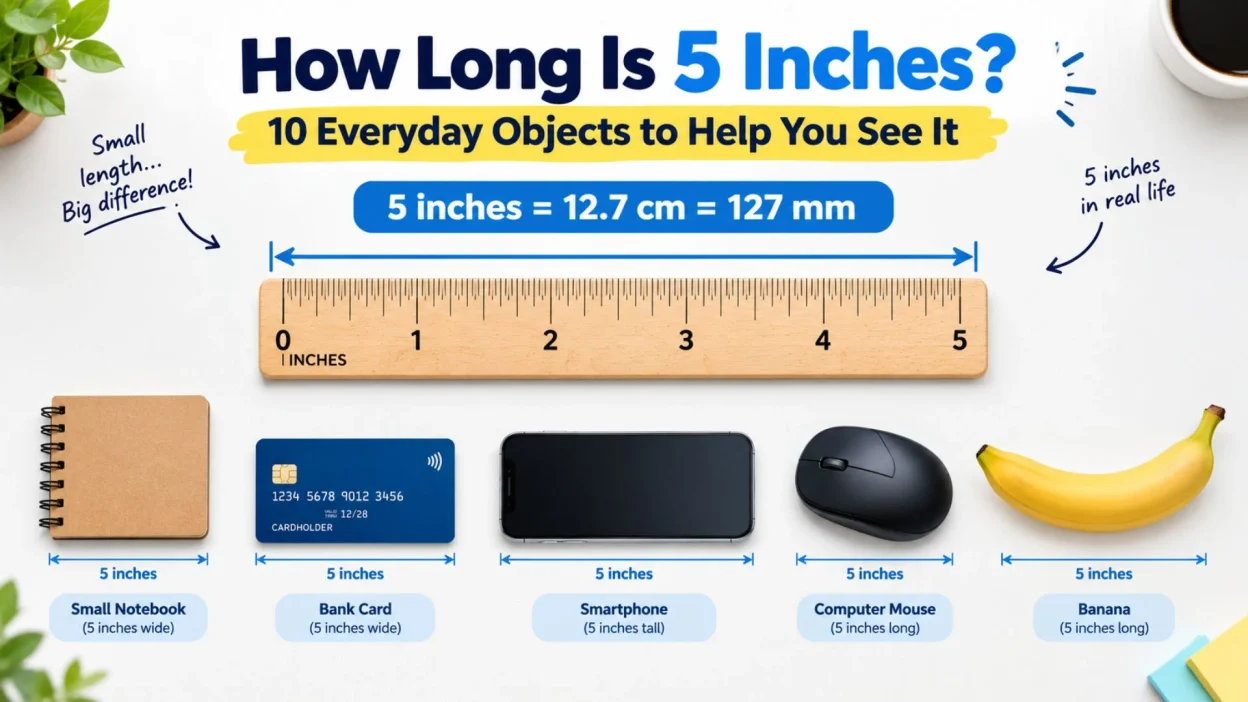
Five inches might sound like a small measurement, but it is longer than many people imagine when they try to picture it without a ruler. It is roughly the length of a large smartphone’s shorter side, a little longer than a standard bank card, and easy to compare with everyday objects around your home.
The challenge is that five inches can look very different depending on whether you are measuring a screen, a piece of furniture, a household item, or a gap between two objects. Knowing the number is useful, but seeing how it compares with familiar things makes it much easier to understand.
So, how long is 5 inches? The exact answer is 12.7 centimeters, 127 millimeters, 0.4167 feet, or approximately 0.127 meters. It is also equal to 5/12 of a foot and 5,000 thousandths of an inch.
Five inches equals 0.4167 feet, 12.7 centimeters, 127 millimeters, and 0.127 meters. In everyday terms, imagine a length slightly shorter than the long edge of a typical smartphone and longer than the width of a standard bank card.
This guide breaks down the conversions, explains where five inches fits on a measurement scale, and compares it with 10 familiar objects. You will also learn how to estimate this length without a tape measure and find answers to common questions about five inches.
📏 Every Unit Five Inches Converts To
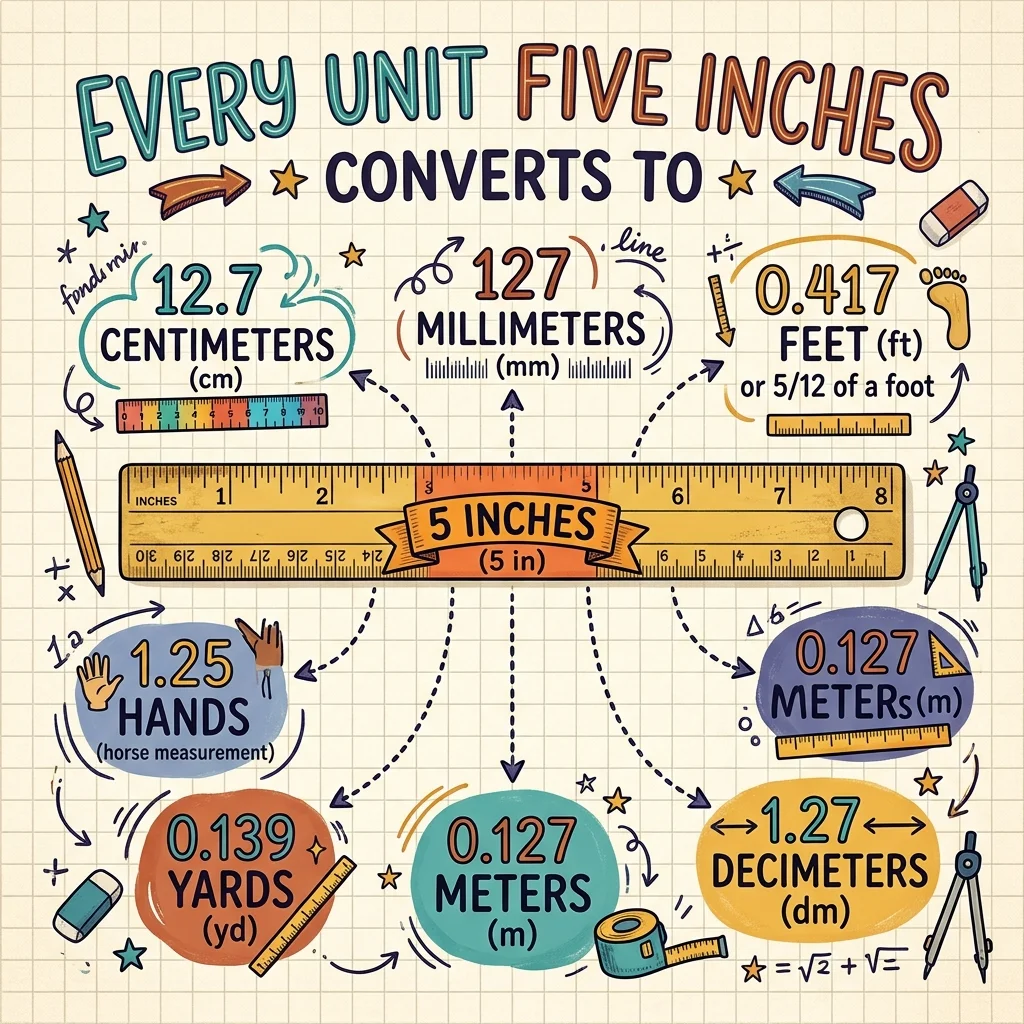
Five inches is a fixed length, so converting it into other units gives you the same measurement expressed in different ways.
The most useful conversions are centimeters, millimeters, feet, and meters.
Five-Inch Conversion Table
| Unit | Value |
|---|---|
| Inches | 5 inches |
| Feet | 0.4167 feet |
| Feet and inches | 0 feet, 5 inches |
| Centimeters | 12.7 cm |
| Millimeters | 127 mm |
| Meters | 0.127 m |
| Yards | 0.1389 yards |
| Fraction of a foot | 5/12 |
| Fraction of a yard | 5/36 |
How to Convert Five Inches Into Other Units
The conversion is straightforward once you know the basic relationships between measurement units.
To convert inches into centimeters, multiply by 2.54.
5 × 2.54 = 12.7 cm
To convert inches into millimeters, multiply by 25.4.
5 × 25.4 = 127 mm
To convert inches into feet, divide by 12.
5 ÷ 12 = 0.4167 feet, approximately.
To convert inches into meters, multiply by 0.0254.
5 × 0.0254 = 0.127 meters
These calculations are exact apart from displayed rounding. For example, five inches is exactly 12.7 centimeters, but its decimal value in feet continues beyond four decimal places.
If you use the metric system, remember 5 inches in cm = 12.7 cm. For smaller measurements, 5 inches in mm = 127 mm. In larger units, 5 inches in meters = 0.127 m.
📐 Where Five Inches Fits on a Measurement Scale
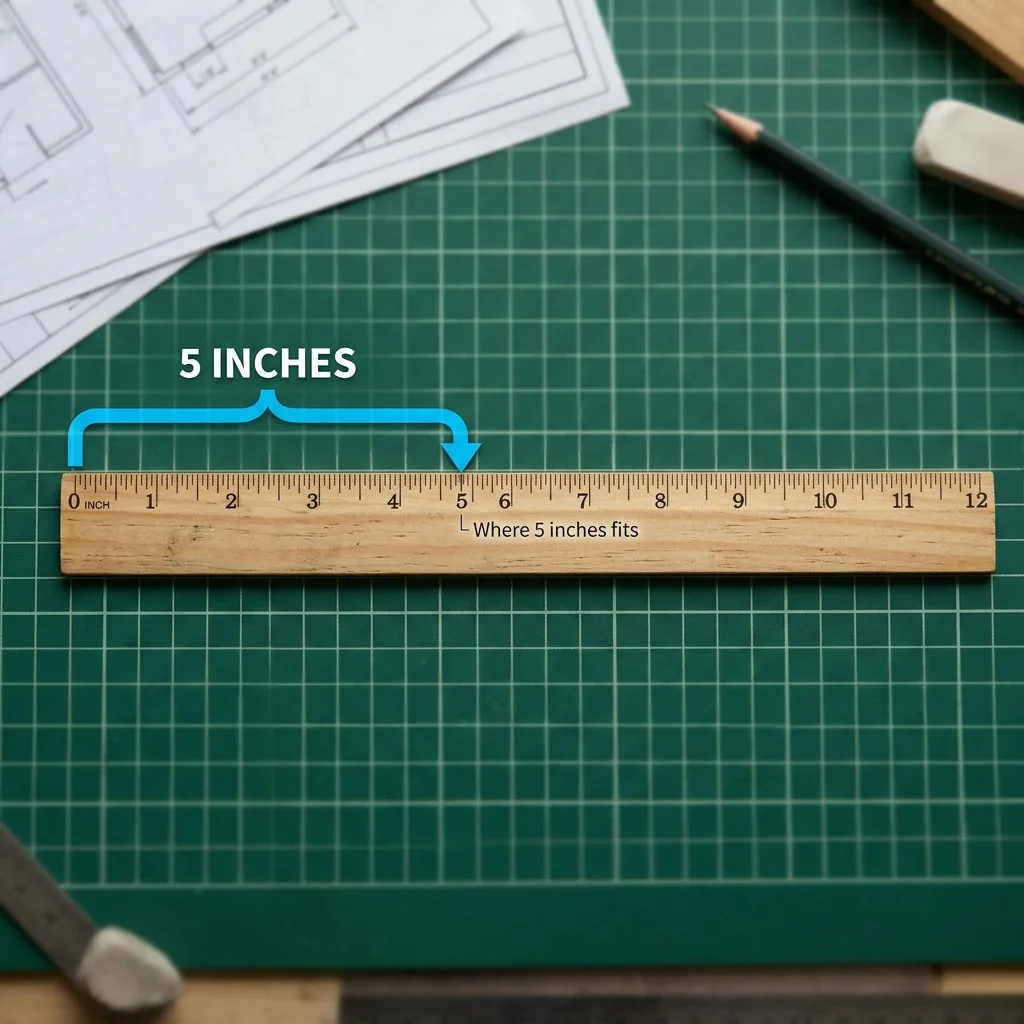
Five inches is a relatively short length, but it is large enough to notice when comparing everyday objects.
Its size becomes clearer when you compare it with common dimensions instead of relying on the number alone.
Five Inches Compared With Common Lengths
| Measurement | Length in Inches | Difference From 5 Inches |
|---|---|---|
| 1 inch | 1 | 4 inches shorter |
| 2 inches | 2 | 3 inches shorter |
| 3 inches | 3 | 2 inches shorter |
| 4 inches | 4 | 1 inch shorter |
| 5 inches | 5 | Exact match |
| 6 inches | 6 | 1 inch longer |
| 8 inches | 8 | 3 inches longer |
| 10 inches | 10 | 5 inches longer |
| 12 inches | 12 | 7 inches longer |
| 1 foot | 12 | 7 inches longer |
A five-inch length is less than half a foot. More precisely, it is 41.67% of a foot.
That makes it useful for estimating compact objects, small gaps, short sections of material, and dimensions on product listings.
Is Five Inches Considered Long?
The answer depends on what you are measuring.
Five inches is a substantial length for a small accessory, a short ruler, or a compact household item. However, it is short compared with a laptop screen’s width, a standard sheet of paper, or a typical doorway.
For example, a five-inch-wide object might fit comfortably in one hand, depending on its shape. A five-inch gap between furniture pieces, on the other hand, can be noticeable and may affect how easily someone can walk through a space.
Context matters more than the number itself.
🏠 10 Everyday Things That Help You Visualize Five Inches
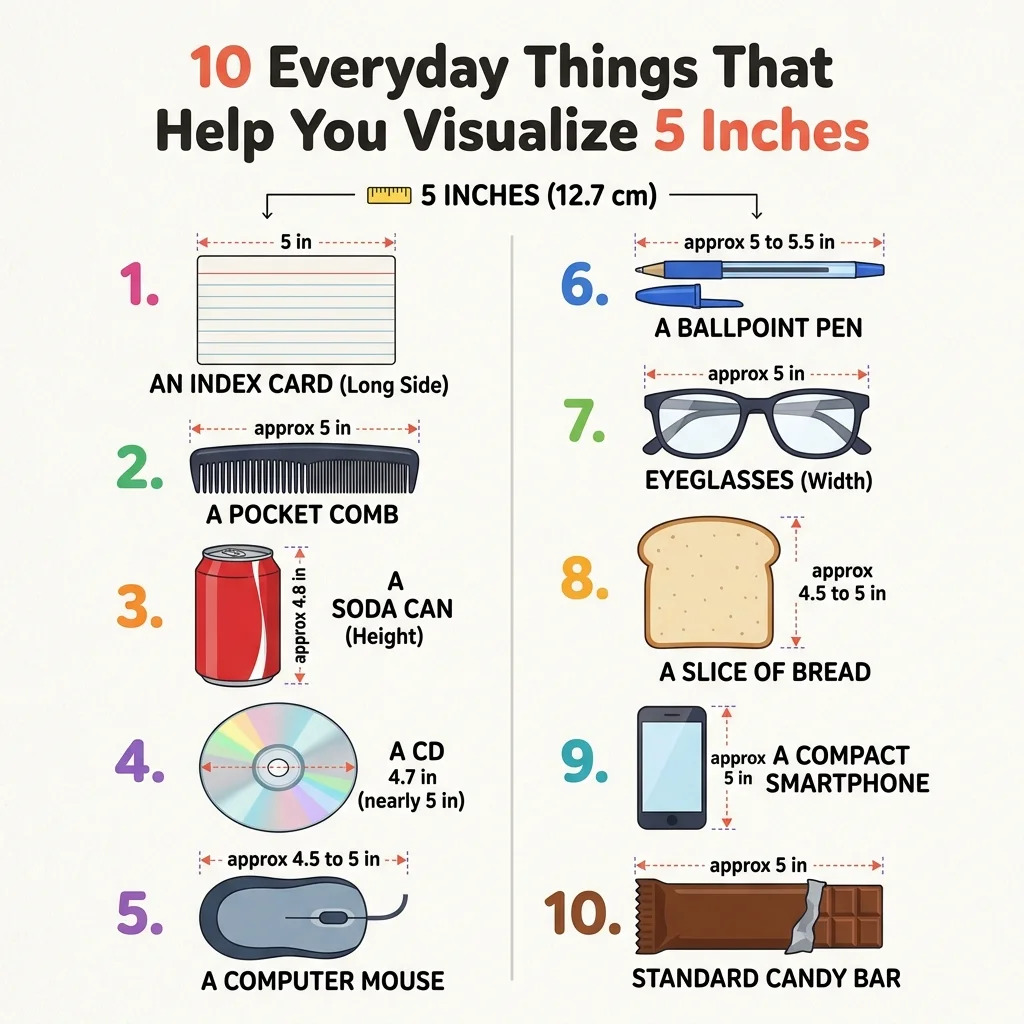
The easiest way to understand five inches is to compare it with objects you already recognize.
The examples below include approximate comparisons, because actual product dimensions can vary by model and manufacturer.
1. A Smartphone’s Shorter Side
Many smartphones have a shorter side measuring around 2.5 to 3.5 inches, depending on the model. Five inches is therefore noticeably longer than the short edge of most modern phones.
This comparison is useful because smartphones are familiar objects that people handle every day. Their dimensions are also often listed on product specification pages.
A five-inch length is closer to the longer side of many compact phones than to their shorter side. Always check the exact device dimensions if accuracy matters.
2. A Standard Bank Card
A typical bank card measures approximately 3.37 inches wide and 2.13 inches tall. Five inches is about 1.63 inches longer than its longer edge.
This makes a bank card a useful reference for understanding a measurement slightly greater than three inches. It is easy to carry, easy to recognize, and has standardized dimensions across many payment cards.
Place the card lengthwise beside a ruler or another known measurement. The difference between its long edge and five inches becomes immediately visible.
3. A Small Paperback Book’s Width
Some compact paperback books measure around five inches across their covers, although book sizes vary considerably. A pocket-sized edition can provide a practical comparison for this length.
Books are produced in several common formats because publishers balance portability, readability, printing costs, and page layout. A smaller paperback can therefore be close to five inches wide without being exactly that size.
To visualize the measurement, imagine the horizontal width of a compact book sitting on a table. Check its specifications if you need a precise five-inch comparison.
4. A Short Pencil Section

A new standard pencil is generally longer than five inches, but a short section cut from its length can match this measurement. A five-inch pencil segment is easy to visualize because pencils are familiar, straight objects.
Pencils come in different lengths depending on their design, intended use, and whether they include an eraser. A shortened pencil is not a standardized five-inch object, so it should be treated as a visual aid rather than a universal reference.
If you have a pencil and a ruler, mark five inches along its length to create your own comparison.
5. A Compact TV Remote’s Width
Some compact remote controls measure around five inches along their shorter dimension, though many are wider or narrower. This comparison is especially useful when estimating the size of a small electronic accessory.
Remote controls are designed to fit comfortably in the hand, with their length and width influenced by the number of buttons and the device they control.
Check the dimensions of a specific remote before using it for an exact measurement. Its width can be a convenient reference, but not every remote is five inches wide.
6. A Small Kitchen Sponge’s Length
Some small household sponges are close to five inches long. Their soft, rectangular shape makes them easy to compare with a ruler or measuring tape.
Kitchen sponges are manufactured in different sizes and thicknesses to suit dishes, countertops, and other cleaning tasks. As a result, the five-inch comparison works best for a small sponge rather than every sponge sold in stores.
Place the sponge flat on a surface and compare its longest edge with five inches. Keep in mind that a sponge can compress, so measure it without squeezing it.
7. A Small Hairbrush Handle
Some compact hairbrushes have handles or head widths around five inches, depending on their style. This can help you picture a short length using an object commonly found in a bathroom or dressing area.
Hairbrushes vary widely in design. A travel brush, a round styling brush, and a full-size paddle brush may have very different dimensions.
For a reliable comparison, look at the manufacturer’s measurements rather than assuming every small brush is five inches long.
8. A Small Notebook’s Short Edge
Some pocket notebooks are around five inches wide or tall, depending on their format. Their paper covers provide a flat edge that is easy to compare with a ruler.
Notebook sizes vary by manufacturer, binding style, and intended use. Some are designed for pockets, while others are closer to standard letter-sized or A-series paper formats.
A compact notebook is useful for visualization because its straight edges make the measurement clear. Compare the relevant side rather than assuming its height and width are equal.
9. A Compact Computer Mouse
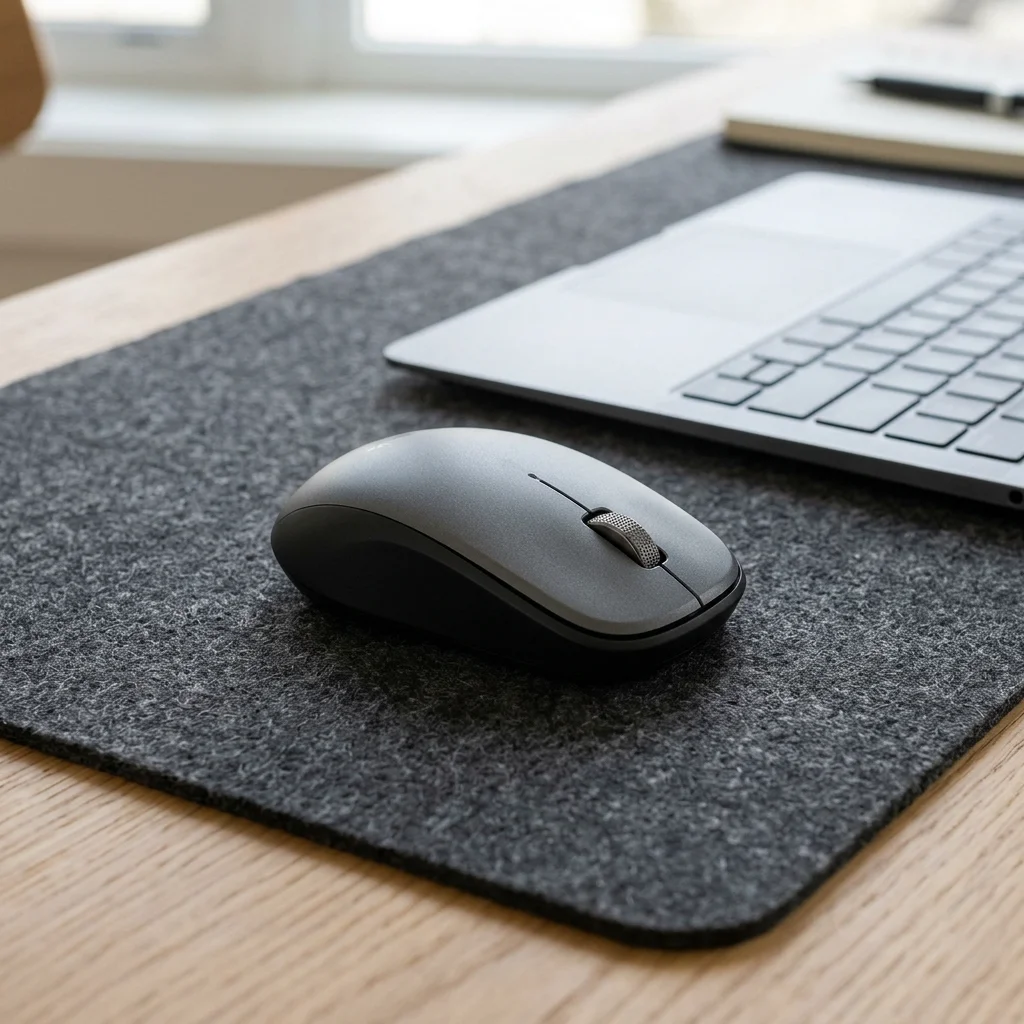
A number of computer mice measure around five inches along their longest dimension, although many models are shorter. The comparison is useful when thinking about the length of a familiar desk accessory.
Mouse dimensions vary to accommodate different hand sizes, grip styles, and design preferences. Gaming mice may also have different shapes and extra controls that affect their measurements.
If you use a mouse as a reference, measure from its frontmost point to its rearmost point. Its longest dimension is more relevant than its width or height.
10. A Five-Inch Ruler Section
A ruler is the most direct way to visualize five inches because it displays the measurement itself. Many rulers are longer than five inches, allowing you to use a clearly marked section without estimating.
The useful detail is that the measurement begins at the zero mark, not necessarily at the physical edge of the ruler. Some rulers have a small unmarked border before the first marking.
Place your finger at zero and follow the markings to five inches. This gives you the clearest reference for checking the other objects in this list.
🔎 The Five-Inch Measurement Question People Actually Mean
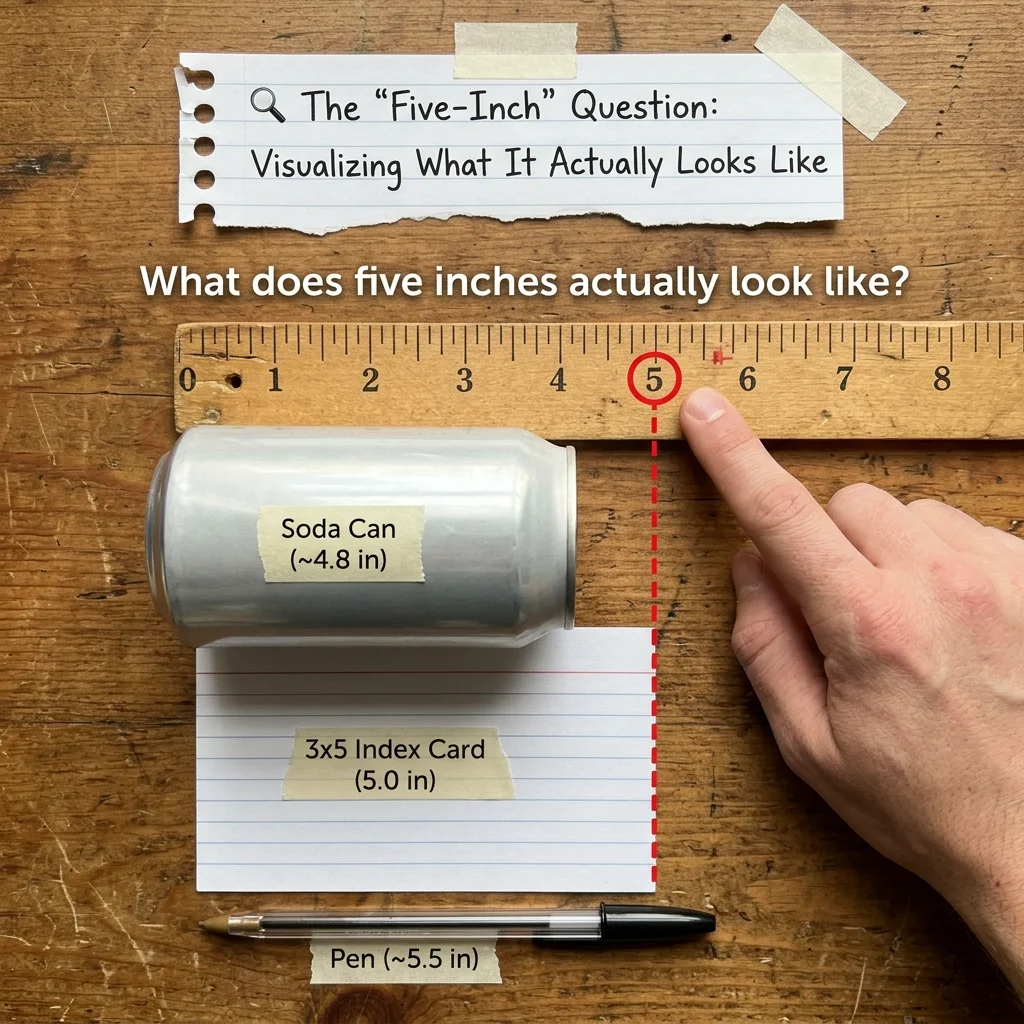
When someone asks how long five inches is, they may be trying to picture a product dimension, measure a gap, or compare an object with something familiar.
The right comparison depends on whether the measurement refers to length, width, height, or screen size.
Is a Five-Inch Screen Five Inches Wide?
Not necessarily. Screen sizes are commonly measured diagonally from one corner of the display area to the opposite corner.
A five-inch screen diagonal does not mean the screen is five inches wide or five inches tall. Its actual width and height depend on its aspect ratio, which describes the relationship between those dimensions.
For example, a display with a 16:9 aspect ratio is wider than a square display with the same diagonal measurement. The diagonal alone is not enough to calculate the dimensions unless the aspect ratio is also known.
How Big Is a Five-Inch Object in Your Hand?
A five-inch object may fit in one hand, but its comfort and fit depend on its shape and thickness.
A thin, flat object measuring five inches long is easier to handle than a thick object with the same length. A five-inch ruler section is also very different from a five-inch-wide box.
When shopping online, check all three dimensions—length, width, and height—rather than relying on one number.
Is Five Inches the Same as Five Square Inches?
No. Five inches measures length, while five square inches measures area.
A five-inch line is a one-dimensional measurement. An area of five square inches describes the amount of surface covered by a shape.
For example, a rectangle measuring 1 inch by 5 inches has an area of 5 square inches. Its length is five inches, but its area is a separate measurement.
👀 Estimating Five Inches Without a Tape Measure
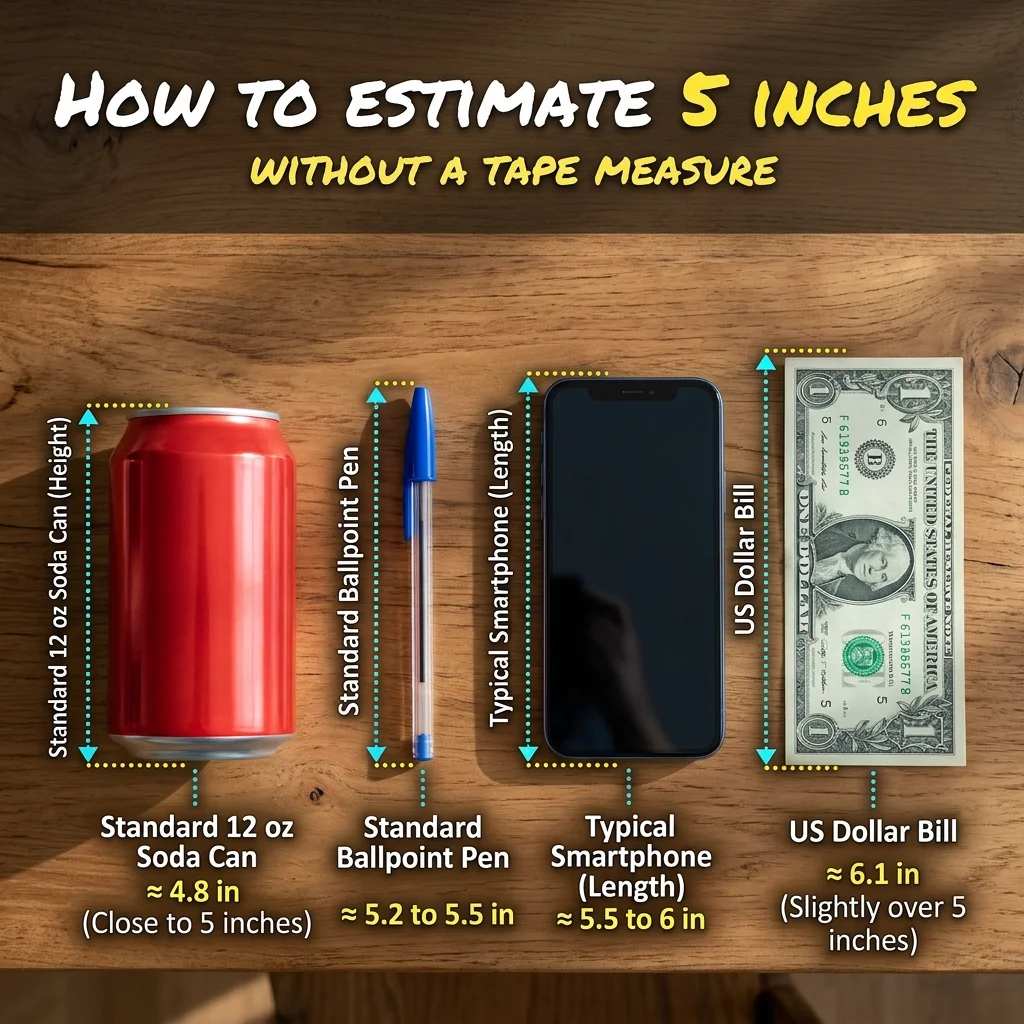
You can estimate five inches using familiar references, but an estimate is not the same as a verified measurement.
For tasks that require accuracy, use a ruler, measuring tape, or another calibrated measuring tool.
- Use a bank card: Its long edge is about 3.37 inches, so five inches is roughly 1.63 inches longer.
- Use a ruler: Find the zero mark and count to five inches for a direct measurement.
- Use a smartphone: Check the device’s published dimensions and compare its longer or shorter side with the target length.
- Use a notebook: Compare five inches with one edge of a compact notebook, but remember that notebook sizes vary.
- Use a printable ruler: Print a ruler only after checking the print scale. Make sure the document is printed at 100% rather than automatically resized.
Avoid relying on hand spans or finger widths as exact measurements. These vary from person to person and can introduce significant errors.
❓ Frequently Asked Questions
How many centimeters is 5 inches?
Five inches equals exactly 12.7 centimeters. Multiply five by 2.54 to convert inches into centimeters.
How many millimeters is 5 inches?
Five inches equals 127 millimeters. This is useful when measuring smaller objects or checking product specifications in metric units.
How many feet is 5 inches?
Five inches equals approximately 0.4167 feet. It is also expressed as 5/12 of a foot.
How many meters is 5 inches?
Five inches equals exactly 0.127 meters. That is 12.7 centimeters expressed in meters.
Is 5 inches considered long?
It depends on the object. Five inches is a noticeable length for a small accessory but relatively short compared with furniture, doors, or large household appliances.
What everyday object is about 5 inches long?
Some compact computer mice, small notebooks, and household sponges are close to five inches in one dimension. Their actual sizes vary, so check individual measurements when precision matters.
Can I measure 5 inches without a ruler?
You can estimate five inches using a known object, such as a bank card, or by comparing it with a device whose dimensions you know. For an accurate result, use a ruler or measuring tape.
Is a 5-inch screen five inches wide?
No. Screen sizes are usually measured diagonally. The actual width depends on the screen’s aspect ratio and may be considerably less than five inches.
✅ Where That Leaves You
Five inches is a compact but useful length equal to 12.7 centimeters, 127 millimeters, 0.4167 feet, and 0.127 meters. Those conversions make it easy to understand the same measurement whether a product listing uses imperial or metric units.
For a quick visual reference, compare five inches with the marked section of a ruler or the dimensions of a familiar object. A compact notebook or computer mouse may provide a helpful estimate, but their sizes are not standardized.
The simplest takeaway is this: five inches is 12.7 centimeters long. Remember that conversion, and you will have a reliable starting point whenever you need to visualize or estimate this measurement.