A 65-inch TV can look enormous in a store, but how wide will it actually be in your living room? The answer may surprise you. Although a 65-inch television is measured diagonally, its actual width is usually around 57 inches. That is almost 5 feet across!
Knowing the width of a 65-inch TV helps you choose the right entertainment stand, plan your wall space, and create a comfortable viewing setup. However, the exact dimensions can vary slightly depending on the brand, bezel, and design.
Fortunately, you do not need a measuring tape to imagine this size. Everyday objects, furniture, and familiar measurements can help you visualize how much space a 65-inch screen occupies. In this guide, you will discover the typical width and height of a 65-inch TV, its measurements in centimeters, and 12 simple real-life comparisons.
Whether you are upgrading your home theater or buying your first big-screen television, these practical examples will help you picture the size before you make a purchase.
🟦 What Is the Width of a 65-Inch TV?
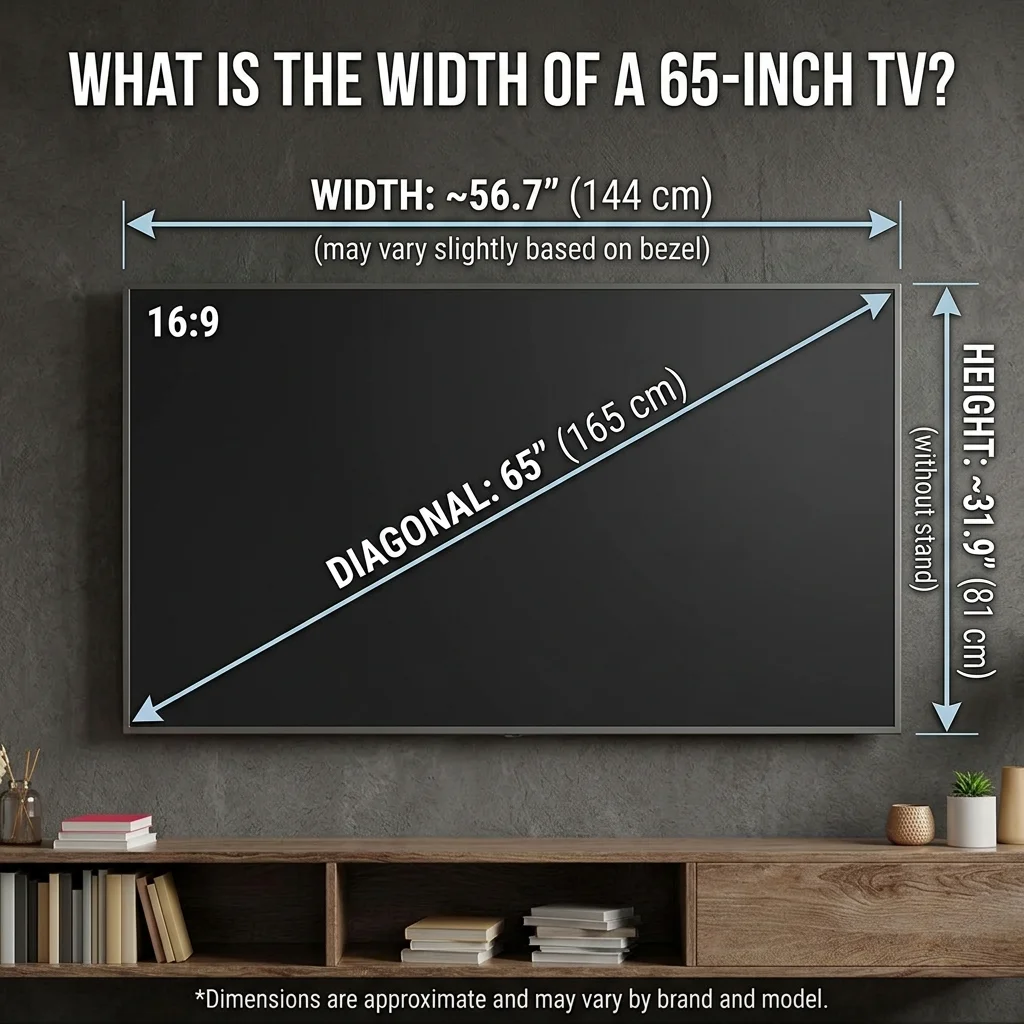
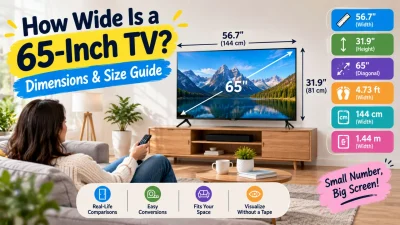
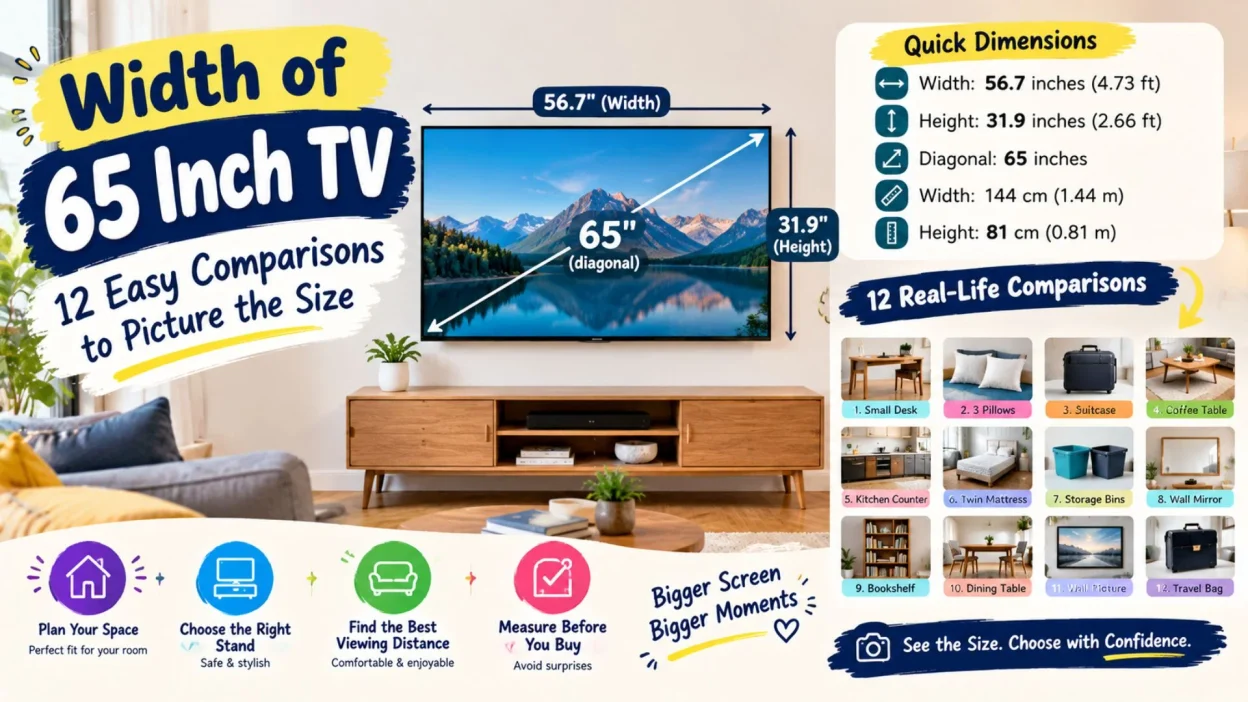
A typical 65-inch TV with a standard 16:9 aspect ratio measures approximately 56.7 inches wide and 31.9 inches tall, excluding the stand and sometimes the outer frame.
Here are the approximate dimensions to remember:
- Width: 56.7 inches
- Height: 31.9 inches
- Diagonal screen size: 65 inches
- Width in feet: About 4 feet 9 inches
- Width in centimeters: About 144 cm
- Height in centimeters: About 81 cm
Keep in mind that these measurements describe the screen area. The television’s full outside dimensions may be slightly larger because of its bezel or frame. Therefore, check the manufacturer’s specifications before choosing a wall mount or TV stand.
🟩 Why Is a 65-Inch TV Not 65 Inches Wide?
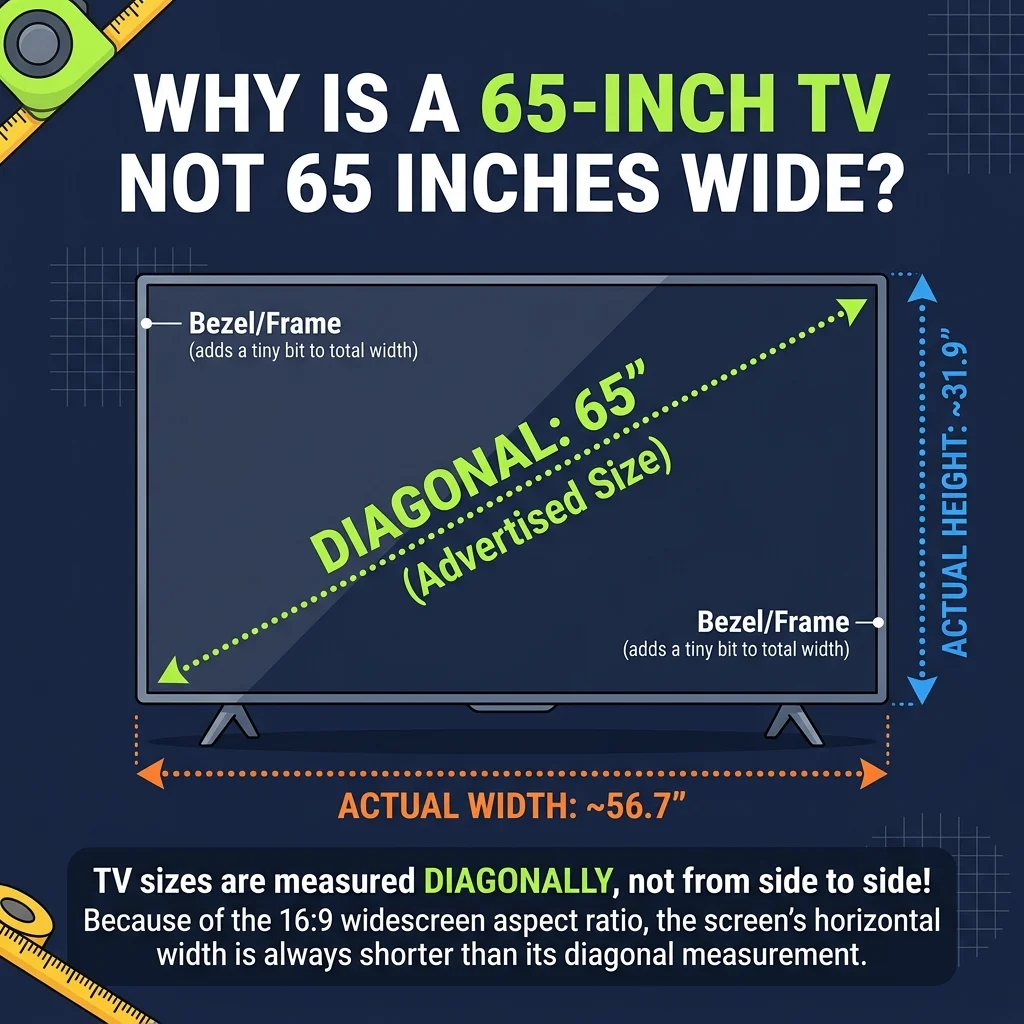
The number 65 refers to the television’s diagonal screen measurement, not its width. Manufacturers measure the screen from one corner to the opposite corner.
Most modern televisions use a 16:9 aspect ratio. This means the screen is wider than it is tall, but its diagonal measurement remains longer than either side.
For example, a 65-inch screen has a diagonal of 65 inches, a width of approximately 56.7 inches, and a height of approximately 31.9 inches.
As a result, two TVs with the same advertised screen size may have slightly different outside dimensions. Their frames, bezels, and stand designs can affect the total space they require.
🟨 Width of a 65-Inch TV in Inches, Feet, and Centimeters
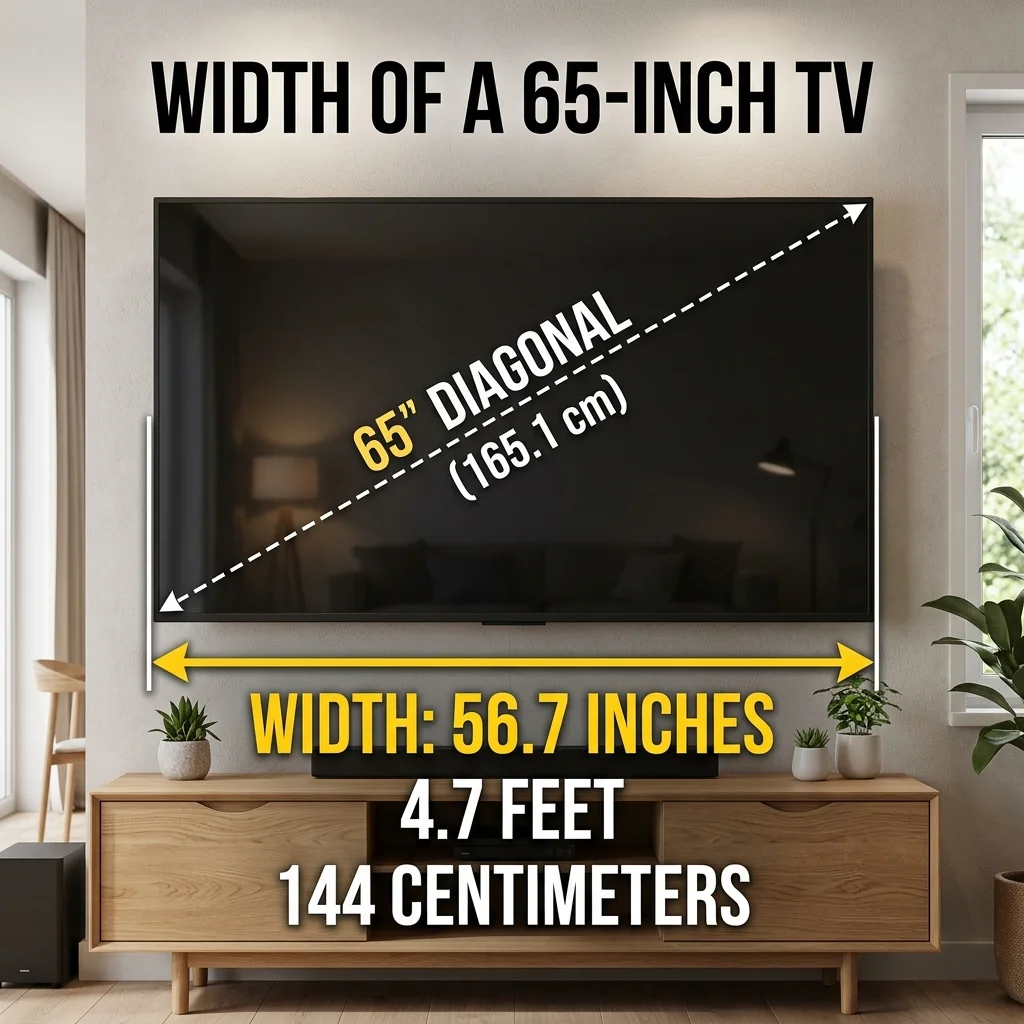
Converting the width into familiar units makes it easier to plan your room.
| Measurement | Approximate size |
|---|---|
| Width in inches | 56.7 inches |
| Width in feet | 4.73 feet |
| Width in centimeters | 144 cm |
| Width in meters | 1.44 m |
| Screen height | 31.9 inches |
| Screen height in centimeters | 81 cm |
| Diagonal screen size | 65 inches |
In other words, a typical 65-inch TV is nearly 5 feet wide. That is a substantial screen, so measure your available wall or furniture before buying one.
🟪 12 Easy Comparisons to Picture the Width of a 65-Inch TV
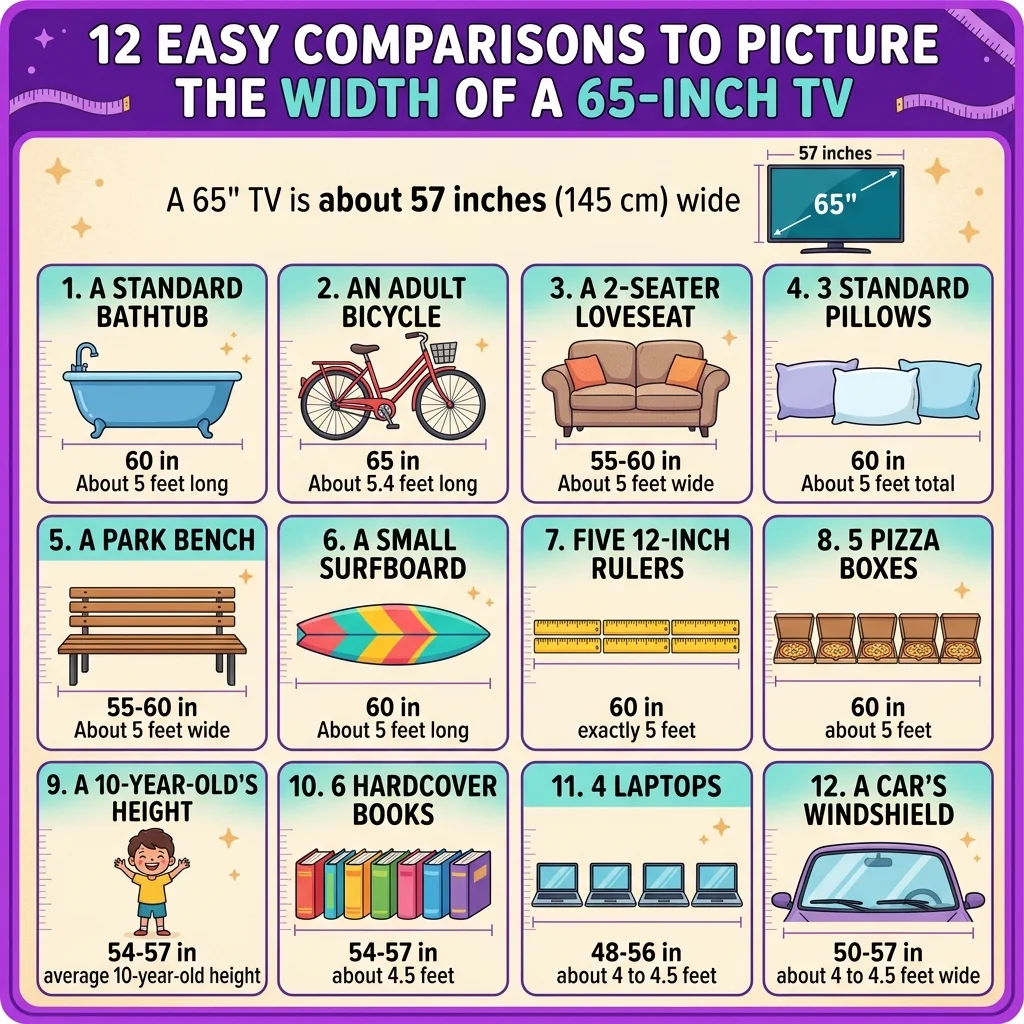
Numbers are helpful, but real-world comparisons make measurements easier to imagine. Here are 12 everyday examples that can help you visualize a TV that is approximately 56.7 inches wide.
🟦 1. Almost as Wide as a Small Desk
Many compact desks measure around 48 inches wide. A 65-inch TV is wider than this by roughly 9 inches.
Imagine placing the TV above a small computer desk. The screen would extend beyond the desk on both sides if centered.
However, the TV should not be placed on a surface that is too narrow or unstable. Always check the television’s base dimensions and the stand’s weight capacity.
🟩 2. Close to Five Feet Across
Five feet equals 60 inches. Since a typical 65-inch TV is approximately 56.7 inches wide, it falls just over 3 inches short of that measurement.
Picture a 5-foot line drawn across your wall. Your television would occupy almost the entire line.
This comparison is useful when deciding whether a large TV will fit between two shelves or inside a designated entertainment area.
🟨 3. Wider Than a Standard Pillow
A common bed pillow measures approximately 20 inches wide. Placing nearly three pillow widths side by side gives you about 60 inches.
Therefore, a 65-inch TV is roughly as wide as three standard pillows arranged in a row, although actual pillow sizes vary.
This familiar comparison helps you understand how much horizontal space the television occupies.
🟪 4. About the Width of a Large Coffee Table

Some rectangular coffee tables measure around 48 to 50 inches wide. A 65-inch TV may extend several inches beyond that width.
Imagine the screen positioned above a coffee table of this size. The television would look broad and prominent, particularly in a smaller room.
Still, a coffee table is only a visual comparison. Your actual TV should rest on a properly sized, stable stand or a suitable wall mount.
🟧 5. Similar to a Large Suitcase Laid Sideways
Large suitcases vary in size, but many measure roughly 28 to 32 inches along their longest side. Two such lengths placed end to end would total around 56 to 64 inches.
That is close to the width of a 65-inch television.
Although this is not an exact comparison, it provides an easy way to picture the screen’s horizontal span.
🟥 6. Longer Than a Typical Kitchen Counter Section
A short kitchen counter section may measure around 48 inches across. A 65-inch TV is nearly 9 inches wider.
If you have a kitchen counter or cabinet of this width, imagine extending it slightly on both sides. That extra span helps illustrate the screen’s size.
Counter dimensions vary, so use this example as a visual guide rather than a precise measurement.
🟦 7. Almost as Wide as a Twin Mattress
A standard twin mattress is approximately 38 inches wide. A 65-inch TV is much wider, exceeding that width by nearly 19 inches.
Imagine adding about half another foot and a half to the width of the mattress. You would be close to the TV’s horizontal measurement.
This comparison is especially useful if you are trying to picture a large television in a bedroom.
🟩 8. Roughly the Width of Two Medium Storage Bins

Suppose two storage bins are each about 28 inches wide. Place them next to each other, and their combined width becomes approximately 56 inches.
That is very close to the width of a typical 65-inch TV.
This comparison works well if you have storage containers at home and want a quick way to visualize the space.
🟨 9. Similar to a Wide Wall Mirror
Large rectangular mirrors often measure around 48 to 60 inches wide. A 65-inch television falls within that general range.
Picture a wide mirror hanging above a console table. A TV of similar width would create a comparable horizontal presence, although its thickness and mounting requirements would differ.
The comparison is particularly helpful when planning a feature wall.
🟪 10. Wider Than a Small Bookshelf
A compact bookshelf may be around 30 to 36 inches wide. A 65-inch TV is considerably wider, extending roughly 21 to 27 inches beyond that width.
Imagine placing two compact bookshelves side by side. Their combined width could come close to the television’s size.
This is an easy way to picture the TV’s scale if you have bookshelves in your home.
🟧 11. Close to the Width of a Large Wall Picture
A wide wall picture or framed print may measure 48 to 60 inches across. A 65-inch TV is similar in overall width to the larger examples.
This comparison is useful if you are planning a gallery wall or replacing a large decorative frame with a television.
Remember, the television’s full outside width can differ from its visible screen width.
🟥 12. About the Length of a Small Dining Table’s Short Side
Some compact dining tables have a short side measuring around 48 to 60 inches. A 65-inch TV is close to the upper end of this range.
Imagine looking across the shorter side of a small rectangular dining table. That gives you a rough sense of the screen’s horizontal span.
Table dimensions vary widely, so measure your own furniture if you need an accurate comparison.
🟦 How Much Wall Space Does a 65-Inch TV Need?
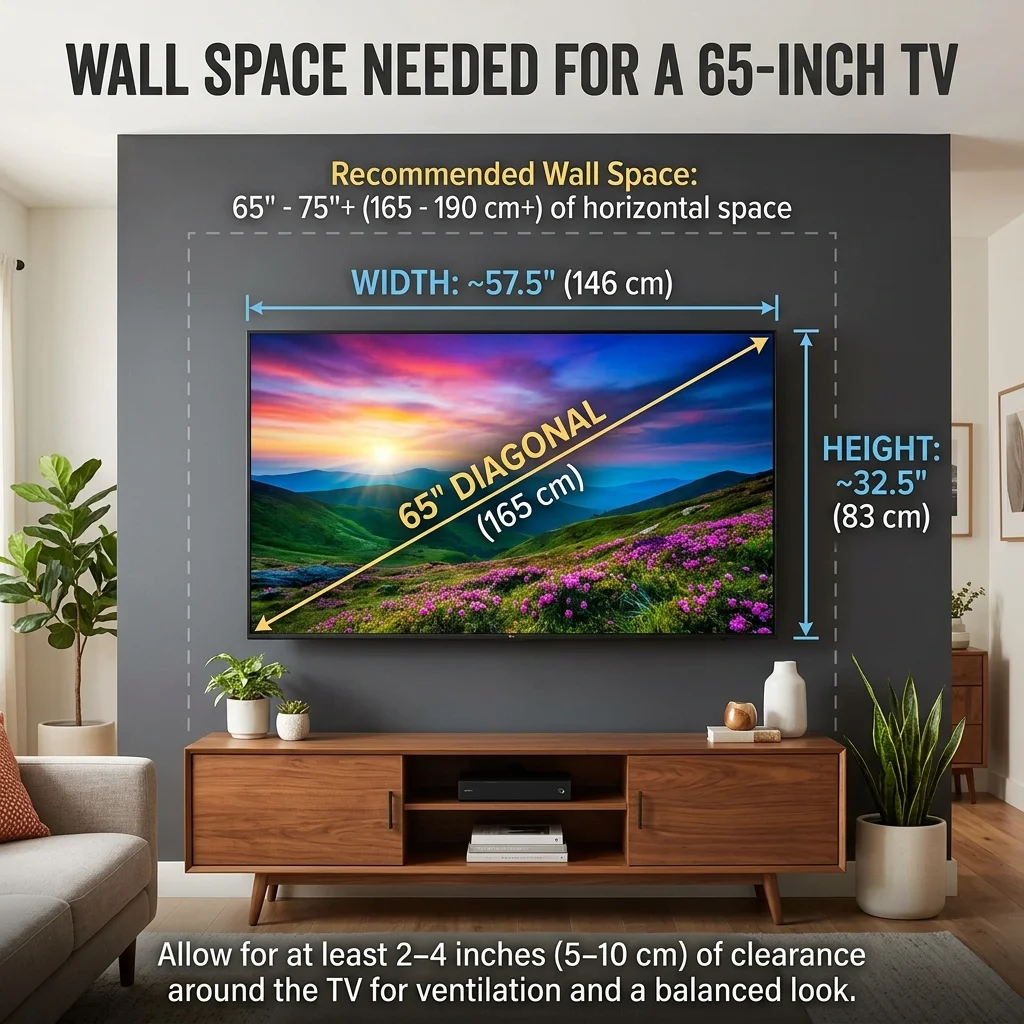
A TV that is about 56.7 inches wide needs more than 56.7 inches of available wall space if you want a comfortable installation.
Consider these practical guidelines:
- Minimum width: Allow at least the television’s full outside width, as specified by its manufacturer.
- More comfortable layout: Leave several inches of visual breathing room on each side when possible.
- Wall mounting: Check the TV’s weight, mounting pattern, wall structure, and bracket compatibility.
- Viewing height: Position the screen so that the center is comfortable to view from your usual seating position.
- Cables and outlets: Leave suitable room for power cords, HDMI cables, and any connectors that extend from the back.
For instance, a 60-inch-wide wall section may be too narrow for many 65-inch TVs. Always use the manufacturer’s overall width, rather than relying only on the advertised diagonal size.
🟩 What Size TV Stand Is Best for a 65-Inch TV?
A stand should safely support the television and provide a stable base. Many people choose a stand wider than the TV to create a balanced appearance, although the correct size depends on the model and its feet.
For a TV approximately 56.7 inches wide, you might consider a stand around 60 to 70 inches wide if it fits your room. However, this is a design guideline, not a universal safety requirement.
Before purchasing a stand, check the following:
- The TV’s overall width and weight.
- The distance between its feet or the size of its central base.
- The stand’s maximum supported weight.
- The stand’s depth and stability.
- Space for a soundbar, streaming devices, or game consoles.
If the television has feet near its outer edges, make sure the stand is wide enough to support both feet securely.
🟨 Is a 65-Inch TV Too Big for a Small Room?
Not necessarily. A 65-inch TV can work in a smaller room if the viewing distance, layout, and personal preferences are suitable.
However, screen size alone does not determine whether the television will feel too large. The room’s layout and how far you sit from the screen matter as well.
Before choosing a 65-inch model, consider these points:
- Measure the distance between your seating area and the TV.
- Check the available wall width.
- Consider windows, doors, and nearby furniture.
- Make sure the screen does not block shelves or other essential items.
- Compare the viewing experience with a 55-inch model if space is limited.
Ultimately, the best size is one that fits your room and feels comfortable during everyday viewing.
🟪 How to Measure Your Space Before Buying a 65-Inch TV
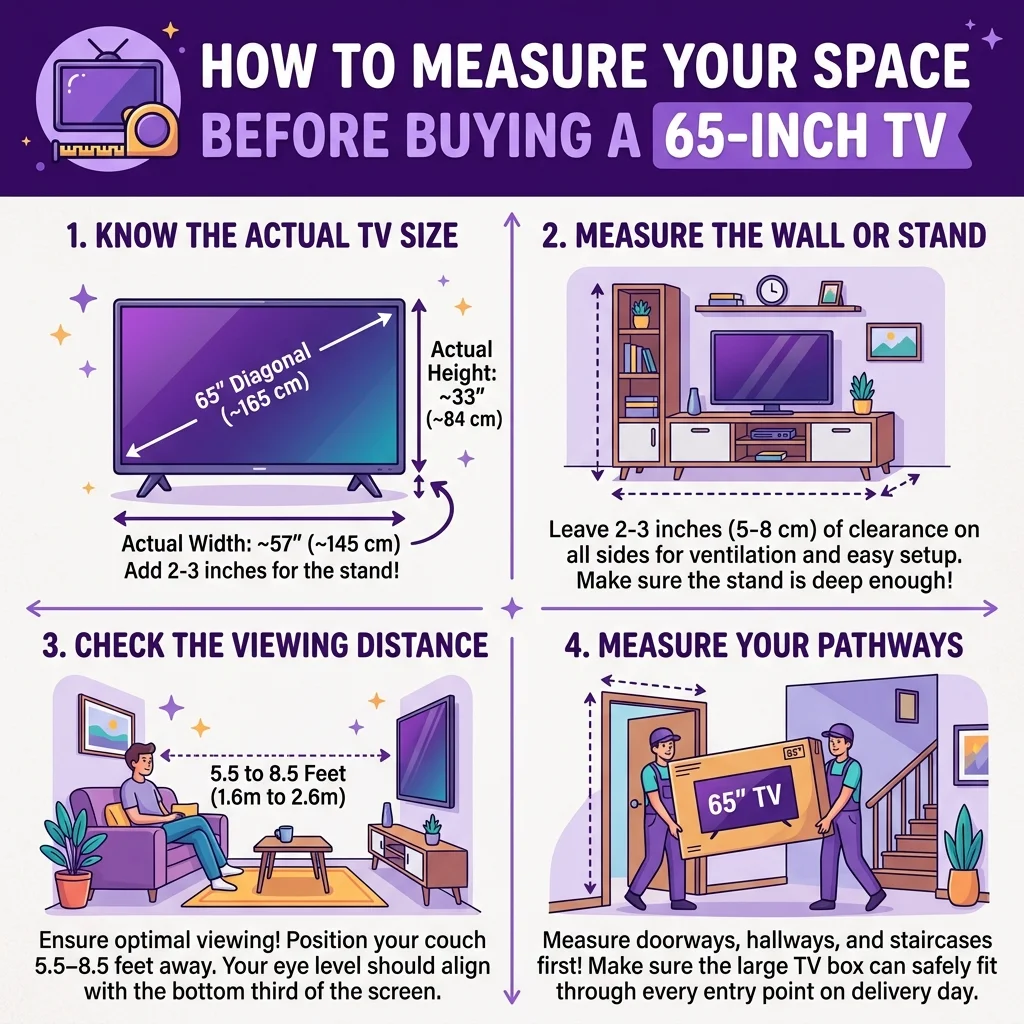
You can check whether a 65-inch TV will fit without purchasing it first.
Follow these simple steps:
- Measure the available width on your wall or TV stand.
- Mark a rectangle approximately 57 inches wide and 32 inches tall.
- Increase the dimensions slightly to account for the specific model’s frame.
- Check whether nearby furniture, shelves, or windows interfere with the planned placement.
- Confirm the manufacturer’s full dimensions before ordering.
You can also use painter’s tape to outline the approximate screen size on the wall. This makes it easier to see how much space the TV will occupy.
For a more accurate result, use the manufacturer’s product specifications rather than relying solely on generic dimensions.
🟦 Frequently Asked Questions About the Width of a 65-Inch TV
How wide is a 65-inch TV?
A typical 65-inch TV with a 16:9 screen is approximately 56.7 inches wide. The total outside width may vary slightly by model.
How wide is a 65-inch TV in feet?
The screen is about 4.73 feet wide, which is approximately 4 feet and 8.7 inches.
How wide is a 65-inch TV in centimeters?
A typical 65-inch TV screen is approximately 144 centimeters wide. The complete television may be slightly wider depending on its frame.
How tall is a 65-inch TV?
The screen is approximately 31.9 inches tall, or about 81 centimeters, excluding the stand and any additional frame dimensions.
Will a 65-inch TV fit on a 60-inch stand?
Many 65-inch TVs are narrower than 60 inches, but you must check the model’s full outside width and the distance between its feet. A 60-inch stand is not automatically suitable for every model.
Is a 65-inch TV actually 65 inches wide?
No. The 65-inch measurement refers to the diagonal of the screen. A typical 16:9 screen is approximately 56.7 inches wide.
How much wall space do I need for a 65-inch TV?
You need enough space for the model’s full outside width, plus any additional room required for mounting, cables, and your preferred layout. Check the manufacturer’s dimensions before installation.
Does every 65-inch TV have the same dimensions?
No. Screen proportions are generally similar across modern 16:9 TVs, but bezels, frames, and stand designs can create small differences in overall dimensions.
🟩 Conclusion
The width of a typical 65-inch TV is approximately 56.7 inches, or 144 centimeters, while its screen height is around 31.9 inches. That makes it nearly 5 feet wide and large enough to become a major feature in most living rooms.
Everyday comparisons, such as a row of three pillows or two medium storage bins, can help you imagine its size. Nevertheless, if you are planning a purchase, always measure your wall or furniture and confirm the exact dimensions of the model you want.
With a little planning, you can choose a 65-inch television that fits your space, looks balanced, and provides an enjoyable viewing experience.