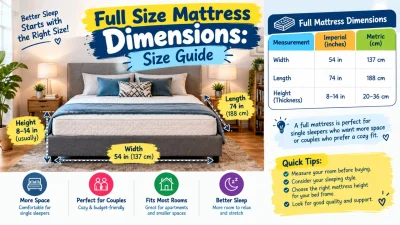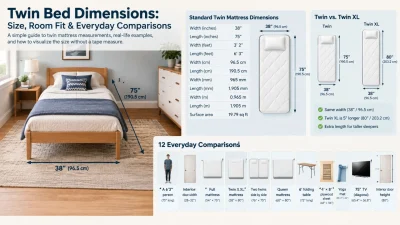
A queen mattress gives you more room to stretch out than a full-size bed without taking up as much space as a king. That balance makes it a popular choice for couples, guest bedrooms, and anyone who wants a comfortable sleeping area without filling the entire room with furniture.
But how big is a queen mattress in real life? The numbers can be difficult to picture until you compare them with a bed frame, a bedroom wall, or the space available beside your nightstands.
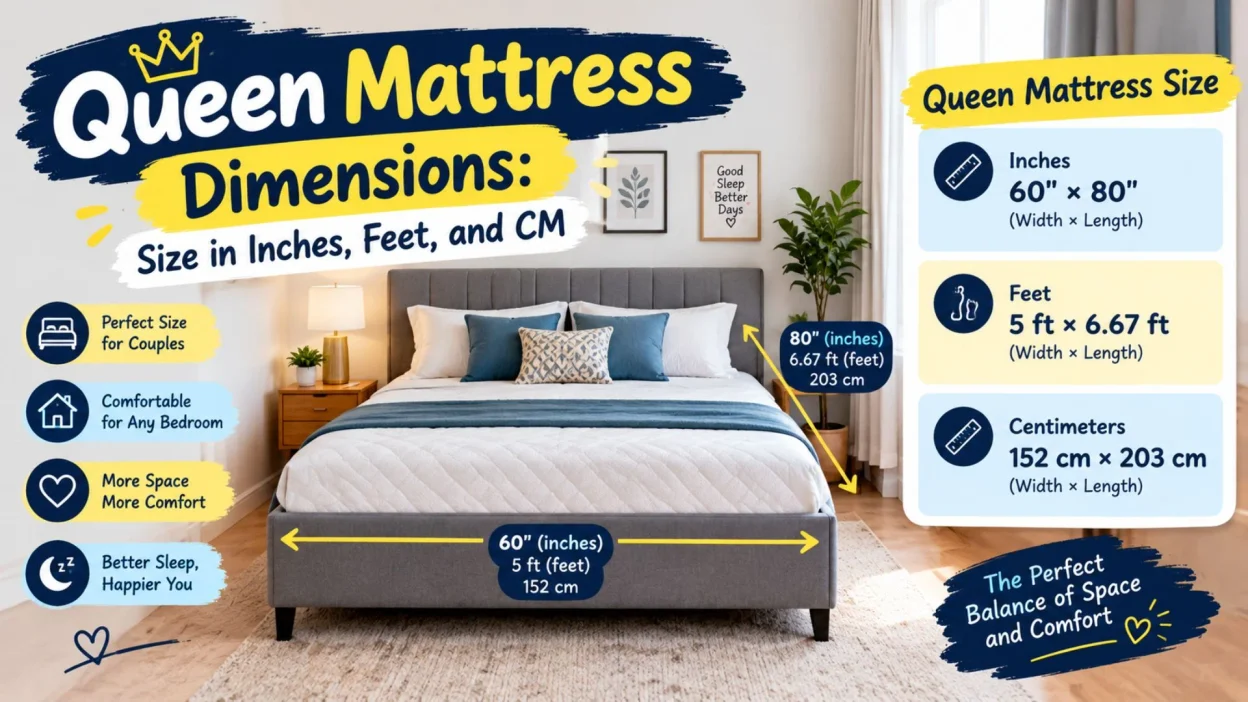
A standard queen mattress in the United States measures 60 inches wide by 80 inches long. That’s 5 feet wide and 6 feet 8 inches long, making it a practical fit for many primary bedrooms and shared sleeping spaces.
In this guide, you’ll learn queen mattress dimensions in inches, feet, centimeters, and millimeters, how they compare with other mattress sizes, and how much room you should leave around the bed. You’ll also find useful comparisons and simple ways to visualize the size before buying a mattress.
A standard queen mattress equals 60 × 80 inches, 5 × 6 feet 8 inches, 152.4 × 203.2 centimeters, 1,524 × 2,032 millimeters, and 1.524 × 2.032 meters.
Every Unit Queen Mattress Dimensions Convert To

The standard US queen mattress has a rectangular sleeping surface measuring 60 inches across and 80 inches from head to foot. These measurements describe the mattress itself, not necessarily the outer dimensions of the bed frame.
Here’s the full conversion table.
| Measurement unit | Width | Length |
|---|---|---|
| Inches | 60 in | 80 in |
| Feet and inches | 5 ft | 6 ft 8 in |
| Decimal feet | 5 ft | 6.67 ft |
| Centimeters | 152.4 cm | 203.2 cm |
| Millimeters | 1,524 mm | 2,032 mm |
| Meters | 1.524 m | 2.032 m |
| Yards | 1.67 yd | 2.22 yd |
How Are Queen Mattress Measurements Calculated?

Converting queen mattress dimensions is straightforward once you know the basic formulas.
- Inches to feet: Divide inches by 12. A 60-inch width equals 5 feet, while an 80-inch length equals 6.67 feet.
- Inches to centimeters: Multiply inches by 2.54. Therefore, 60 inches equals 152.4 cm, and 80 inches equals 203.2 cm.
- Inches to millimeters: Multiply inches by 25.4. This gives 1,524 mm wide and 2,032 mm long.
- Inches to meters: Divide the centimeter measurement by 100, giving 1.524 m × 2.032 m.
- Inches to yards: Divide inches by 36 to convert each dimension into yards.
The distinction between decimal feet and feet plus inches is worth remembering. An 80-inch mattress is 6.67 feet long, not 6 feet 7 inches. The decimal represents a fraction of a foot, so 0.67 feet is approximately 8 inches.
What Is the Surface Area of a Queen Mattress?
Multiply the width by the length to find the mattress’s surface area:
60 inches × 80 inches = 4,800 square inches.
That works out to approximately 33.33 square feet, or 3.10 square meters. This is the flat sleeping surface, not the floor space required for the bed and surrounding furniture.
Where a Queen Mattress Fits on a Bed Size Chart
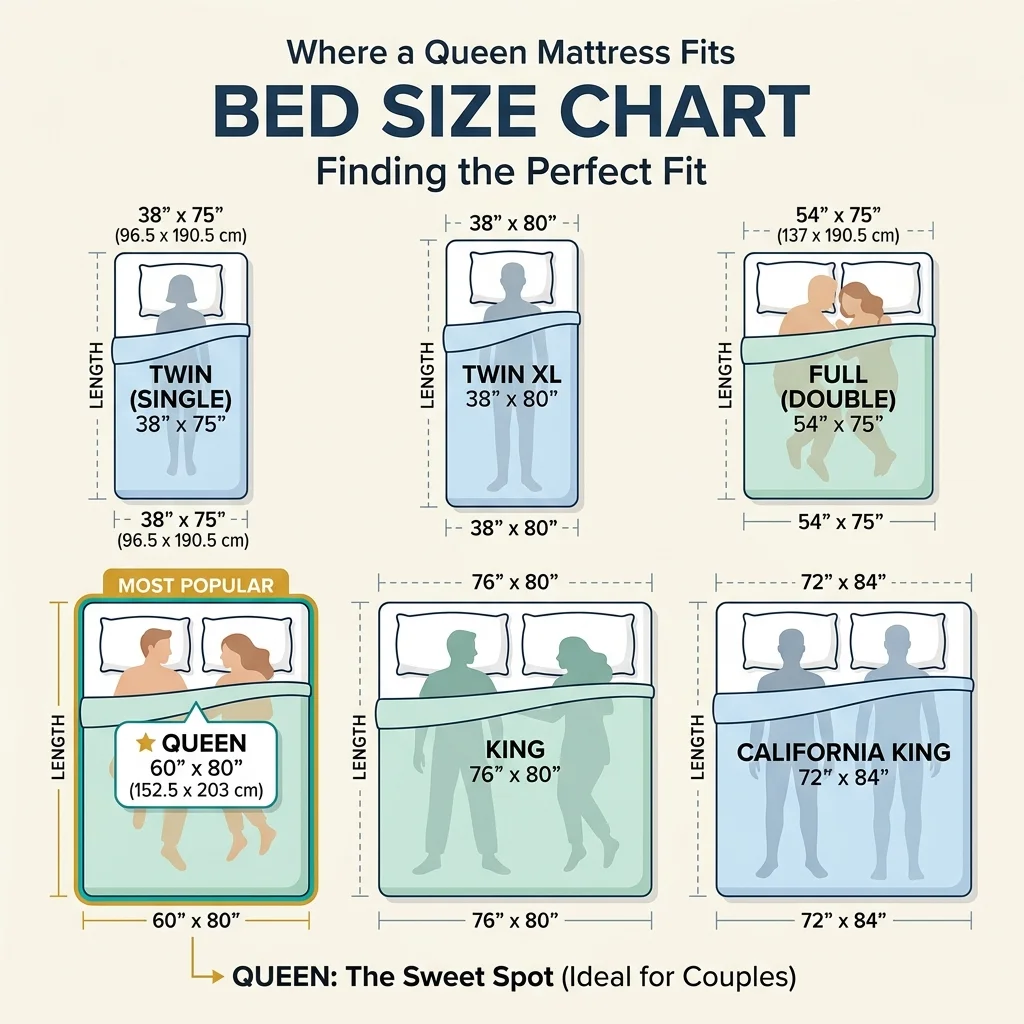
A queen mattress sits between a full mattress and a king mattress in the common US mattress-size range. It’s wider than a full but narrower than a king, while sharing the same standard 80-inch length as both.
Twin mattress
38 × 75 inches
A compact choice for one sleeper, children’s rooms, and smaller guest spaces.
Full mattress
54 × 75 inches
Six inches narrower and five inches shorter than a standard queen.
Queen mattress
60 × 80 inches
A versatile size for couples or individuals who prefer extra sleeping space.
King mattress
76 × 80 inches
Sixteen inches wider than a queen, offering more room for two sleepers.
These are common US mattress dimensions. Actual products can vary by manufacturer, and bed frames usually add a little extra width or length.
Is a Queen Mattress Big Enough for Two People?
For many couples, yes. Each person gets approximately 30 inches of mattress width when two people share a standard queen.
That is enough for many sleepers, although people who move around frequently, have different sleep schedules, or prefer more personal space may find a king more comfortable. A queen’s 80-inch length also works for many adults, but very tall sleepers should check the available length before purchasing.
For a single sleeper, the extra width can make a queen feel especially roomy. It also gives you more flexibility if you share the bed occasionally with a child or pet.
12 Real-World Ways to Visualize a Queen Mattress

A measurement becomes easier to understand when you can picture something familiar. The comparisons below help you visualize the queen’s 60-inch width, 80-inch length, or overall footprint. Some are close comparisons, while others illustrate just one dimension.
1. A Five-Foot-Wide Rectangle
The width of a standard queen mattress is exactly 5 feet. Imagine a straight line across the floor from one side of the mattress to the other, spanning 60 inches.
This is a useful starting point because five feet is a familiar measurement in home layouts. It helps you judge whether a bed will fit between walls or leave room for nearby furniture.
The length is another 20 inches greater than the width. That difference gives the mattress its distinctly rectangular shape.
2. A Six-Foot-Eight-Inch Line
The length of a queen mattress is 80 inches, or 6 feet 8 inches. Picture a line stretching across the floor that’s longer than a six-foot sofa and nearly seven feet from end to end.
This length provides a useful amount of room for many adults. However, a person’s height is not the only factor that determines comfort; sleeping position and how much space they want above and below their body also matter.
For a quick visualization, mark a point on the floor, measure about 6 feet 8 inches forward, and mark the endpoint. That gives you the mattress’s approximate head-to-foot length.
3. Two Twin Mattresses Side by Side
Two standard twin mattresses each measure 38 × 75 inches. Together, they would be 76 inches wide and 75 inches long if placed side by side, so they are not the same size as a queen.
The comparison is still useful because it shows how mattress widths add up. A queen is 16 inches narrower than two standard twins placed together and 5 inches longer than either twin.
This distinction is especially helpful when shopping for split sleeping arrangements. Two twin XL mattresses are commonly paired to make a king-size sleeping surface, rather than a queen.
4. A Full Mattress With Extra Room
A standard full mattress is 54 inches wide by 75 inches long. Compared with it, a queen adds 6 inches of width and 5 inches of length.
Six extra inches may not sound like much on paper, but the added space can be noticeable when two people share a bed. It also gives solo sleepers more room to stretch out.
Imagine adding a 6-inch strip along the side of a full mattress and extending its foot by another 5 inches. That illustrates the basic difference between the two sleeping surfaces.
5. A King Mattress With Less Width
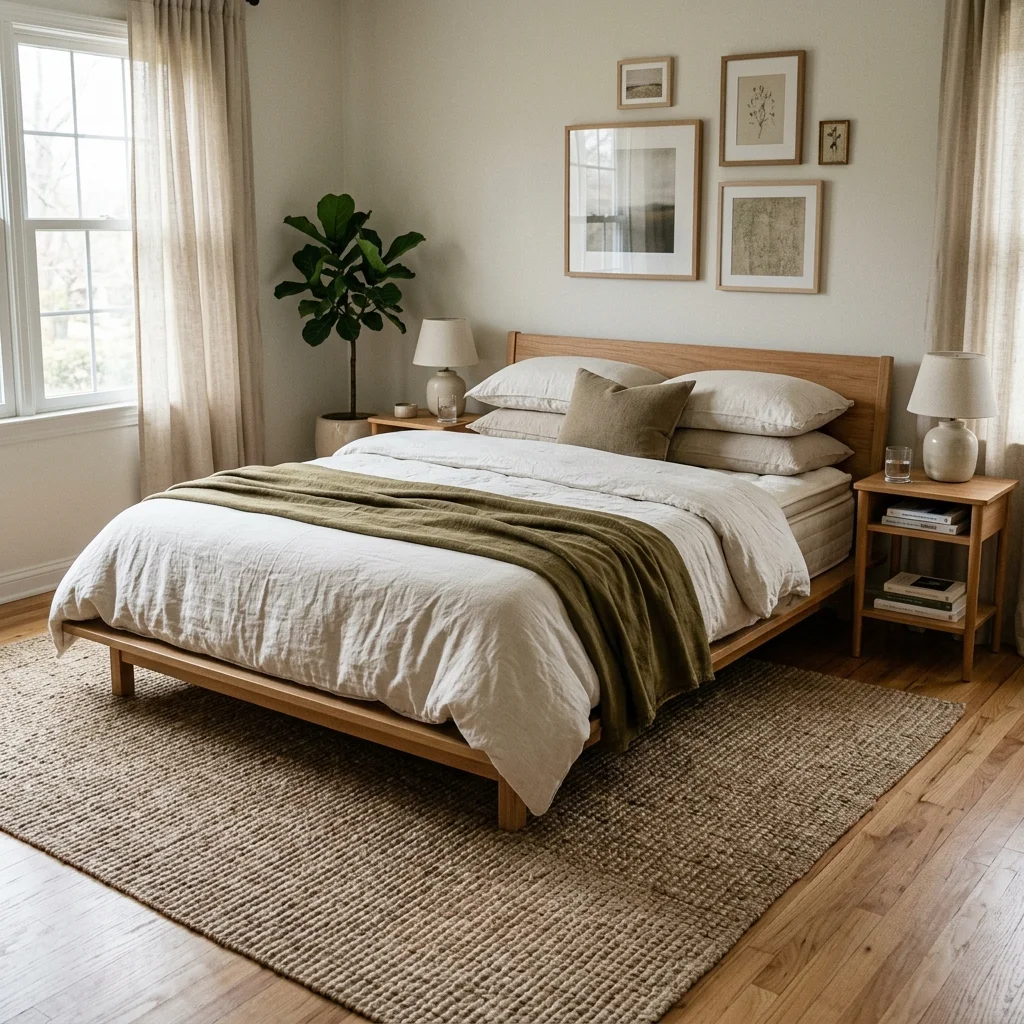
A standard king mattress measures 76 × 80 inches. It shares the queen’s 80-inch length but provides 16 additional inches of width.
That makes the king a useful comparison when deciding whether the queen will give you enough personal space. The two sizes occupy the same head-to-foot length, so the main difference is how far the mattress extends across the room.
You can picture a queen as a king with a 16-inch-wide strip removed from one side. In practice, the extra width can make a king more suitable for couples who want generous individual sleeping areas.
6. A Standard Interior Door’s Height
Many standard US interior doors are around 80 inches tall, although door dimensions vary by home and building standards. That’s the same nominal measurement as the length of a standard queen mattress.
The comparison makes the mattress length easier to visualize: an 80-inch line is about as long as a typical 6-foot-8-inch door is tall.
Keep in mind that a door’s actual slab size and its installed frame dimensions are not always identical. Use this as a mental comparison, not a substitute for measuring a doorway when planning furniture delivery.
7. A Five-Foot Furniture Span
Some compact sofas, benches, and upholstered seats measure around 60 inches across, depending on the model. That makes a five-foot-wide furniture piece a convenient comparison for the queen mattress’s width.
A 60-inch sofa is not necessarily as deep as a mattress, though. The mattress is 80 inches long, so comparing only the width does not show how much floor space the whole bed occupies.
If you have a piece of furniture that’s five feet wide, picture turning that measurement into one side of a rectangle and extending the other side to 6 feet 8 inches.
8. A Large Area Rug’s Short Side
A rug measuring 5 × 8 feet has a short side of 60 inches and a long side of 96 inches. Its short side matches a queen mattress’s width, but the rug is 16 inches longer than the mattress.
This is a helpful way to think about floor space in a bedroom. A 5 × 8-foot rug is not the same size as a queen mattress, but it provides a familiar rectangular footprint for visual comparison.
The rug’s placement also matters. Depending on the bedroom layout, it may sit beneath the lower portion of the bed or extend beyond the sides.
9. A Yoga Mat for Width and Length Context
Many standard yoga mats measure roughly 24 inches wide and 68 inches long, although longer and wider models are available.
A queen mattress is 36 inches wider and 12 inches longer than a 24 × 68-inch mat. Looking at the two side by side helps show that a mattress offers much more lateral space than a typical exercise mat.
The yoga mat is a useful comparison because its dimensions are often printed in product listings. If you own one, you can use it to begin estimating the queen’s length and width, then account for the difference.
10. A Six-Foot-Eight-Inch Tabletop Span
Some long dining tables and work surfaces are around 80 inches long, though table sizes vary considerably. An 80-inch tabletop can help you picture the queen mattress’s head-to-foot dimension.
A tabletop has a different shape and purpose, of course. Its width may be much smaller than the mattress’s 60-inch width, so this comparison is best used for length only.
If you already own a table close to this length, imagine a mattress extending along its long edge. This offers a practical sense of the distance from the head of the bed to the foot.
11. A 60-Inch Television’s Width Is Not 60 Inches
A television marketed as 60 inches is measured diagonally across its screen, not horizontally from left to right. A widescreen 16:9 television with a 60-inch diagonal has a screen width of about 52.3 inches and a screen height of about 29.4 inches, excluding the frame.
That means its width is somewhat less than the 60-inch width of a queen mattress. The example is useful because it highlights a common measurement trap: a product’s advertised size may refer to a diagonal, not its width or length.
A mattress, in contrast, is normally listed using its width and length. Those are the two numbers to use when planning your bedroom.
[IMAGE: 60-inch widescreen television beside a queen mattress outline comparing screen width with mattress width]
12. A 5 × 7-Foot Floor Rectangle
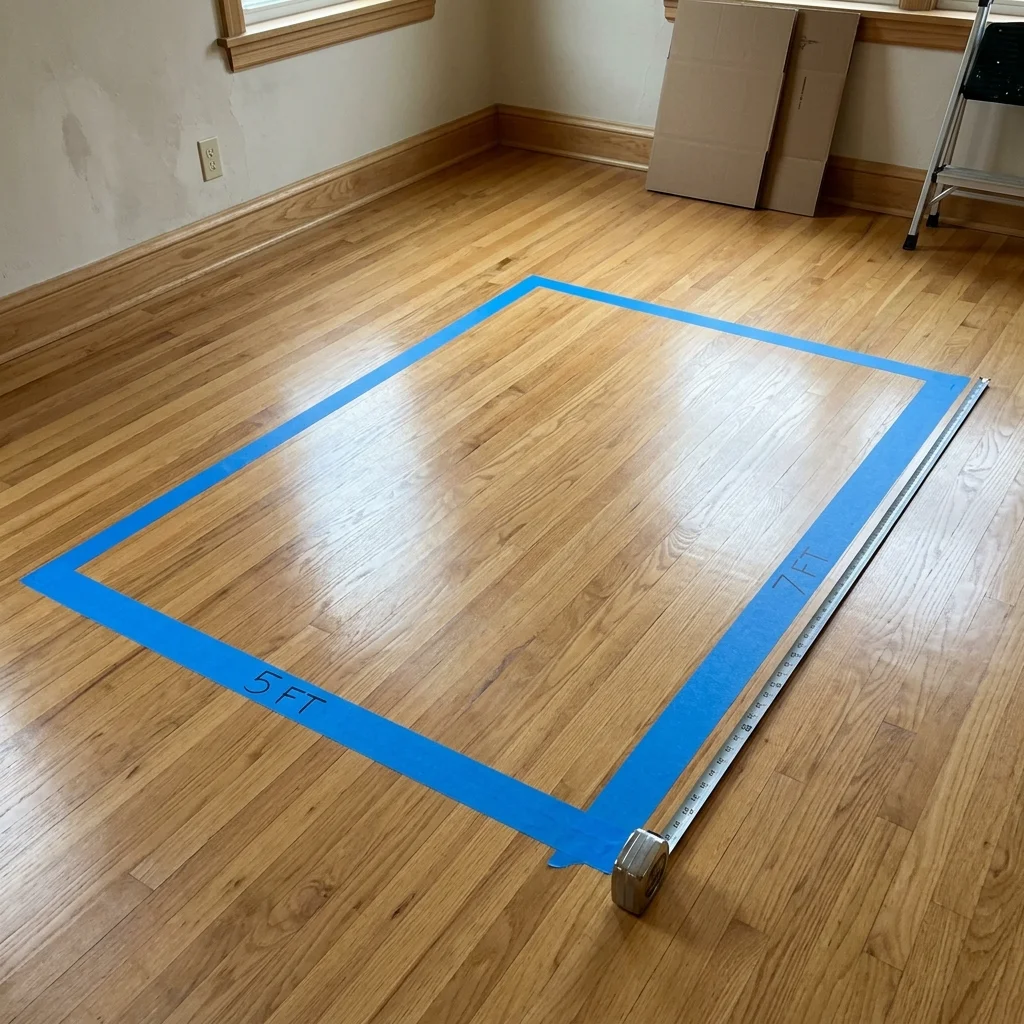
A 5 × 7-foot rectangle measures 60 × 84 inches. Its width matches the queen mattress’s 60 inches, while its length is 4 inches greater than the mattress’s 80 inches.
This is a convenient comparison when sketching a room layout on paper or marking an approximate area on the floor. It is close enough to help you visualize the mattress, but it does not account for the bed frame or access space around it.
For a more accurate layout, mark out a 60 × 80-inch rectangle instead. Then draw the extra area needed for walking, opening drawers, and placing bedside tables.
[IMAGE: floor plan with a 60-by-84-inch rectangle next to an exact 60-by-80-inch queen mattress outline]
Queen Mattress Dimensions vs. Bedroom Size
Knowing the mattress size is only half the job. You also need enough floor space to walk around the bed, open drawers, and access closets without squeezing past furniture.
A queen mattress covers about 33.33 square feet, but the bedroom needs to be larger than that to feel comfortable.
What Size Bedroom Fits a Queen Mattress?
A room measuring approximately 10 × 10 feet can accommodate a queen mattress, although furniture placement may feel tight. A room around 10 × 12 feet generally gives you more flexibility for nightstands, a dresser, and walking space.
These are practical planning examples, not strict minimum room-size requirements. The ideal layout depends on the door location, closet doors, windows, and the size of your other furniture.
| Bedroom dimensions | Floor area | Queen bed suitability |
|---|---|---|
| 8 × 10 ft | 80 sq ft | Possible, but very limited furniture space |
| 10 × 10 ft | 100 sq ft | Compact arrangement |
| 10 × 12 ft | 120 sq ft | More flexibility for bedroom furniture |
| 12 × 12 ft | 144 sq ft | Roomier layout with additional furniture options |
| 12 × 14 ft | 168 sq ft | Generous space for a queen bed and storage |
How Much Space Should You Leave Around a Queen Bed?
For comfortable access, aim for roughly 24–30 inches of walking space along accessible sides of the bed when the room allows. This is a practical planning guideline rather than a universal building requirement.
Remember that a queen bed frame can be larger than the mattress. A thick upholstered frame or a headboard with projecting side rails may add several inches to the total footprint.
Before buying, measure the actual frame dimensions as well as the mattress. Also consider whether you can carry it through your bedroom doorway, hallway, and stairs.
Getting to Queen Mattress Size Without a Tape Measure

You can estimate a queen mattress’s dimensions using familiar measurements, although these methods are best for rough planning rather than exact fitting.
1. Measure a Five-Foot Width
A queen mattress is exactly 5 feet wide. If you have a ruler or measuring stick marked in feet, mark out five feet across the floor to estimate the width.
2. Count Eighty Inches Along the Floor
The mattress is 80 inches long. You can measure this distance using a ruler or another object with a known length, repeating the measurement until you reach the full span.
Avoid relying on hand spans or footsteps unless you know their actual size. Individual measurements vary, and repeated estimates can accumulate errors.
3. Use a Paper Floor Plan
Draw a rectangle representing your room and use a consistent scale. For example, on a plan where 1 inch represents 1 foot, a queen mattress becomes a rectangle measuring 5 inches by approximately 6.67 inches.
Add the bed frame and nearby furniture to check whether the layout works before moving anything.
4. Mark the Mattress Footprint With Painter’s Tape
If you’re planning to buy a bed, this is one of the most useful methods. Measure a 60 × 80-inch rectangle on the floor and outline it with painter’s tape.
Walk around the marked area and check nearby doors, drawers, and furniture. This reveals practical space issues that a measurement table alone cannot show.
5. Check the Existing Bed Frame
If you’re replacing an old mattress, inspect the frame’s manufacturer’s specifications. A frame designed for a queen mattress may help you confirm the intended size, but measure the inner sleeping area if you need to verify the fit.
FAQs About Queen Mattress Dimensions
1. What are standard queen mattress dimensions?
A standard US queen mattress measures 60 inches wide by 80 inches long. That equals 5 feet by 6 feet 8 inches, or 152.4 × 203.2 centimeters.
2. How many feet is a queen mattress?
A queen mattress is 5 feet wide and approximately 6.67 feet long. In feet and inches, its dimensions are 5 feet by 6 feet 8 inches.
3. What are queen mattress dimensions in cm?
Queen mattress dimensions in centimeters are 152.4 cm wide by 203.2 cm long. These measurements refer to the standard US queen size and may differ from mattress sizes in other countries.
4. How many meters is a queen mattress?
A standard queen mattress measures 1.524 meters wide and 2.032 meters long. For simple room planning, you can round these to approximately 1.52 × 2.03 meters.
5. Is a queen mattress bigger than a full?
Yes. A standard queen is 6 inches wider and 5 inches longer than a standard full mattress. That extra space can make a queen more comfortable for couples.
6. Is a queen mattress big enough for two adults?
For many couples, a queen provides enough sleeping space. Each person gets approximately 30 inches of width, although people who prefer more room may find a king mattress more comfortable.
7. What size bed frame do I need for a queen mattress?
Choose a frame specifically designed for a standard queen mattress measuring 60 × 80 inches. Check the frame’s interior dimensions and overall exterior footprint because the frame may extend beyond the mattress.
8. How big should a bedroom be for a queen mattress?
A 10 × 10-foot bedroom can often fit a queen mattress, but furniture placement may be tight. A room around 10 × 12 feet or larger generally offers more options for nightstands, dressers, and walking space.
9. Are queen mattress dimensions the same in every country?
No. Mattress sizing systems vary internationally. A standard US queen is 60 × 80 inches, while sizes marketed as queen in other countries may have different measurements. Always check the exact dimensions before buying bedding or a bed frame.
10. What is the difference between a queen and an Olympic queen mattress?
An Olympic queen is commonly listed as 66 × 80 inches, making it 6 inches wider than a standard queen while retaining the same length. Availability varies, so confirm the exact specifications before purchasing a mattress, frame, or sheets.
Where That Leaves You
A standard queen mattress measures 60 inches wide by 80 inches long, or 5 feet by 6 feet 8 inches. In metric measurements, that’s 152.4 × 203.2 cm, covering approximately 33.33 square feet of sleeping surface.
The easiest way to picture it is as a five-foot-wide rectangle extending nearly seven feet along the floor. That gives you a practical starting point when comparing mattress sizes or planning a bedroom layout.
Before making a purchase, mark out the 60 × 80-inch footprint and account for the bed frame, walking space, and other furniture. A few minutes of measuring can help you choose a mattress that fits both your sleeping needs and your room.