Five inches sounds simple until you try to picture it without a ruler. It is long enough to be noticeable, but short enough that many everyday objects come surprisingly close to it.
If you’re searching how big is 5 inches, you’re probably trying to understand the measurement in practical terms. You might be comparing a product size, checking a screen, estimating an object’s length, or simply wondering what 5 inches looks like in your hand.
The good news is that 5 inches has a very precise conversion: 5 inches equals 0.4167 feet, 12.7 centimeters, 127 millimeters, and 0.127 meters.
That makes it easier to understand when you compare it with familiar objects such as a smartphone width, a small notebook, a credit card, or parts of common household items. Let’s break down the measurement and turn an abstract number into something you can actually picture.
Every Unit 5 Inches Converts To
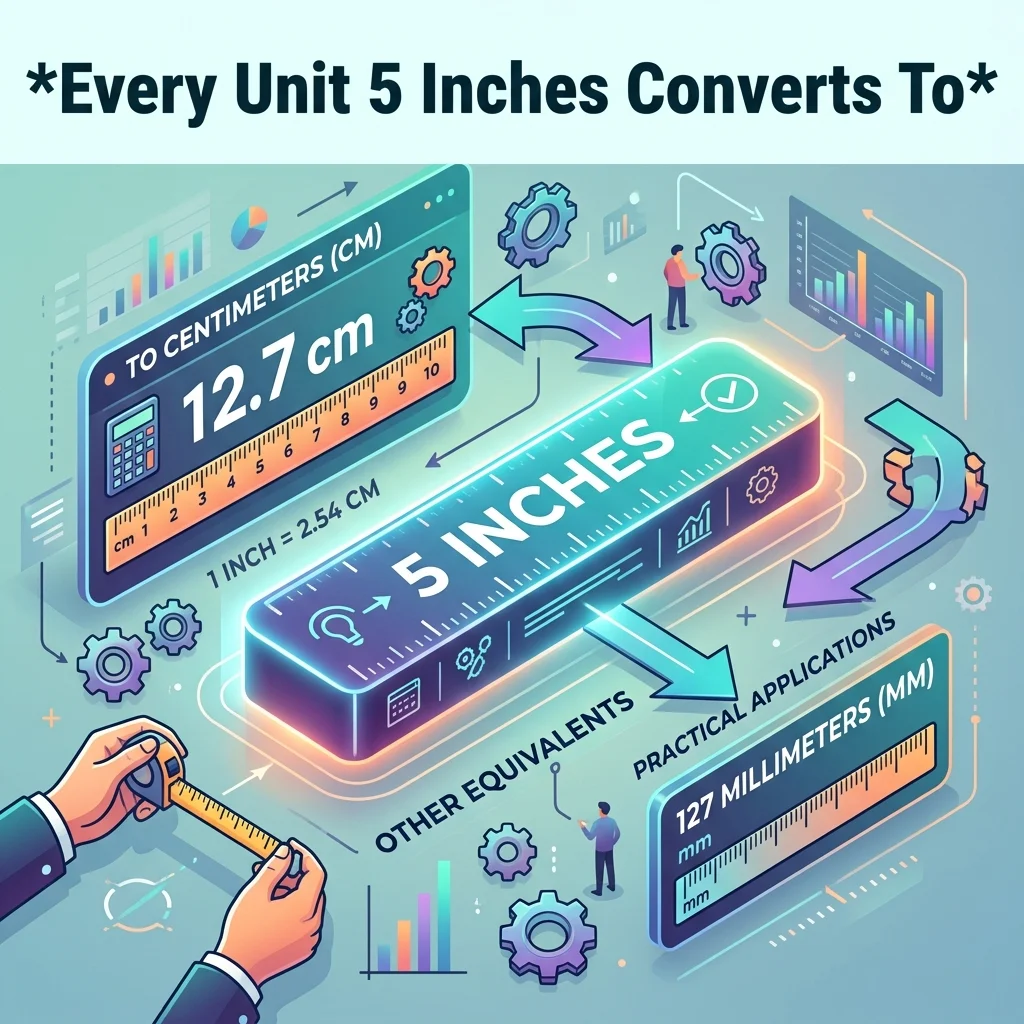
The easiest way to understand 5 inches is to put it into several measurement systems.
The inch is commonly used in the United States, while centimeters and meters are widely used internationally.
| Unit | 5 Inches Equals |
|---|---|
| Inches | 5 in |
| Feet | 0.4167 ft |
| Centimeters | 12.7 cm |
| Millimeters | 127 mm |
| Meters | 0.127 m |
| Yards | 0.1389 yd |
The basic conversions are straightforward.
To convert inches to feet, divide by 12:
5 ÷ 12 = 0.4167 feet
To convert inches to centimeters, multiply by 2.54:
5 × 2.54 = 12.7 cm
For millimeters, multiply the inch measurement by 25.4:
5 × 25.4 = 127 mm
And because 100 centimeters make a meter:
12.7 ÷ 100 = 0.127 meters
So when someone asks about 5 inches in feet, the answer is about 0.417 feet. For 5 inches in cm, it is exactly 12.7 cm. In millimeters, it is 127 mm, and in meters, it is 0.127 m.
Where 5 Inches Sits on a Common Length Scale
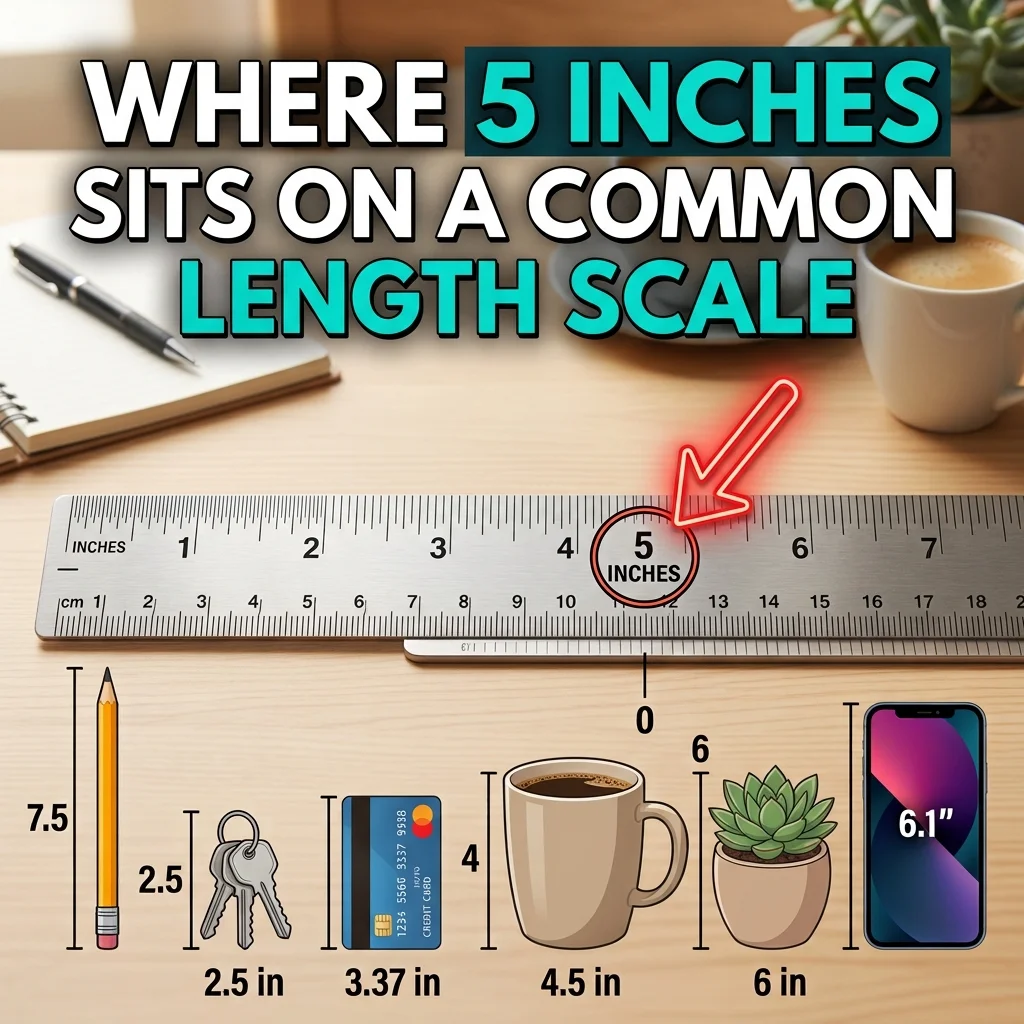
Five inches is a relatively short everyday length, but it is not tiny.
At 12.7 cm, it falls into a range that appears frequently in household products and personal items.
Think of a 12-inch ruler. Five inches is a little less than half its length.
On a larger scale, 5 inches is:
- Less than half a foot
- Just over 12 centimeters
- About one-eighth of a meter
- Slightly longer than a standard playing card’s long side
- Around the length of many small household items
- Much shorter than a typical sheet of paper
- Roughly the width of some larger smartphones
It is also worth remembering that length and width are different dimensions. An object might be 5 inches wide but considerably longer, or 5 inches long while being only a couple of inches wide.
That distinction becomes especially important when shopping for electronics, furniture, tools, and other products.
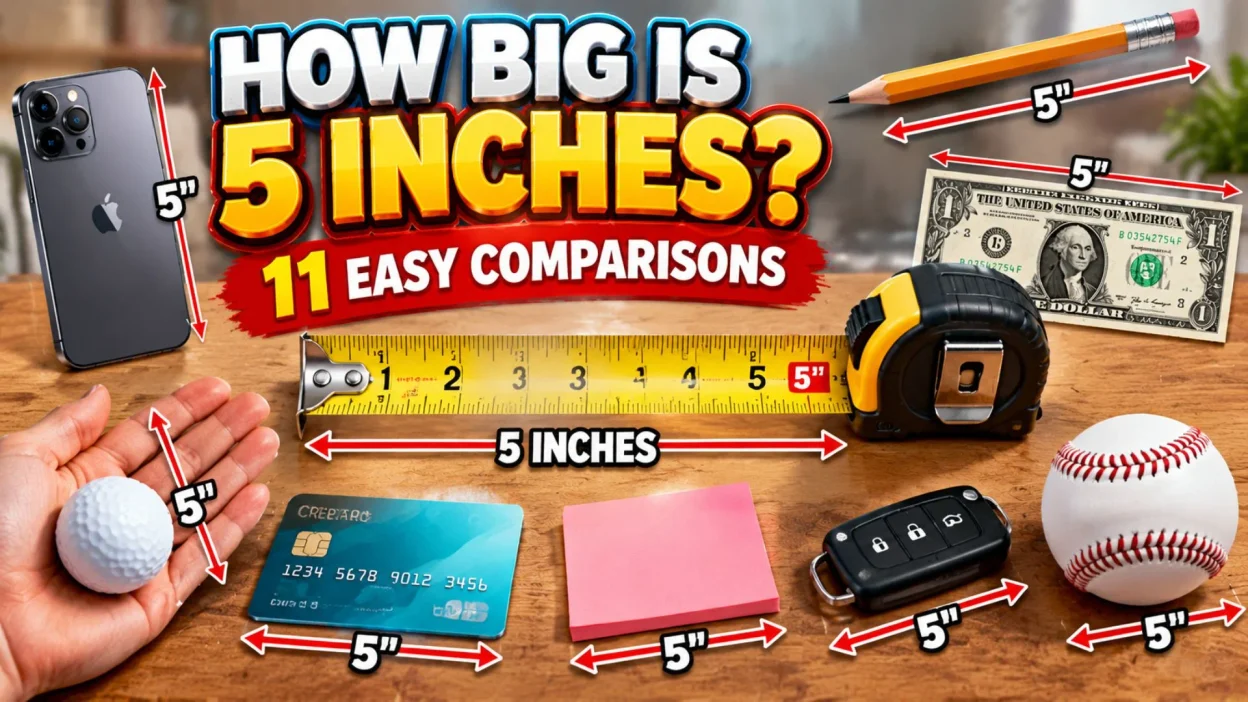
11 Things That Are Around 5 Inches
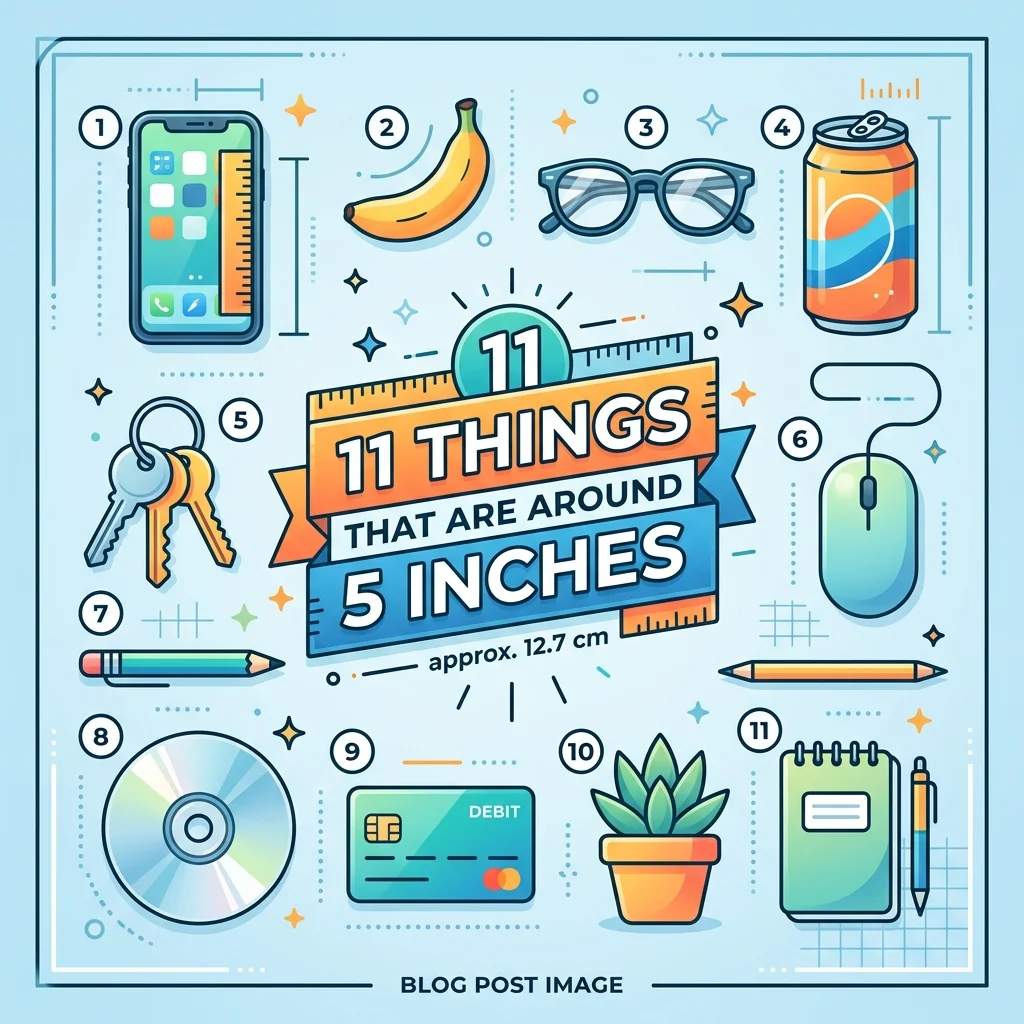
The best way to understand how big is 5 inches is to compare it with things you already recognize.
The following examples are approximate because everyday objects are manufactured in many different sizes.
A Small Smartphone Width
Some larger smartphones have widths that approach 3 inches, while smaller tablets and other handheld devices can be wider. A 5-inch span is therefore noticeably wider than most modern phone bodies.
It can still be useful as a visual reference because holding your hand across a device makes the difference obvious.
Smartphones are generally measured by screen diagonal rather than simply by width, so a device described as having a 5-inch screen does not necessarily measure 5 inches across.
A Standard Playing Card’s Long Side
A typical poker-size playing card measures about 3.5 inches by 2.5 inches. That means its long side is considerably shorter than 5 inches.
Put two cards end-to-end and the comparison becomes much easier to see. Five inches is about 1.4 times the long side of one standard playing card.
This makes playing cards useful for visual estimation, although one card alone should not be treated as a 5-inch measuring tool.
A Small Notebook Width
Small notebooks come in many formats, but some compact notebooks have widths around 4–5 inches.
A notebook near 5 inches wide gives you a particularly practical reference because its rectangular shape makes the measurement easy to see.
Place a ruler across the shorter side and you’ll quickly understand how close that dimension is to 5 inches.
A Credit Card Plus a Little Extra
A standard payment card is approximately 3.37 inches wide and 2.125 inches tall.
Its width therefore falls well below 5 inches. Add roughly another 1.6 inches and you reach the target.
This is a useful comparison because most people have seen or held a bank card. It gives you a familiar starting point rather than requiring you to imagine 5 inches from scratch.
A Small Kitchen Utensil Handle
Some compact kitchen utensils have handles that are close to 5 inches long, although their dimensions vary considerably.
A utensil handle can be a useful visual reference because its length is easy to compare directly with a ruler.
Remember that a complete spoon, fork, or spatula will normally be much longer than 5 inches. Here, we’re talking specifically about a portion or handle of an appropriately sized utensil.
Five Inches on a Ruler
The most reliable comparison is also the simplest: look directly at the first 5 inches of a standard ruler.
Most rulers make the individual inch marks obvious, so you can see exactly where the measurement begins and ends.
If you have a 12-inch ruler nearby, mark the 5-inch point. The section from zero to that mark is precisely the length you’re trying to visualize.
A Small Remote Control Section
Many remote controls are considerably longer than 5 inches, but some compact remotes have sections or widths that provide a useful approximation.
This is another example where you should compare a specific dimension rather than assume the entire object is 5 inches.
Place the remote beside a ruler and measure its length, width, or another clearly defined section.
A Short Pencil
A new standard wooden pencil is usually much longer than 5 inche, often around 7–8 inches before sharpening and use.
However, a shortened pencil can easily reach the 5-inch range.
That makes a pencil a good demonstration of how familiar objects change size over time. A well-used pencil can eventually become close to 5 inches long.
A Small Banana Section
A whole banana is generally much longer than 5 inche, but a cut section can provide an easy visual comparison.
Because bananas vary naturally in length and shape, this is only an approximation and should not be used for precise measurement.
Still, placing a roughly 5-inch piece beside a ruler makes the scale immediately understandable.
A Compact Flashlight
Small handheld flashlights are produced in many sizes, and some compact models fall close to 5 inches long.
This is a useful comparison because cylindrical objects make length particularly easy to visualize.
A flashlight measuring around 5 inches would fit comfortably into one hand while still being substantially longer than a tiny keychain light.
The Short Side of a Small Book
Some small books and pocket-sized notebooks have a shorter dimension close to 5 inches.
The exact size depends on the publishing format, so this comparison should be treated as approximate.
If you have a pocket book nearby, measure its shorter edge. You may find that it gives you a surprisingly good visual reference for 5 inches.
The 5-Inch Screen Question People Actually Mean
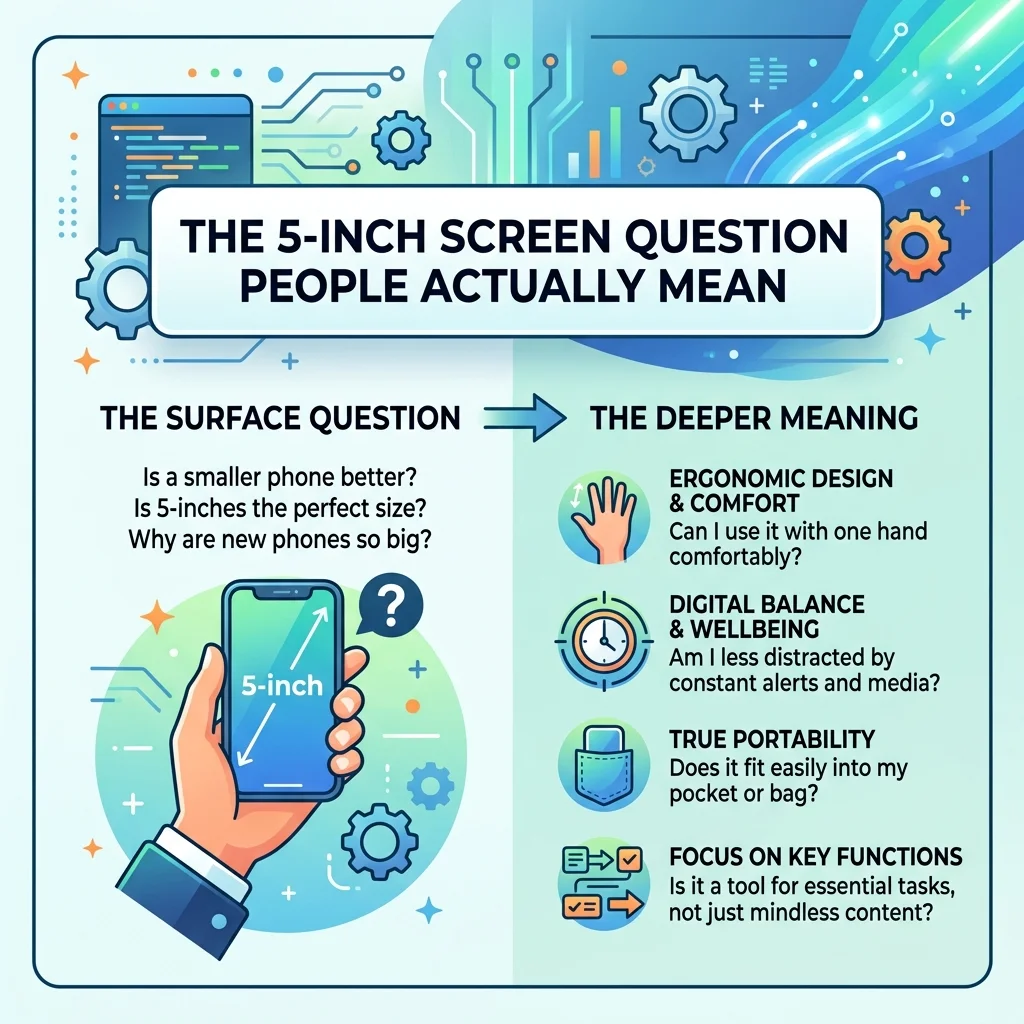
When people ask how big is 5 inches, they may actually be asking about a 5-inch screen.
This is where things can get confusing.
A television, monitor, phone, or tablet screen is commonly described by its diagonal measurement. A 5-inch screen therefore does not mean the screen is 5 inches wide or 5 inche tall.
For a typical 16:9 rectangular display, a 5-inch diagonal would be approximately:
| Screen Dimension | Approximate Size |
|---|---|
| Diagonal | 5 inches |
| Width | 4.36 inches |
| Height | 2.45 inches |
These figures assume a 16:9 display with no consideration for bezels or the outer body of the device.
That means a 5-inch screen can look considerably smaller than someone might expect if they interpret “5 inches” as its width.
Screen size is one reason the phrase 5 inche long and 5-inch screen should never be treated as the same thing.
Getting to 5 Inches Without a Tape Measure
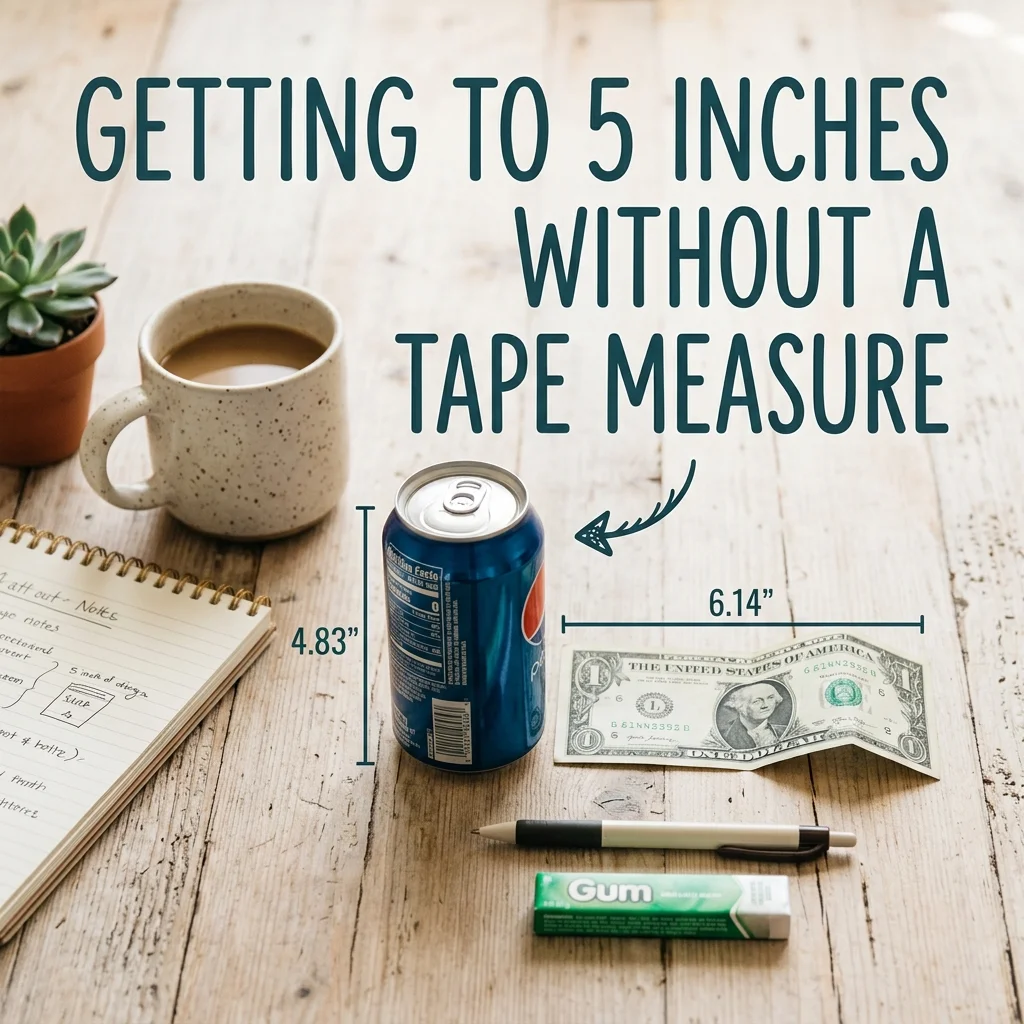
You can estimate 5 inches without carrying a ruler, but an estimate is never the same as an exact measurement.
Here are several practical methods.
Use the First Part of a 12-Inch Ruler
If you have any standard ruler, measuring the first 5 inches is the most accurate approach.
The zero mark is your starting point, and the fifth inch mark gives you the exact endpoint.
Compare With a Playing Card
A standard playing card is about 3.5 inche long.
Imagine extending it by roughly 1.5 inches. That gets you close to 5 inches.
This is useful for rough visualization but not for precision.
Use a Credit Card as a Starting Reference
A standard credit card is about 3.37 inches wide.
Adding approximately 1.6 inches gives you 5 inches.
Because card dimensions are standardized, this can be a reasonably consistent visual reference.
Compare Against Your Hand
Hand dimensions vary considerably from person to person, so this method is approximate.
For some people, the distance across part of the palm or the length of a finger may come reasonably close to 5 inches.
Measure your own hand once with a ruler, and you’ll have a personalized reference for future estimates.
Use a Known 5-Inch Object
Once you’ve measured an object that is genuinely 5 inches long, keep it as your reference.
A ruler-marked piece of string, a craft item, or another household object can help you estimate similar lengths later.
For exact work, however, always return to a ruler, measuring tape, or digital caliper.
FAQs
How many feet is 5 inches?
Five inches equals 0.4167 feet, or about 0.42 feet when rounded to two decimal places. This comes from dividing 5 by 12.
How many centimeters is 5 inches?
Five inches equals exactly 12.7 centimeters. The conversion uses 1 inch = 2.54 centimeters.
How many millimeters is 5 inches?
Five inches equals exactly 127 millimeters. One inch contains 25.4 millimeters, so 5 × 25.4 = 127.
How many meters is 5 inches?
Five inches equals 0.127 meters. That is the same physical length as 12.7 centimeters.
Can I visualize 5 inches without a ruler?
Yes, but only approximately. A standard playing card, credit card, your own hand, or a previously measured object can help you estimate the distance.
Where That Leaves You
So, how big is 5 inches? The exact answer is 12.7 centimeters, 127 millimeters, 0.4167 feet, or 0.127 meters.
The easiest mental picture is to think of a length noticeably longer than a standard playing card and somewhat shorter than half a foot. For a precise reference, the first 5 inches of a standard ruler remains the simplest option.