
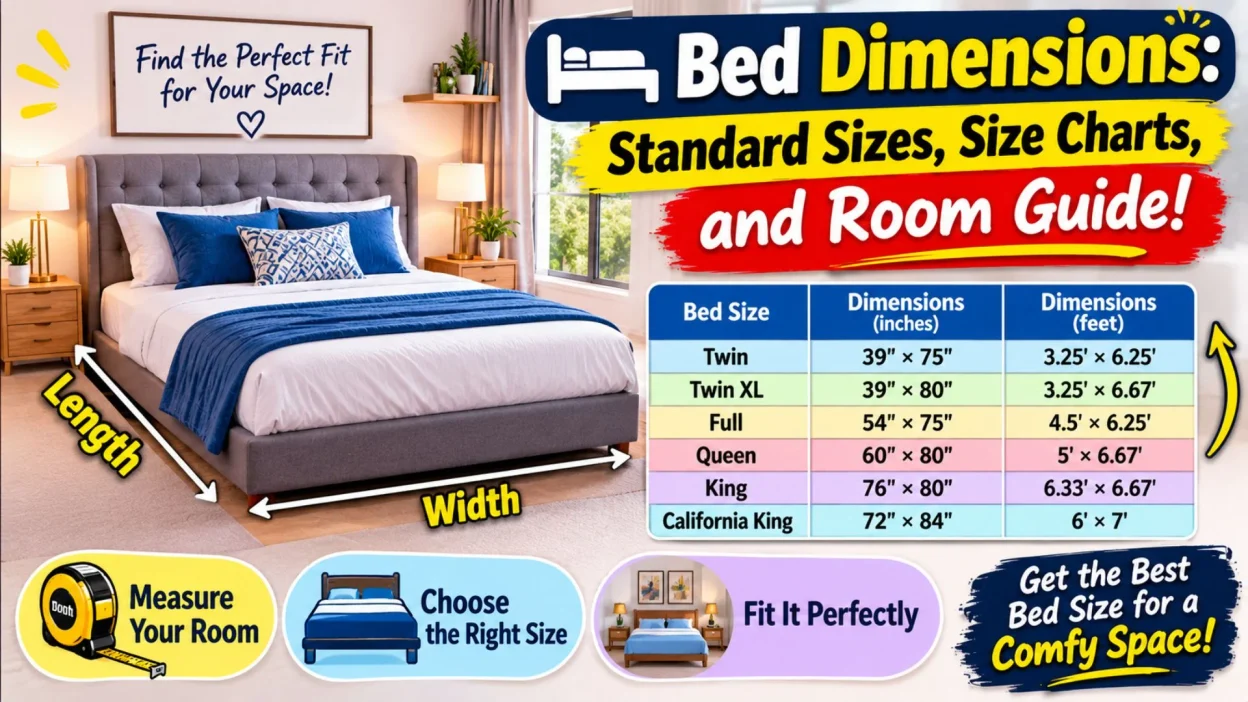
Choosing the right bed is about more than finding a comfortable mattress. You also need enough room for the bed frame, bedside tables, and space to move around. That is why understanding bed dimensions is important before buying a new bed or arranging your bedroom. In the United States, common bed sizes include Twin, Twin XL, Full, Queen, King, and California King. Each option has a different width and length, so the best choice depends on who will use it and how much bedroom space is available. This guide explains standard bed sizes in inches, feet, and centimeters, with easy comparison charts and practical tips to help you choose the right size.
📏 Standard Bed Dimensions Chart
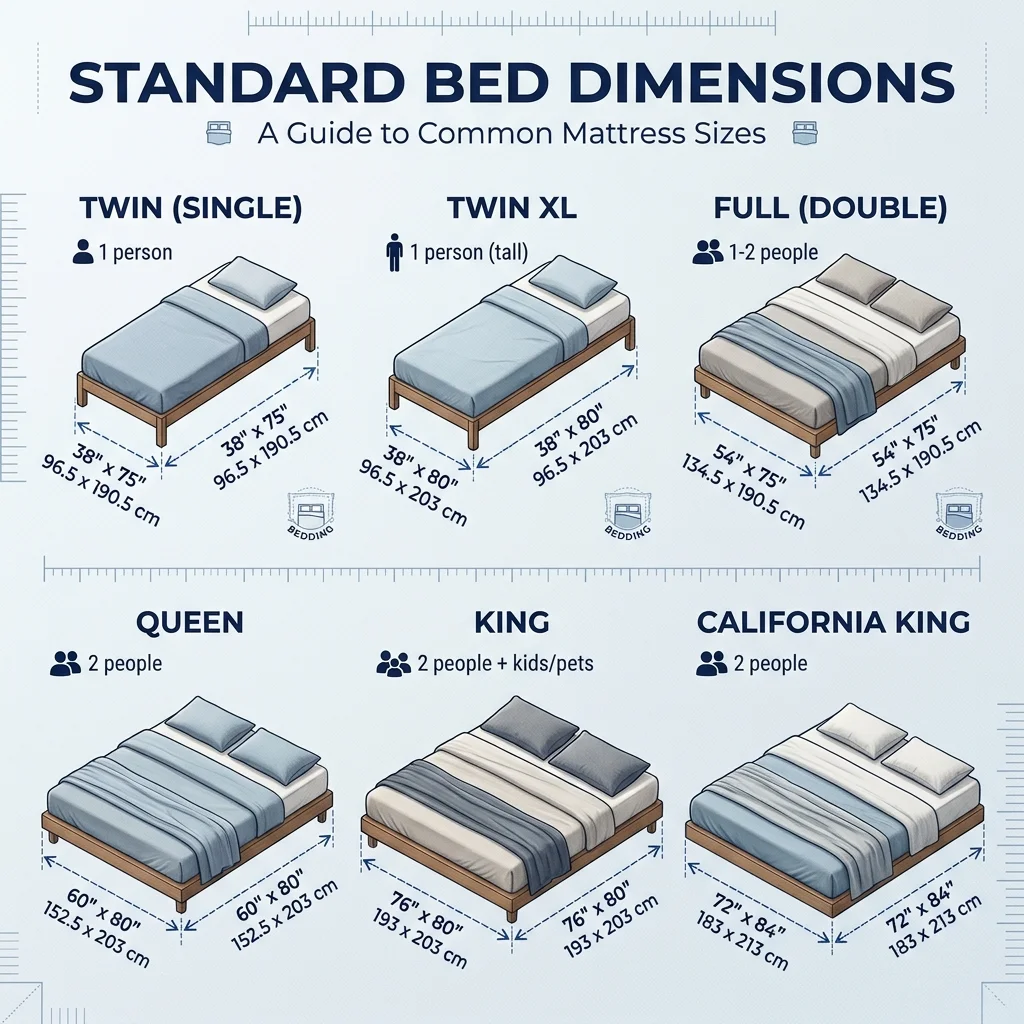
Most standard US mattress sizes follow common measurements. However, the dimensions can vary slightly between manufacturers and countries.
Here is a quick chart of the most popular bed sizes.
| Bed Size | Width | Length | Width × Length in cm |
|---|---|---|---|
| Crib | 28 inches | 52 inches | 71.1 × 132.1 cm |
| Twin | 38 inches | 75 inches | 96.5 × 190.5 cm |
| Twin XL | 38 inches | 80 inches | 96.5 × 203.2 cm |
| Full | 54 inches | 75 inches | 137.2 × 190.5 cm |
| Queen | 60 inches | 80 inches | 152.4 × 203.2 cm |
| King | 76 inches | 80 inches | 193 × 203.2 cm |
| California King | 72 inches | 84 inches | 182.9 × 213.4 cm |
Quick takeaway: A Twin is a compact choice for one person, while a Queen offers more room for couples. King and California King mattresses provide extra sleeping space.
🛏️ Different Bed Sizes and Their Dimensions
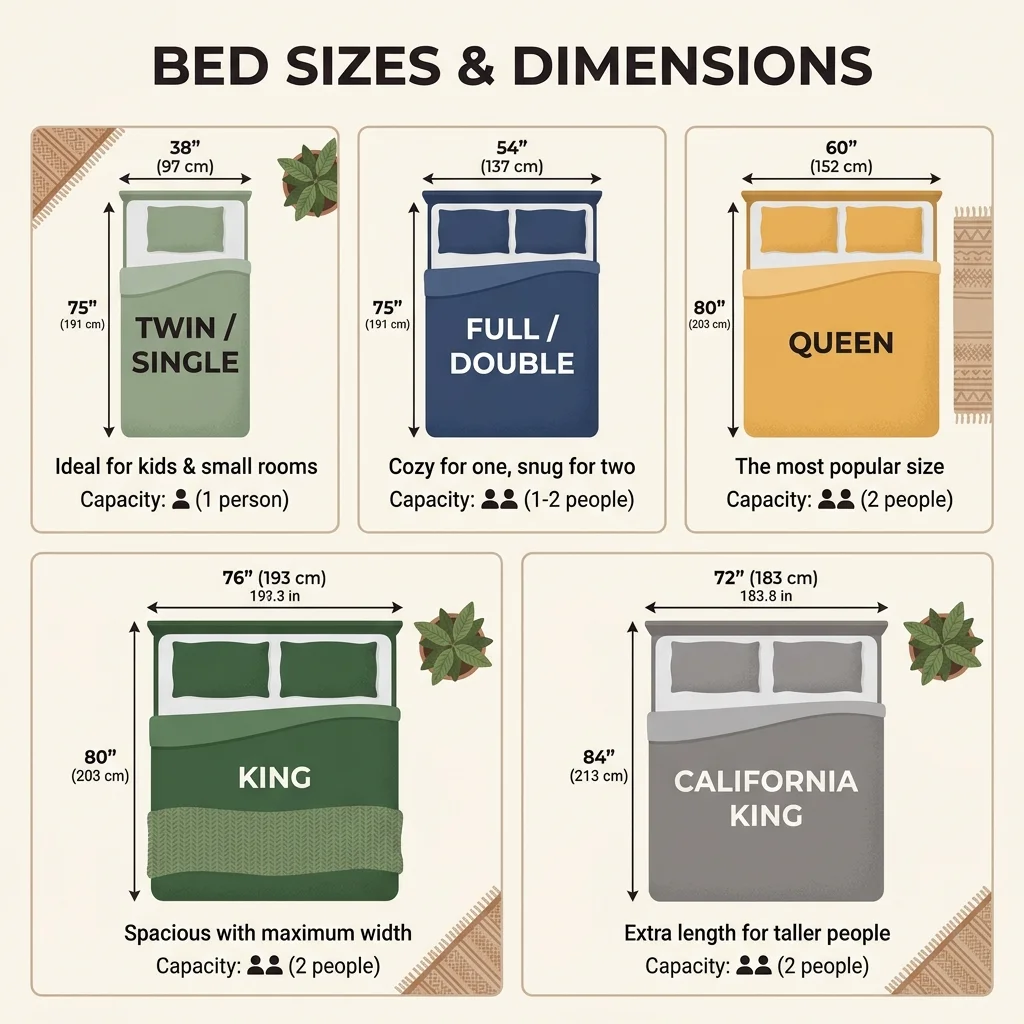
Every bed size serves a different purpose. Some are designed for children or single sleepers, while others provide enough room for two adults.
Let’s look at each standard size in more detail.
1. Crib Bed Dimensions
28 × 52 inches | 2 feet 4 inches × 4 feet 4 inches
A standard US crib mattress measures approximately 28 inches wide and 52 inches long.
It is designed to fit a standard-size baby crib. Always check the crib manufacturer’s instructions because mattress fit is an important safety consideration.
2. Twin Bed Dimensions
38 × 75 inches | 3 feet 2 inches × 6 feet 3 inches
A Twin bed is one of the smallest standard mattress sizes for older children and adults.
It works well in compact bedrooms, guest rooms, and shared children’s rooms.
Best for:
- Children and teenagers
- Single sleepers
- Small bedrooms
- Bunk beds
- Guest rooms with limited space
3. Twin XL Bed Dimensions
38 × 80 inches | 3 feet 2 inches × 6 feet 8 inches
A Twin XL has the same width as a standard Twin but offers an extra 5 inches of length.
This additional length can make sleeping more comfortable for taller people.
Best for:
- Taller teenagers
- College dorm rooms
- Single adults
- Narrow bedrooms
4. Full Bed Dimensions
54 × 75 inches | 4 feet 6 inches × 6 feet 3 inches
A Full bed, sometimes called a Double bed in the United States, provides 16 inches more width than a Twin.
It can accommodate one adult comfortably, although two adults may find it a little narrow.
Best for:
- Single adults
- Teenagers
- Small guest rooms
- People who prefer extra sleeping width
5. Queen Bed Dimensions
60 × 80 inches | 5 feet × 6 feet 8 inches
A Queen bed is one of the most popular mattress choices for couples.
It provides enough room for two people while taking up less floor space than a King bed.
Best for:
- Couples
- Single adults who like extra space
- Medium-sized bedrooms
- Guest bedrooms
6. King Bed Dimensions
76 × 80 inches | 6 feet 4 inches × 6 feet 8 inches
A standard King bed offers 16 inches more width than a Queen mattress.
Its larger sleeping surface provides more personal space for couples.
Best for:
- Couples who want extra room
- Larger bedrooms
- Families who occasionally share the bed with children
- People who prefer spacious sleeping arrangements
7. California King Bed Dimensions
72 × 84 inches | 6 feet × 7 feet
A California King is narrower but longer than a standard King bed.
It offers an additional 4 inches of length, making it a useful option for taller sleepers.
Best for:
- Tall adults
- Couples who need extra length
- Long bedrooms
- People who prefer a longer mattress
📊 Bed Size Comparison: Twin to California King
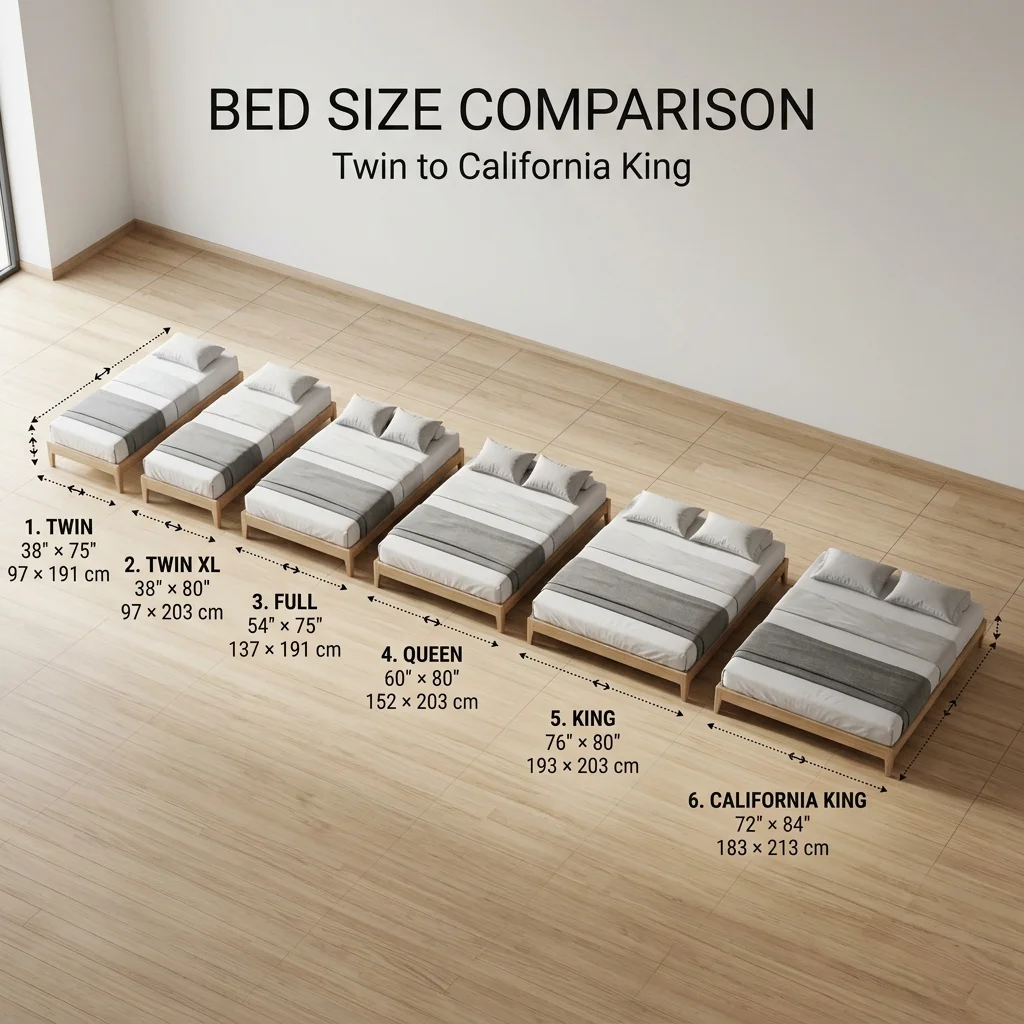
Comparing mattress sizes side by side makes it easier to understand how much sleeping space each one offers.
| Size | Width | Length | Approx. Surface Area |
|---|---|---|---|
| Twin | 38″ | 75″ | 19.8 sq. ft. |
| Twin XL | 38″ | 80″ | 21.1 sq. ft. |
| Full | 54″ | 75″ | 28.1 sq. ft. |
| Queen | 60″ | 80″ | 33.3 sq. ft. |
| King | 76″ | 80″ | 42.2 sq. ft. |
| California King | 72″ | 84″ | 42 sq. ft. |
The surface area represents the mattress only. It does not include the bed frame, headboard, or surrounding furniture.
What stands out?
- Twin XL adds length without adding width.
- Full provides more width than Twin.
- Queen is a popular middle-ground option.
- King offers the greatest width among these standard sizes.
- California King provides the greatest length.
📐 Bed Dimensions in Feet and Inches
If you find feet and inches easier to understand than centimeters, this chart provides a quick reference.
| Bed Size | Width in Feet | Length in Feet |
|---|---|---|
| Twin | 3 ft 2 in | 6 ft 3 in |
| Twin XL | 3 ft 2 in | 6 ft 8 in |
| Full | 4 ft 6 in | 6 ft 3 in |
| Queen | 5 ft | 6 ft 8 in |
| King | 6 ft 4 in | 6 ft 8 in |
| California King | 6 ft | 7 ft |
For example, a Queen mattress is 5 feet wide and 6 feet 8 inches long. A standard King mattress is 1 foot 4 inches wider but has the same length.
🏠 What Bedroom Size Do You Need for Each Bed?
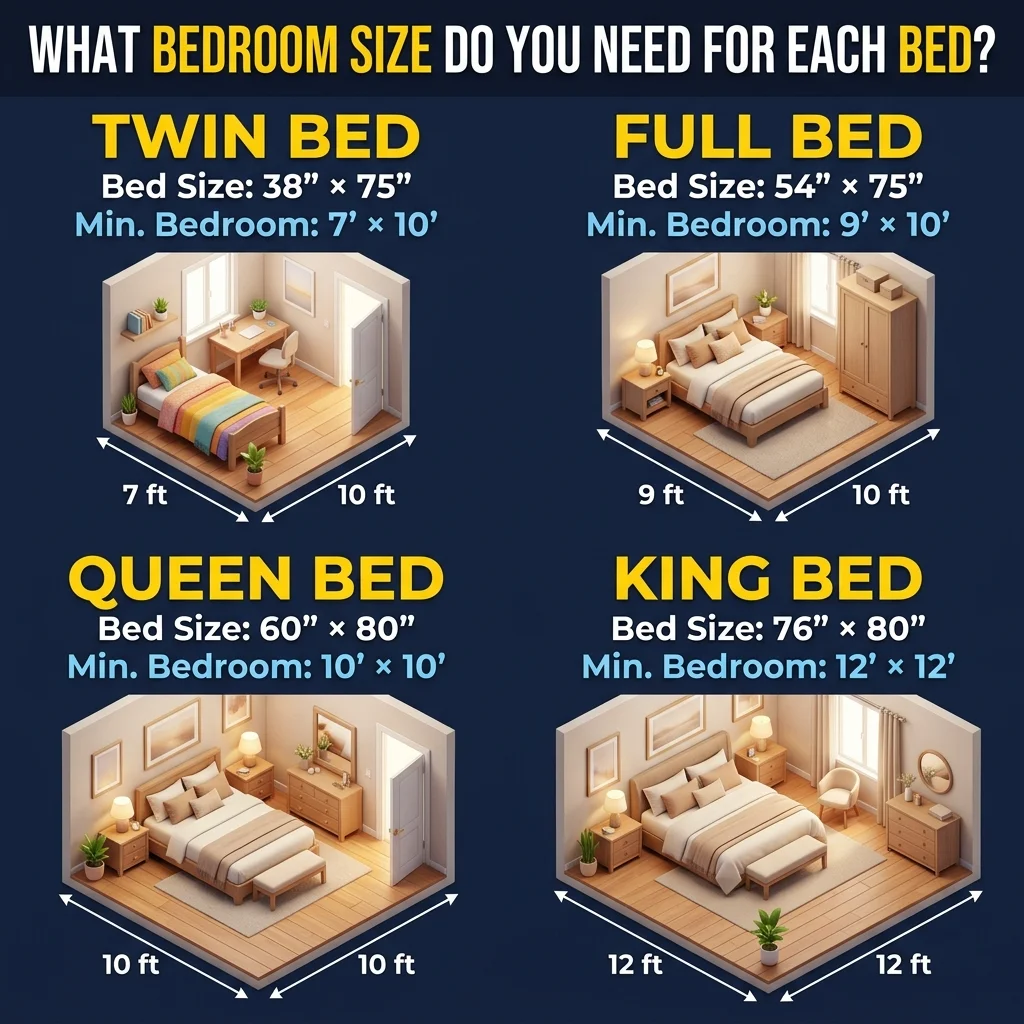
A mattress may fit inside a bedroom but still leave too little space for walking or opening drawers.
Therefore, consider the room layout before choosing a bed.
The following are practical planning suggestions, not strict minimum room-size standards.
| Bed Size | Suggested Room Size |
|---|---|
| Twin | 7 × 10 feet |
| Twin XL | 7 × 10 feet |
| Full | 9 × 10 feet |
| Queen | 10 × 10 feet |
| King | 12 × 12 feet |
| California King | 12 × 12 feet or larger |
Actual space requirements depend on furniture, door placement, wardrobes, and walking paths.
How Much Space Should You Leave Around a Bed?
Try to leave approximately 24–30 inches of walking space along accessible sides of the bed.
This makes it easier to:
- Walk around the mattress.
- Change bed sheets.
- Open nearby drawers.
- Reach bedside tables.
- Move around without bumping into furniture.
If your room is small, place the bed against a wall where practical. This can free up useful floor space.
👀 10 Easy Ways to Visualize Bed Dimensions
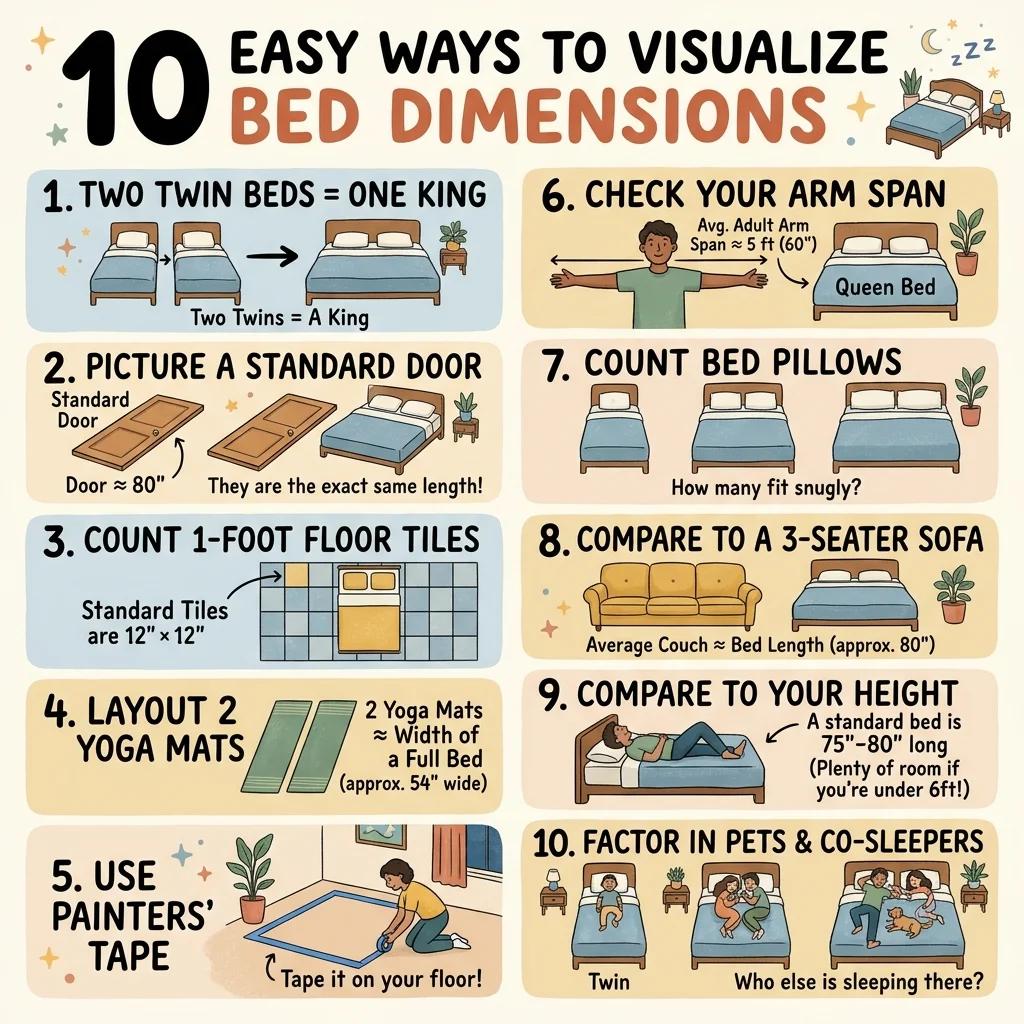
Numbers can be difficult to imagine. Everyday comparisons make mattress sizes easier to understand.
Here are some simple ways to picture the dimensions.
- Twin width: At 38 inches, it is just over 3 feet wide.
- Twin length: Its 75-inch length is 6 feet 3 inches.
- Twin XL length: It is 5 inches longer than a standard Twin.
- Full width: At 54 inches, it is 1 foot 4 inches wider than a Twin.
- Queen width: A Queen mattress is exactly 5 feet wide.
- Queen length: Its 80-inch length is 6 feet 8 inches.
- King width: A King mattress is 16 inches wider than a Queen.
- California King length: Its 84-inch length equals 7 feet.
- Full versus Queen: A Queen is 6 inches wider and 5 inches longer.
- King versus California King: A standard King is 4 inches wider, while a California King is 4 inches longer.
These comparisons help you understand the differences without needing to see every mattress in person.
🧮 How to Measure Your Bed Correctly
Measuring your existing bed can help you identify its size before buying new sheets, a mattress, or a replacement frame.
Follow these simple steps:
- Remove thick blankets and pillows from the mattress.
- Measure from the left edge to the right edge to find the width.
- Measure from the head of the mattress to the foot to find the length.
- Measure the mattress thickness separately if you need fitted sheets.
- Record the measurements in inches or centimeters.
- Compare your results with the standard bed size chart.
Important: Measure the mattress itself, not the outside edges of the bed frame. Frames are often wider and longer than mattresses.
🪑 Mattress Dimensions vs. Bed Frame Dimensions
One common mistake is assuming that a mattress and its bed frame have identical dimensions.
They usually do not.
A bed frame may extend beyond the mattress because of its headboard, footboard, side rails, or decorative design.
For example, a standard Queen mattress measures 60 × 80 inches. However, its frame may require more floor space.
Before purchasing a frame, check:
- Overall frame width and length.
- Headboard height.
- Footboard dimensions.
- Space needed for side rails.
- Clearance for drawers or storage compartments.
- Whether the frame supports your mattress size.
Always check the manufacturer’s specifications rather than relying only on the mattress measurements.
🛒 How to Choose the Right Bed Size
The best mattress size depends on your sleeping habits, available space, and budget.
Consider these factors before making a decision.
1. Number of Sleepers
A Twin or Twin XL is generally suitable for one person. A Queen or King is more suitable for couples who want to share a mattress.
2. Your Height
Taller sleepers may prefer a Twin XL or California King because both provide additional length compared with their shorter alternatives.
3. Bedroom Dimensions
Measure the available floor space before buying. Remember to account for wardrobes, tables, doors, and walking areas.
4. Sleeping Habits
People who move around frequently during sleep may appreciate a wider mattress.
5. Bedding Availability
Check that fitted sheets, mattress protectors, and comforters are available in the size you choose.
6. Budget
Larger mattresses and their matching frames and bedding can cost more. Consider the total purchase rather than the mattress price alone.
🌍 Are Bed Dimensions the Same in Every Country?
No. Mattress dimensions differ between countries and manufacturers.
For example, a US Queen mattress generally measures 60 × 80 inches. A UK King mattress is commonly around 60 × 78 inches, which is close to a US Queen but not identical.
Australian, European, and other international sizing systems also use different names and measurements.
Therefore, always check the exact width and length in the product specifications. Do not assume that a mattress with the same size name will fit a frame or bedding set from another country.
❓ Frequently Asked Questions About Bed Dimensions
1. What are standard bed dimensions?
Common US mattress sizes include Twin (38 × 75 inches), Twin XL (38 × 80 inches), Full (54 × 75 inches), Queen (60 × 80 inches), King (76 × 80 inches), and California King (72 × 84 inches).
2. What is the most popular bed size?
Queen is one of the most popular mattress sizes in the United States. It provides a useful balance between sleeping space and bedroom floor space.
3. How wide is a Queen bed in feet?
A standard US Queen mattress is 60 inches wide, which equals exactly 5 feet.
4. How big is a King bed in feet?
A standard King mattress measures 6 feet 4 inches wide and 6 feet 8 inches long.
5. Is a Full bed bigger than a Twin?
Yes. A Full mattress is 54 inches wide, while a Twin is 38 inches wide. Both are usually 75 inches long.
6. Is a California King bigger than a regular King?
A California King is longer but narrower than a standard King. It measures 72 × 84 inches, compared with 76 × 80 inches for a regular King.
7. What bed size is best for couples?
A Queen is a common choice for couples with limited or medium bedroom space. A King offers more width and personal sleeping space.
8. Does a bed frame have the same dimensions as a mattress?
No. Bed frames usually require more floor space than the mattress because of their structure and design. Always check the frame’s overall measurements.
Conclusion
Understanding bed dimensions makes it easier to choose a mattress that fits your bedroom and sleeping needs. Twin and Twin XL sizes work well for single sleepers, while Full and Queen mattresses offer more room. King and California King options provide additional sleeping space for couples and larger bedrooms. Before buying, measure your room, check the mattress dimensions, and remember that the bed frame may take up extra space. A little planning can help you find a comfortable bed without overcrowding your bedroom.